
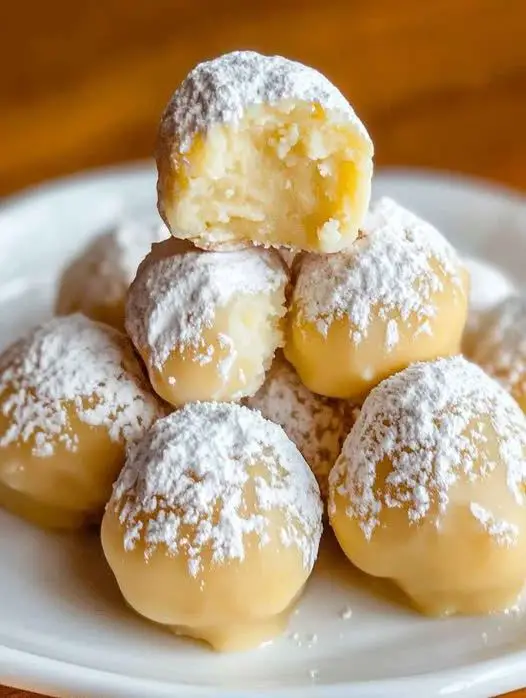
Once the ganache is firm, I use a small cookie scoop or a teaspoon to portion it out. With clean, slightly damp hands (this prevents sticking), I quickly roll each portion into a smooth ball, placing them on the parchment-lined sheet. I then return the tray to the fridge or freezer for another 30 minutes. This second chill is crucial—it firms the balls up so they hold their shape when dipped in warm chocolate. Meanwhile, I melt the chocolate for the coating in a clean bowl over simmering water. Using a fork or dipping tool, I dip each frozen ganache ball, let the excess drip off, and return it to the parchment. Before the coating sets, I can sprinkle on a little extra lemon zest for decoration.
Pro Tips for Best Results
I tested the ganache chilling time three different ways: 1 hour in the fridge, 3 hours, and overnight. Overnight is the undisputed winner. A 1-hour chill is not nearly enough—the ganache is still too soft to handle. The 3-hour chill works in a pinch, but the overnight chill makes the ganache perfectly firm and easy to roll into smooth, neat balls without melting from the heat of your hands.
Here’s what I learned the hard way about the lemon juice: add it after the butter. I once added the cold lemon juice directly to the hot ganache, and the temperature shock caused the fat in the chocolate and cream to seize slightly, making the ganache a bit grainy. Now, I whisk in the softened butter first to slightly cool the mixture, then whisk in the room-temperature lemon juice and zest. This gives a perfectly smooth, creamy texture every time.
For the smoothest, most professional-looking coating, use a fork and a spoon in tandem. I place the chilled ganache ball on the fork, dunk it, then lift it and gently tap the fork on the edge of the bowl to remove excess chocolate. I then use a small spoon to help slide the coated truffle off the fork and back onto the parchment. This method minimizes messy finger marks and creates a perfect, even shell.(See the next page below to continue…)