
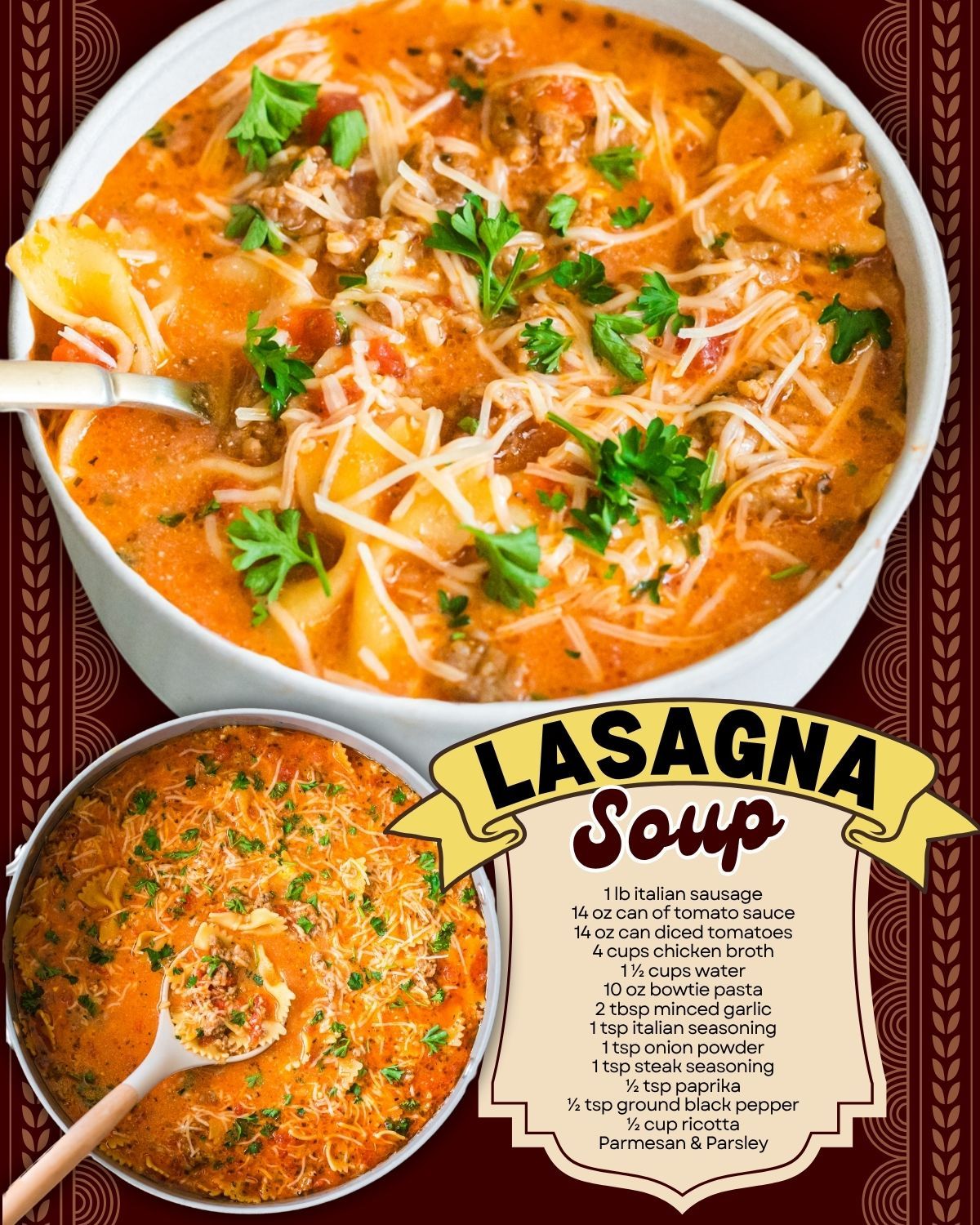
Over-salting can also be an issue. Between the sausage, broth, and Parmesan, there’s already plenty of salty elements at play. I always wait until the very end to add salt—most of the time I don’t need any at all. Taste first, season second.
And lastly, don’t walk away from the pot when the pasta is cooking. I’ve done it, and trust me, mushy pasta ruins the whole experience. Set a timer if you need to. Perfectly tender pasta makes all the difference in this soup.
Serving Suggestions
I love serving this Lasagna Soup with a warm slice of garlic bread. The bread soaks up the broth beautifully, and it reminds me of tearing into a loaf at an Italian restaurant. Sometimes I’ll even butter it and sprinkle on extra garlic powder just because it feels extra cozy.
On the nights when I want something lighter, I serve the soup with a simple green salad. A crisp salad with lemon dressing balances the richness of the soup really well. It refreshes your palate between each cheesy bite, and I find it turns the meal into a perfect weeknight dinner.
If I’m cooking for friends or family, I like to make a small toppings bar next to the pot—extra Parmesan, ricotta, red pepper flakes, and fresh parsley. It feels fun and interactive, and everyone gets to tailor their bowl exactly the way they like it. People always go heavy on the cheese, and honestly, I can’t blame them.
And sometimes, when I’m really craving comfort, I pair this soup with a glass of red wine. Something about the combination of tomato, sausage, and wine makes the whole dinner feel warm and relaxing, especially on a cold evening.
Variations & Customizations
One version I’ve tried that turns out amazing is swapping the Italian sausage for ground turkey and adding a splash of cream at the end. It creates a lighter, creamier soup that feels like a healthier indulgence. The flavor is still deep and cozy but not quite as heavy.
Another delicious variation is using broken lasagna noodles instead of bowtie pasta. It looks rustic and authentic, and the wide noodle pieces remind you exactly why this soup is named after the classic dish. Every bite feels like you’re scooping up a deconstructed lasagna.
I’ve also added spinach a few times, and it wilts beautifully into the hot broth without changing the flavor too much. It’s a great way to sneak in greens, especially if kids are involved. A handful of fresh basil at the end also elevates the whole pot with a fragrant, bright finish.
And if you love spice, try using hot Italian sausage or adding crushed red pepper flakes. I’ve done this when making the soup for friends who enjoy heat, and it transforms the dish into something bold and lively without losing the cozy lasagna essence.
How to Store, Freeze & Reheat
Whenever I store this soup, I always keep the pasta separate if possible. If the noodles sit in the broth overnight, they continue absorbing liquid and become too soft. I learned that the hard way when I opened the leftovers and found more of a casserole than a soup. Storing the broth and pasta separately keeps everything perfect the next day.
For freezing, I recommend freezing just the soup base without any pasta. The broth freezes beautifully, but pasta becomes mushy after thawing. I freeze the soup in airtight containers, label them, and add fresh cooked pasta when I reheat the broth later. It tastes just as good as the day I made it.
Reheating is easy—just warm the soup on the stove over medium heat. I stir gently and add a splash of water or broth if it has thickened too much. The aroma that fills the kitchen during reheating is so comforting, almost like making it from scratch again.
If you reheat in the microwave, heat it in 30-second intervals and stir between each. This helps the broth warm evenly and keeps the pasta from overcooking. Add fresh ricotta and Parmesan on top, and it’s like a brand-new bowl.
Nutrition Information
Even though this soup tastes incredibly indulgent, it’s actually more balanced than traditional lasagna. You get protein from the Italian sausage, carbs from the pasta, and a surprising amount of vitamins from the tomatoes and broth. I love that it feels hearty without being overwhelmingly heavy.
The ricotta adds a bit of creaminess but not nearly as much fat as a full cheese layer in baked lasagna. I’ve made this soup on nights when I wanted comfort food but not a brick of pasta and cheese sitting in my stomach afterward. It satisfies without weighing you down.
The broth adds hydration, and the tomatoes provide antioxidants like lycopene. I always feel like this meal gives me a warm, nourishing boost, especially during the winter months. It’s the kind of soup that fills you up while still feeling wholesome.
Of course, you can adjust the nutrition to fit your needs—use turkey sausage, whole wheat pasta, or even skip the ricotta. It’s flexible enough to adapt to any dietary preference.
FAQ Section
1. Can I make this soup in a slow cooker?
Yes, I’ve tried it! I brown the sausage first, then add everything except the pasta and ricotta to the slow cooker. It cooks beautifully on low for about 6 hours. I stir in cooked pasta at the end to keep it from getting mushy.
2. Can I use gluten-free pasta?
Absolutely. I’ve made it with gluten-free noodles for a friend, and it turned out great. Just remember that gluten-free pasta can cook faster, so check it often to avoid overcooking.
3. Is there a dairy-free option?
Yes. You can skip the ricotta or replace it with a dairy-free alternative. Parmesan can be substituted with nutritional yeast for a cheesy flavor without dairy.
4. Can I double the recipe?
Definitely. I’ve doubled it for parties, and it works perfectly. Just make sure your pot is large enough to handle the extra liquid and pasta.
5. Will this soup thicken as it sits?
Yes, it does. The pasta continues absorbing liquid, so the soup gets thicker over time. Adding a splash of broth or water when reheating solves the problem instantly.
Conclusion
Every time I make this Lasagna Soup, I’m reminded of how simple ingredients can create something unbelievably comforting. It has all the flavor and warmth of classic lasagna but in a bowl that comes together without any stress. Whether I’m cooking for myself on a quiet night or feeding a table full of hungry friends, this recipe never lets me down. I hope it brings the same cozy joy to your kitchen as it does to mine—one delicious spoonful at a time.