
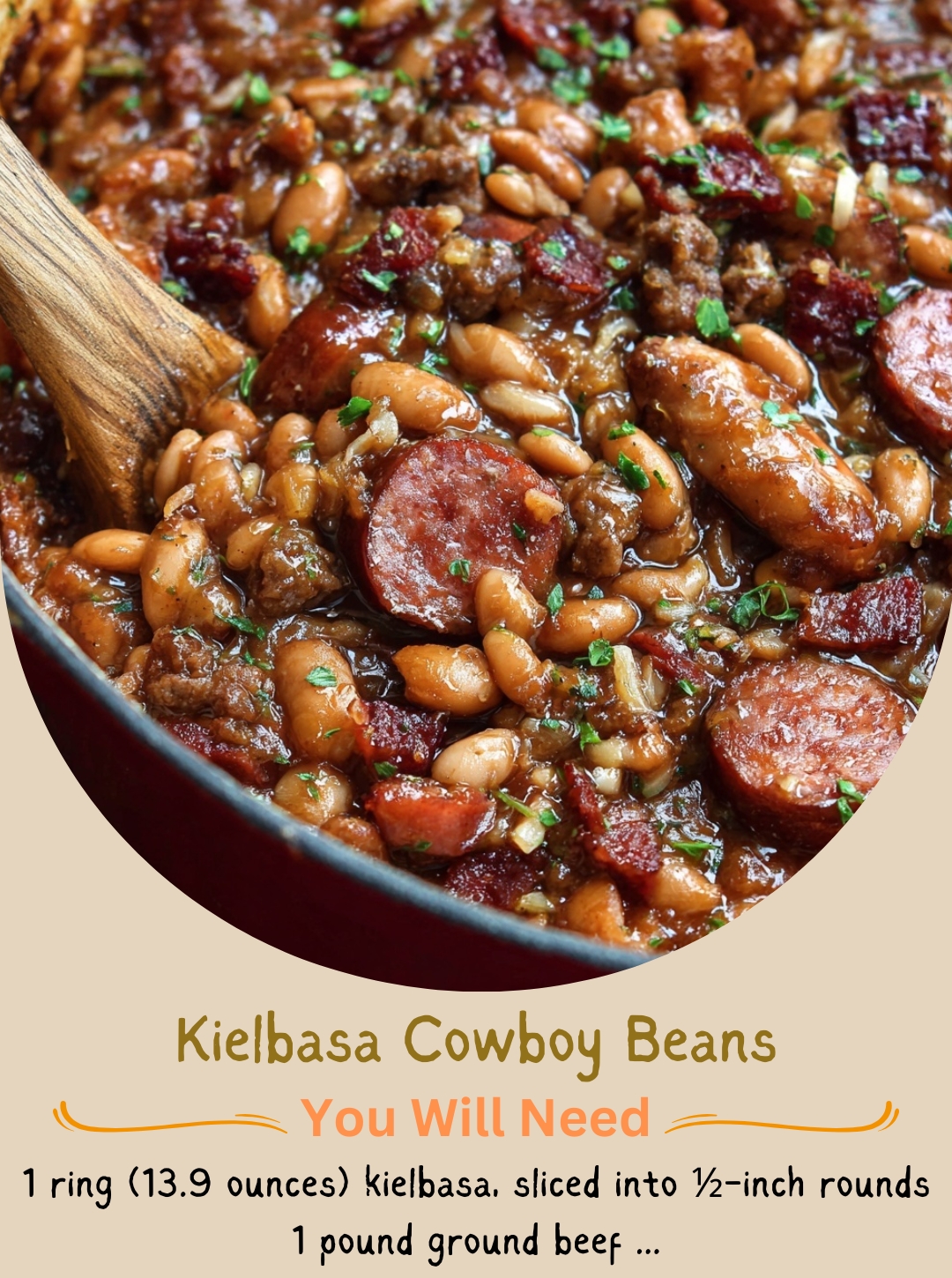
After the kielbasa is done, I add in the ground beef and diced onion. I break the beef up with my spoon and let the onion soften until it becomes translucent and fragrant. The beef absorbs some of the bacon and kielbasa flavors lingering in the pot, and the onion sweetens everything with its gentle aroma. I always season with a pinch of salt and pepper at this stage, just enough to enhance the meat without overdoing it.
Once the beef is cooked through, I pour in the pork and beans, the drained beans, and all of the sauce ingredients—barbecue sauce, ketchup, brown sugar, mustard, vinegar, and Worcestershire. As soon as everything is stirred together, the mixture turns into a thick, glossy pot of absolute comfort. This is when I add the cooked bacon back in, because the crispy pieces soften slightly and soak up the sauce in the best way.
I let the beans simmer on low for at least 20–25 minutes, although I’ll be honest: the longer they simmer, the deeper the flavor becomes. Sometimes I even let the mixture go on the stove for an hour on the lowest heat possible, and it turns into a cowboy-style baked bean situation that tastes like it cooked for half a day. When it’s done, everything smells smoky, sweet, tangy, and savory all at once—the kind of aroma that brings people wandering into the kitchen asking, “What are you making?”
Pro Tips for Best Results
One thing I tested several times was the order in which I cooked the meats, and trust me—bacon first is the way to go. The fat you get from the bacon is perfect for browning the kielbasa and beef. When I reversed the order, the flavor just wasn’t as rich or layered. So start with bacon and build your flavors from there.
Another tip learned through trial and error is to taste the sauce before letting it simmer. Everyone likes beans a little differently—some prefer sweeter, some tangier, some with a little heat. Adjusting the sauce before cooking ensures the final taste is exactly the way you want it. I always add an extra splash of vinegar or mustard if I’m craving something punchier.
Letting the beans simmer uncovered for the last 10 minutes helps thicken the sauce, especially if you want a more stew-like consistency. If you prefer it saucier, cover the pot instead. I’ve done both depending on whether I’m serving it as a main dish or a side.
Finally, don’t underestimate the power of fresh garnish. A sprinkle of parsley or green onion right before serving brightens the entire dish. I used to skip it, but once I tried it, I realized it makes every bowl look and taste fresher.
Common Mistakes to Avoid
The first mistake I made with this dish was using too much sugar because I assumed beans should be very sweet. But once you simmer everything together, the sweetness intensifies. Now I start with the listed amount and only adjust at the end. Too much sugar can overpower the meatiness of the kielbasa.
Another misstep is draining the pork and beans. I did this accidentally on my second attempt, and the beans turned out dry and just not the right texture. Pork and beans come in a lightly seasoned sauce that adds moisture and flavor to the dish—don’t drain them.(See the next page below to continue…)