
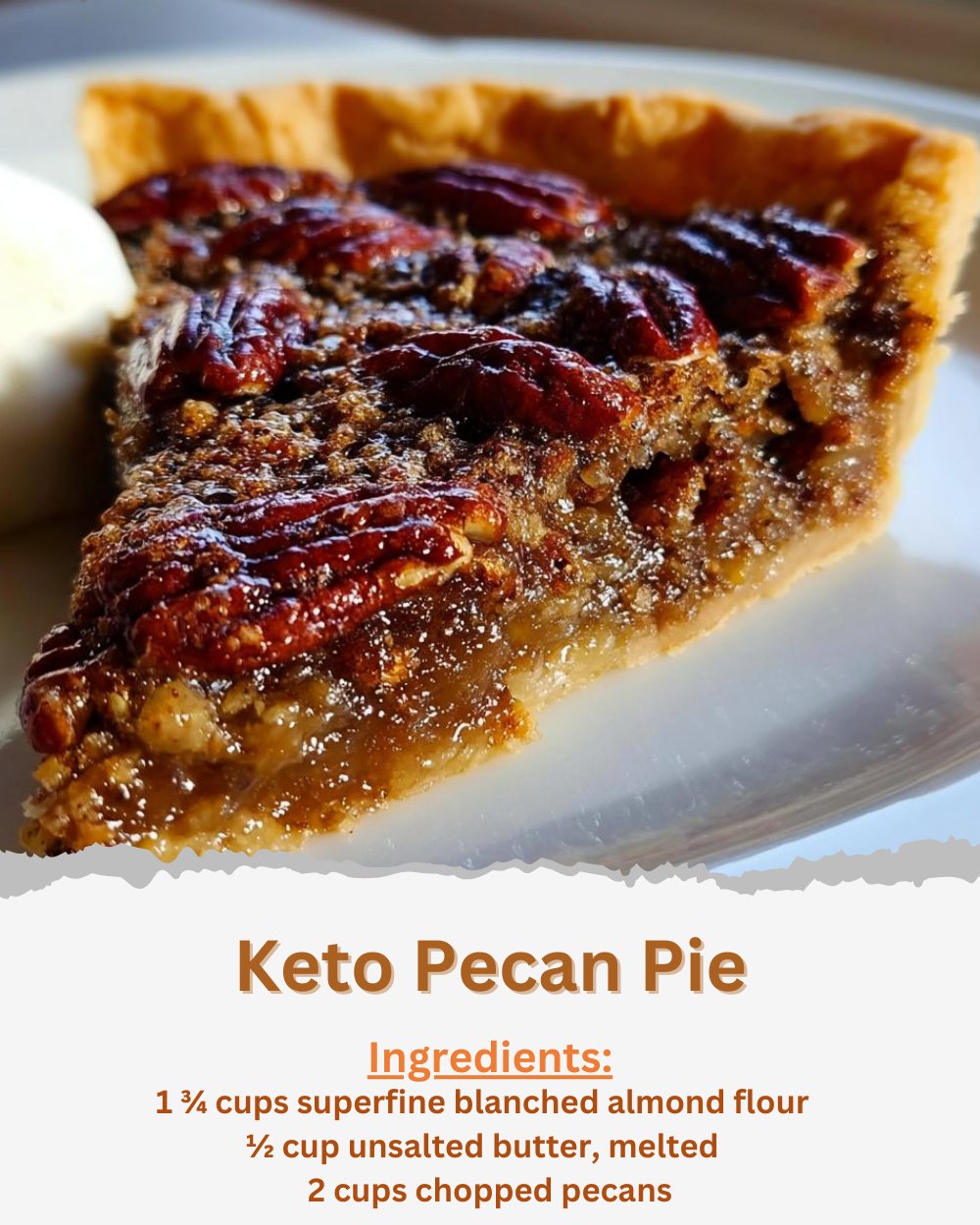
Keto Pecan Pie is the holiday dessert that proves you don’t have to give up classics to stay low carb. You still get a rich, gooey, caramel‑style filling and toasty pecans on top, all nestled in a buttery almond‑flour crust—just without the sugar and corn syrup.
It looks like traditional pecan pie, slices cleanly, and completely satisfies that cozy, nostalgic craving while keeping carbs in check. This is the kind of recipe that impresses everyone at the table, keto or not.
Why This Keto Version Works
Classic pecan pie is usually built on a wheat flour crust and a filling loaded with brown sugar and corn syrup. Delicious, but obviously not keto‑friendly. The trick to a great keto pecan pie is to mimic that same texture and flavor using low‑carb ingredients that behave as closely as possible to sugar and flour. That’s exactly what this recipe is designed to do.
An almond‑flour crust stands in for traditional pastry: it’s naturally low carb, slightly nutty, and bakes up tender and buttery. The filling relies on a blend of keto sweeteners that caramelize smoothly, plus eggs and butter for body and richness.
Toasted pecans add crunch and flavor, making each bite feel luxurious. Done right, you end up with a pie that feels indulgent and festive—but fits your macros.
This recipe is also very make‑ahead friendly. The crust can be baked in advance, and the whole pie actually tastes better the next day as the flavors meld and the filling fully sets. That makes it an ideal holiday dessert when you’ve already got a lot going on in the kitchen.
Ingredient Overview
A good keto pecan pie comes down to three main parts: the crust, the sweetener mix, and the pecans.
For the crust, fine almond flour, butter, egg, and a bit of sweetener and vanilla create a press‑in dough that’s quick and sturdy. There’s no rolling—just mix, press, and par‑bake.
For the filling, you’ll use a combination of granular and “sticky” sweeteners. Allulose, monk fruit blends, or erythritol‑based brown sweeteners can all work, but allulose or a blend with allulose is especially good for a smooth, gooey, non‑crystallized texture. Eggs, melted butter, and vanilla hold everything together and give the filling that custardy structure.
And then there are the pecans—the star of the show. Toasted pecan halves or large pieces bring crunch, richness, and that signature flavor. Toasting them first deepens their nuttiness and keeps them from tasting flat against the sweet filling.
Keto Pecan Pie Ingredients
For the almond‑flour crust
- 2 1/4 cups fine blanched almond flour
- 3 tablespoons powdered or granular keto sweetener (such as allulose or erythritol/monk fruit)
- 1/2 teaspoon fine sea salt
- 1/2 teaspoon ground cinnamon (optional)
- 1/4 cup (4 tablespoons) unsalted butter, melted
- 1 large egg
- 1 teaspoon vanilla extract
For the filling
- 3 large eggs, room temperature
- 1/2 cup unsalted butter, melted and cooled slightly
- 2/3 cup granular keto brown sugar substitute (or golden erythritol/monk fruit blend)
- 1/3–1/2 cup liquid allulose or keto syrup (for a gooey, corn‑syrup‑like effect)
- 2 teaspoons vanilla extract
- 1/2 teaspoon fine sea salt
- 1/2 teaspoon ground cinnamon (optional)
- 2–2 1/2 cups pecan halves or pieces, toasted
Optional flavor boost:
- 1 teaspoon blackstrap molasses (about 4–5 grams of carbs spread over the whole pie, but adds real “pecan pie” depth; skip if you want strict zero‑sugar)
Making the Almond‑Flour Crust
Preheat your oven to 350°F (175°C). Lightly grease a 9‑inch pie plate.
In a medium bowl, whisk together the almond flour, keto sweetener, salt, and cinnamon if using. Pour in the melted butter, egg, and vanilla and stir until a soft dough forms. It should hold together when pressed; if it feels too dry, add a teaspoon or two more melted butter. If it’s very sticky, let it sit for a couple of minutes—almond flour absorbs moisture as it rests.
Transfer the dough to the pie plate and press it evenly across the bottom and up the sides using your fingertips or the bottom of a measuring cup. Try to keep the thickness roughly even all around so it bakes uniformly and doesn’t crack.
Prick the bottom lightly with a fork (this helps prevent bubbling), then bake the crust for 10–12 minutes, just until it’s lightly set and starting to turn golden at the edges. Almond flour can brown quickly, so keep an eye on it. Remove from the oven and set aside to cool slightly while you prepare the filling.
Toasting Pecans for Maximum Flavor
While the crust is baking, toast the pecans. Spread pecan halves or pieces on a baking sheet in a single layer. Place them in the oven (you can do this alongside the crust or separately) for about 6–8 minutes, stirring once halfway through. They’re done when they smell fragrant and look a touch darker, but not burnt.
Immediately transfer the toasted pecans to a plate to cool so they don’t continue cooking on the hot pan. Toasting is a small step that makes a big difference in a keto pie, since you’re relying on high‑quality flavor rather than extra sugar to carry the dessert.
Mixing the Sugar‑Free Pecan Filling
In a large bowl, whisk the eggs just until they’re broken up and smooth—no need to whip a lot of air in. Add the melted (but not hot) butter, brown‑style keto sweetener, liquid allulose or keto syrup, vanilla, salt, and cinnamon. If you’re using that tiny spoonful of blackstrap molasses for flavor, add it here.
Whisk everything together until the mixture is smooth and well combined. You don’t want big air bubbles; a gentle but thorough whisk is perfect. Taste a tiny bit on a spoon if you like (keeping in mind it contains raw egg) to check sweetness and flavor. You can adjust sweetness slightly now by adding a bit more granular sweetener if needed.
Fold in most of the toasted pecans, reserving a handful of the prettiest halves to arrange on top. Stir so the nuts are evenly coated in the filling.
Assembling the Pie
Scatter the pecan pieces evenly over the bottom of the par‑baked almond‑flour crust if you haven’t already mixed them into the liquid. Pour the filling mixture over the crust, using a spatula to scrape out every bit. If you reserved some whole pecans, arrange them decoratively on top in circles or patterns—this gives the finished pie a polished look.
Because almond‑flour crusts brown quickly, it’s smart to protect the edges. Wrap the crust edge with strips of foil or use a pie shield so it doesn’t overbrown or burn during the longer filling bake.
Baking and Doneness Cues
Carefully transfer the pie to the oven and bake at 350°F (175°C) for about 35–45 minutes. Baking time can vary with ovens and sweeteners, so start checking around the 30‑minute mark.
You’re looking for a pie with set edges and a center that’s just barely jiggly when you gently nudge the pan—like soft Jell‑O. The top will be puffed slightly and might crack a tiny bit, which is normal. If the crust edges are browning too fast before the center is done, keep the foil shield in place and you can even loosely tent the whole pie with a sheet of foil.
Avoid overbaking; that can make the filling grainy or overly firm once cooled. Remember it will continue to set as it cools.
Cooling, Slicing, and Texture
Once baked, remove the pie from the oven and place it on a wire rack. Let it cool to room temperature completely, at least 2–3 hours. This is crucial for the filling to finish setting to that gooey yet sliceable texture you associate with good pecan pie.
For the cleanest slices, chill the pie in the refrigerator for another couple of hours or overnight, then bring it back toward room temperature before serving. Use a sharp knife, wiping the blade between cuts, to get neat wedges that show off the glossy top and packed nut filling.
The texture should be rich and slightly sticky, with a gentle chew on the pecans and a crisp‑tender crust that holds everything together. You shouldn’t see any gritty crystallization from the sweeteners if you’ve used allulose or a smart blend and avoided overbaking.
Serving Suggestions and Keto Pairings
Serve slices on their own for a decadent finish to a meal, or add a spoonful of lightly sweetened whipped cream made with heavy cream and a keto sweetener. A sugar‑free vanilla ice cream also plays beautifully with the warm spices and toasty pecans.
Because the pie is fairly rich, modest slices go a long way. Pair it with black coffee, unsweetened tea, or a keto‑friendly latte to balance the sweetness. On holiday tables, it sits nicely next to keto pumpkin pie, cheesecakes, or lighter desserts like berries and cream.
You can also cut it into smaller bars for a dessert platter if you want bite‑size portions—just chill well before cutting to keep the edges tidy.
Variations and Flavor Ideas
Once you have the base down, there are lots of ways to customize:
- Maple‑style: Add a little maple extract to the filling and use a keto “maple” syrup as part of the liquid sweetener for a maple pecan vibe.
- Chocolate pecan pie: Sprinkle a few sugar‑free chocolate chips over the crust before adding the filling.
- Bourbon twist: Add 1–2 tablespoons of bourbon (if it fits your plan) for flavor only; most of the alcohol will bake off, leaving the aroma.
- Spiced: Increase cinnamon and add a pinch of nutmeg or allspice for a more heavily spiced holiday version.
- Nut mix: Replace some pecans with chopped walnuts or hazelnuts if you enjoy mixed textures.
Just keep an eye on overall carbs in any add‑ins, and stick to keto‑friendly options where possible.
Make‑Ahead, Storage, and Freezing
Keto pecan pie is a dream for making ahead. In fact, the flavor improves after a rest. Make it up to 1–2 days before serving, cool completely, cover tightly, and refrigerate. Bring it closer to room temperature when it’s time to slice and serve.
Leftovers keep well in the fridge for up to 5 days. Cover the pie dish with wrap or transfer slices to an airtight container. To freeze, wrap whole or sliced pie tightly in plastic and then foil, and freeze for up to 2 months. Thaw overnight in the fridge and let it sit at room temperature before serving.
If reheating individual slices, do so gently—just a few minutes in a low oven or a very short burst in the microwave so you don’t dry out the filling.
Troubleshooting and Keto Sweetener Tips
If your filling turns out grainy, it’s usually due to certain sweeteners (like straight erythritol) crystallizing as they cool. Using allulose or a blend that includes allulose helps avoid this. Also, make sure the sweetener is fully dissolved in the egg mixture before baking and avoid overbaking.
If the crust feels soggy, make sure you par‑baked it long enough and that your filling wasn’t overly thin. Letting the pie cool fully before slicing also helps the filling firm up and prevents the crust from soaking too much.
If the pie doesn’t set, it may need more time in the oven. A very wobbly center when you take it out is a sign it’s underbaked. Next time, bake a bit longer and check that your oven temperature is accurate.
Who This Recipe Is For
This keto pecan pie is perfect for anyone following a low‑carb or ketogenic way of eating who misses traditional pecan pie. It’s also great for guests who are diabetic or avoiding sugar but still want something special at the dessert table. Because it looks and tastes like the “real thing,” it’s an easy way to serve one dessert that almost everyone can enjoy.
Even if you’re not strictly keto but just want to cut down on sugar without sacrificing dessert, this recipe gives you that option. It’s rich, satisfying, and feels like a treat—not a compromise.
Conclusion
Keto Pecan Pie keeps the spirit of the classic—gooey, nutty, buttery, and deeply comforting—while swapping out the sugar and carbs for smart low‑carb ingredients. With a simple almond‑flour crust, a smooth, sugar‑free caramel‑style filling, and plenty of toasted pecans, it earns its spot on any holiday table. Make it once, and it’s likely to become a regular tradition, whether you’re keto or just pecan‑pie obsessed.