
Overbaking is the enemy of tenderness. These cookies are done when they are just set. A light golden bottom is your cue. If you wait for them to brown on top, they will be dry. I set a timer for 12 minutes and check them. They continue to cook a bit on the hot tray as they cool.
Using cold butter that isn’t properly softened makes creaming nearly impossible and leads to dense cookies. “Softened” butter should leave a clear indent when you press it but shouldn’t be oily or melted. I leave mine on the counter for a solid 45-60 minutes before baking.
Skipping the anise extract because you think you don’t like licorice is a common hesitation. I was skeptical too! But in this small amount, it doesn’t taste like black licorice; it adds a warm, complex, almost floral background note that makes the cookies taste authentically Italian. Try it—you can always leave it out next time, but I think you’ll be pleasantly surprised.
Serving Suggestions
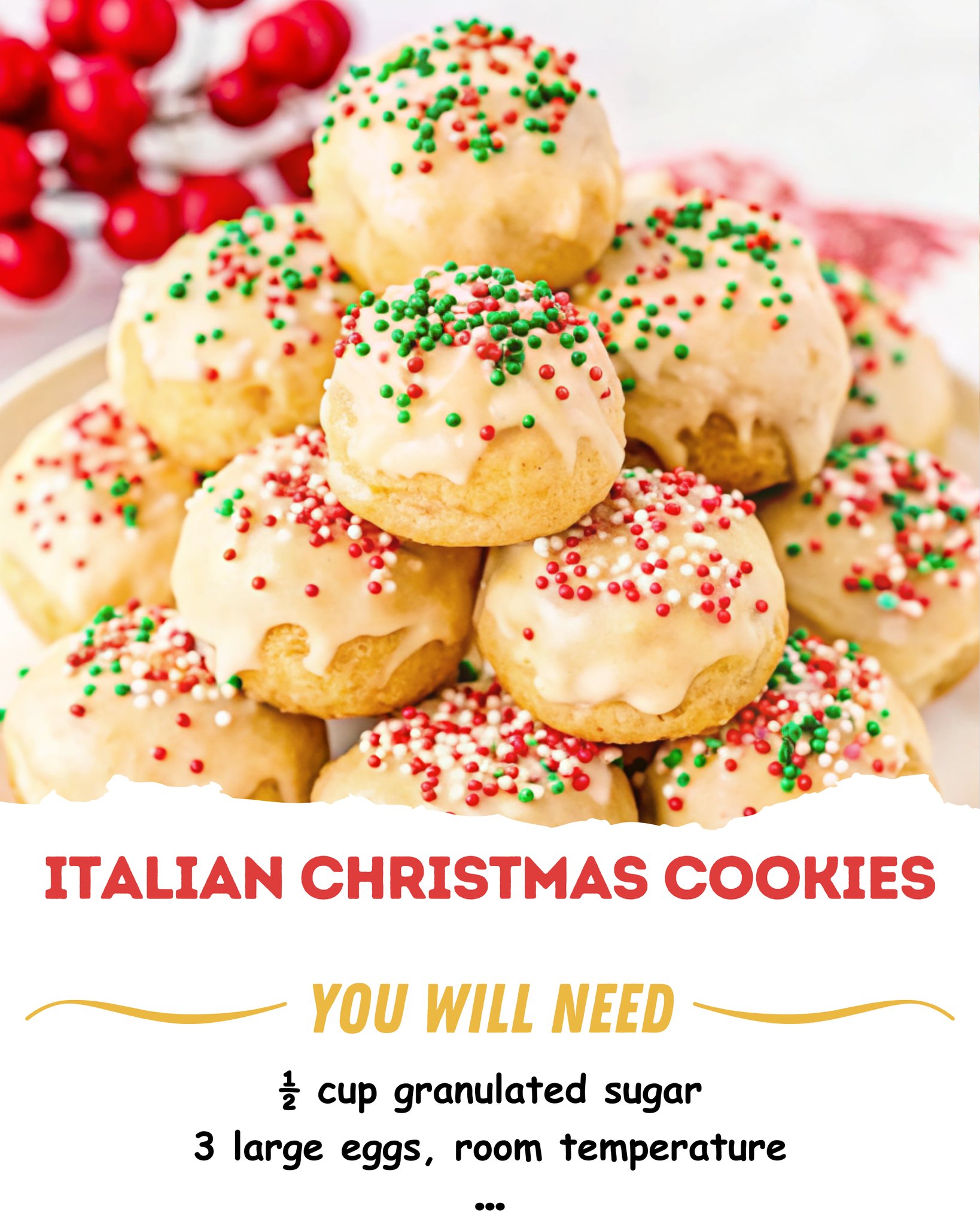
I love piling these glazed cookies high on a vintage cake stand or a festive red platter. They look so abundant and joyful. They are the perfect cookie for a holiday open house or cookie exchange because they stand out in both texture and appearance, and they pair wonderfully with coffee, tea, or dessert wine.
These are my favorite cookies to package as gifts. I layer them in a Christmas tin between sheets of parchment paper. They travel beautifully and the glaze holds up well. A tin of these soft, homemade Italian cookies feels like a truly thoughtful and special gift.
On Christmas morning, I serve a platter of these with a big pot of strong espresso or cappuccino. Their not-too-sweet, cakey texture is the ideal companion to a bitter, robust coffee. They also make a lovely afternoon treat with a cup of hot tea.
Variations & Customizations
For an almond version, replace the anise extract with ½ teaspoon of almond extract and add ½ cup of finely chopped toasted almonds to the dough. You can also replace the lemon zest with orange zest for a different citrus profile.
Before baking, you can press a whole almond or a candied cherry into the center of each knotted cookie for a more decorative look. For the glaze, you can divide it and tint portions with gel food coloring for a rainbow of pastel-dipped cookies.
For a chocolate dip, skip the white glaze and instead, dip half of each cooled cookie into melted dark chocolate. Let them set on parchment paper. This creates a stunning two-tone cookie that’s always a hit with chocolate lovers.
How to Store, Freeze & Reheat
Store the fully glazed and set cookies in a single layer in an airtight container at room temperature. Place parchment paper between layers if you must stack them. They will stay soft and delicious for 4-5 days. Do not refrigerate, as it can dry them out.
You can freeze the unglazed baked cookies beautifully. Let them cool completely, then freeze in a single layer on a tray before transferring to a freezer bag. They’ll keep for 2 months. Thaw at room temperature, then glaze as directed. You can also freeze the shaped, unbaked dough knots on a tray, then bag them, and bake from frozen, adding 1-2 minutes to the bake time.
I do not recommend reheating these cookies, as the glaze will melt. They are meant to be enjoyed at room temperature. If your kitchen is cold and they seem a bit firm, let them sit out for 15-20 minutes to come to their perfectly soft texture.
Conclusion
These Italian Christmas Cookies are more than a recipe; they are a holiday tradition waiting to happen in your kitchen. The process of making them is half the fun, and sharing them is a gesture of pure festive joy. I hope you’ll give this timeless recipe a try and fill your home with their wonderful aroma and your holiday tables with their sweet, sparkly presence. Buon Natale and happy baking!