
Another mistake is trying to bake two sheets at a time. The heat circulation in most home ovens isn’t even enough, leading to uneven baking. One sheet might have perfect pale tops while the other is already too brown on the bottom. I bake one sheet at a time on the center rack. It takes a little longer, but every cookie comes out perfectly. If you must bake two, rotate the sheets top-to-bottom and front-to-back halfway through.
Don’t skip the step of letting the butter and eggs come to true room temperature. I’ve tried to shortcut this by microwaving the butter (which melts the outside) and using cold eggs. The batter never emulsifies correctly, leading to greasy, flat cookies that spread too much. True room-temperature ingredients, where the butter yields to a gentle press but isn’t shiny or soft, are the foundation of this recipe.
Finally, avoid making the glaze too thin. If it’s runny, it will just drip off the sides and pool on your parchment paper, leaving a sad, thin coating. You want it thick enough to coat the back of a spoon and leave a defined ribbon when you drizzle it. It should cling to the cookie and set with a slight crust. If it’s too thin, just whisk in more powdered sugar a tablespoon at a time until it thickens up.
Serving Suggestions
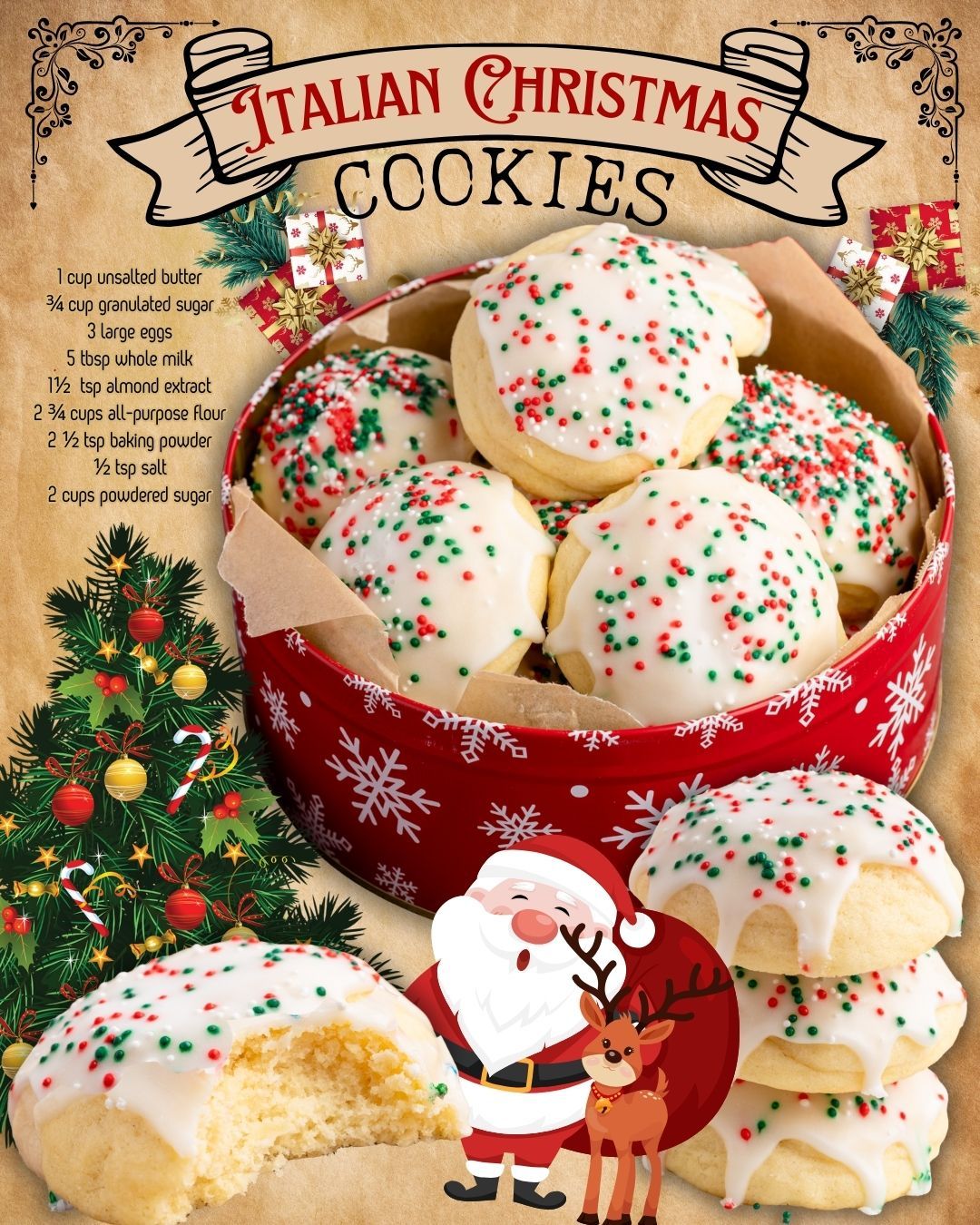
I like serving these cookies piled high on a vintage cake stand or a simple holiday platter. Their snowy white glaze and colorful sprinkles look so festive against a dark plate or a piece of holiday fabric. They’re perfect with a cup of strong espresso after dinner or a glass of cold milk for the kids. For a real Italian Christmas Eve tradition, I’ll put them out with other cookies like pizzelles and biscotti as part of a dolci spread.
They also make the most heartfelt homemade gift. I place a dozen in a clear cellophane bag, tie it with a red ribbon, and include a tag with the baking date. I’ve given these to teachers, neighbors, and mail carriers, and they are always received with genuine delight. The personal touch of a homemade cookie says so much more than anything store-bought ever could.
If I’m hosting a cookie swap, these are my go-to. They stand out beautifully among chocolate chip and gingerbread cookies, and they transport easily. I always bring a few extra because I know they’ll be the first to disappear. Their delicate, cakey texture and sweet almond flavor are universally appealing.
Variations & Customizations
While the classic is perfect, you can play with the flavors. For a citrus twist, replace the almond extract with 1 teaspoon of pure vanilla extract and the zest of one lemon or orange. You can also add a teaspoon of anise extract for a more traditional Italian flavor profile—it’s a love-it-or-hate-it taste, but it’s authentic.
Before baking, you can roll the dough balls in colored sugar instead of glazing them after. This gives a sparkly, crunchy exterior. You can also press a single maraschino cherry half (well-drained) or a slivered almond into the top of each dough ball before baking for a different look and texture.
For the glaze, you can tint it with a drop or two of food coloring for pastel holiday hues. A pink or light blue glaze is lovely. Instead of sprinkles, you can decorate with finely chopped pistachios, a drizzle of melted chocolate after the glaze sets, or even edible gold dust for a truly glamorous touch.
How to Store, Freeze & Reheat
These cookies store beautifully thanks to their soft, moist texture. Once the glaze is fully set (after a few hours), layer them between sheets of parchment or wax paper in an airtight container. They will keep at room temperature for up to 5 days. I find they actually become softer and more flavorful on the second day as the almond flavor permeates every crumb.
You can freeze both unglazed and glazed cookies successfully. To freeze unglazed baked cookies, cool them completely and freeze in a single layer on a baking sheet before transferring to a freezer bag. They’ll keep for up to 3 months. Thaw at room temperature, then glaze. You can also freeze the glazed cookies, but the sprinkles may bleed color slightly. I prefer to freeze unglazed and add the fresh glaze after thawing.
These cookies are meant to be enjoyed at room temperature, so there’s no need to reheat them. If they’ve been in the fridge or a cold room, just let them sit out for 30 minutes before serving to take the chill off. Microwaving will soften the glaze too much. Their tender texture is best as-is, a perfect little bite of sweet, almond-scented comfort.
Conclusion
These Italian Christmas Cookies are more than just a holiday recipe; they’re a tangible piece of warmth, memory, and shared joy. Baking them has become one of my own cherished December traditions, filling my home with their wonderful aroma and my heart with the satisfaction of creating something so lovingly received. I hope this recipe finds its way into your kitchen and becomes a part of your family’s story, creating sweet memories one soft, glazed cookie at a time. Now, go soften that butter—it’s time to make some magic.