
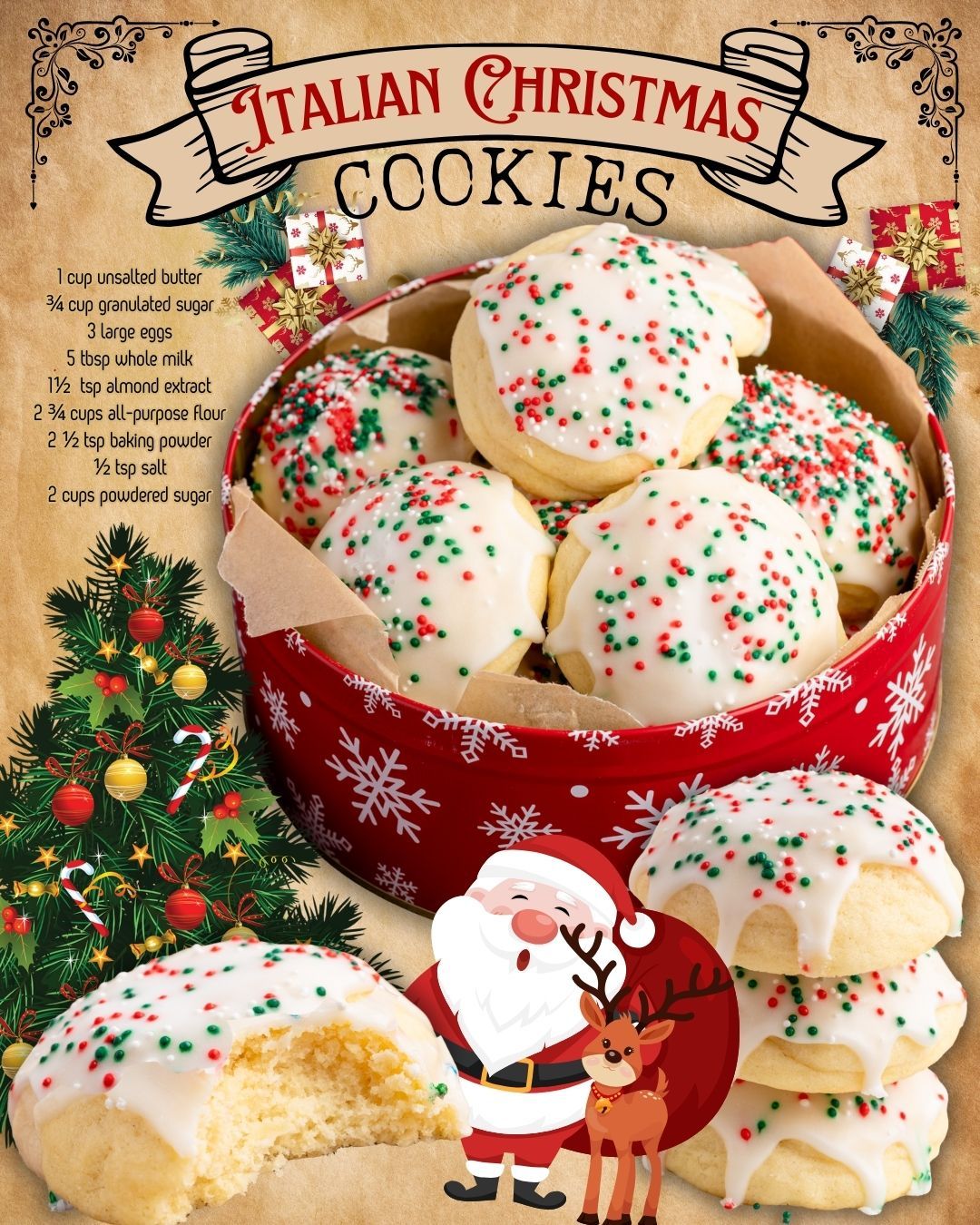
Transfer the cookies to a wire rack to cool completely before glazing. This is the hardest part—waiting! For the glaze, in a small bowl, whisk together the 2 cups of powdered sugar, 3 tablespoons of milk (or water), and another ½ teaspoon of almond extract. You want a thick but pourable consistency, like a heavy cream. If it’s too thick, add more liquid a teaspoon at a time. Holding a cooled cookie by its bottom, dip the top into the glaze, let the excess drip off, and place it back on the rack. Immediately, while the glaze is wet, shower it with colorful nonpareils or sprinkles. Watching them transform into these festive, snowy treats is my favorite part of the whole process.
Pro Tips for Best Results
I tested the flour measurement three different ways: scooping directly from the bag, spooning and leveling, and weighing it. Spooning and leveling is the absolute key. Scooping directly packs the flour into the cup, leading to a dry, dense cookie. For 3 cups of all-purpose flour, spoon it lightly into your measuring cup and level it off with a knife. This ensures you get the right amount for that perfect, tender-cake texture. If you have a scale, 360 grams is your target.
Here’s what I learned the hard way about baking time: these cookies continue to cook from residual heat as they cool on the sheet. If you leave them on the hot baking sheet for more than a minute, the bottoms can over-brown and they can become dry. The moment they come out of the oven, I use a spatula to transfer them directly to the cooling rack. This stops the cooking process and keeps their bottoms perfect and their insides supremely soft.
For the glossiest, whitest glaze that sets beautifully, use milk instead of water. The tiny bit of fat in the milk gives it a lovely sheen and a slightly richer flavor. Make sure the cookies are completely cool—even slightly warm cookies will cause the glaze to melt and slide right off. I always glaze them over the cooling rack with a baking sheet or parchment paper underneath to catch the drips for easy cleanup.
Common Mistakes to Avoid
My first batch turned out tough because I overmixed the dough after adding the flour. I kept mixing until it looked perfectly smooth, which developed the gluten in the flour. The result was cookies that were more like sweet biscuits than tender cakes. Now, I mix the dry ingredients in on the lowest speed just until no dry streaks remain, and I finish any incorporation by hand with a spatula. A few tiny flour streaks are better than overmixing.(See the next page below to continue…)