
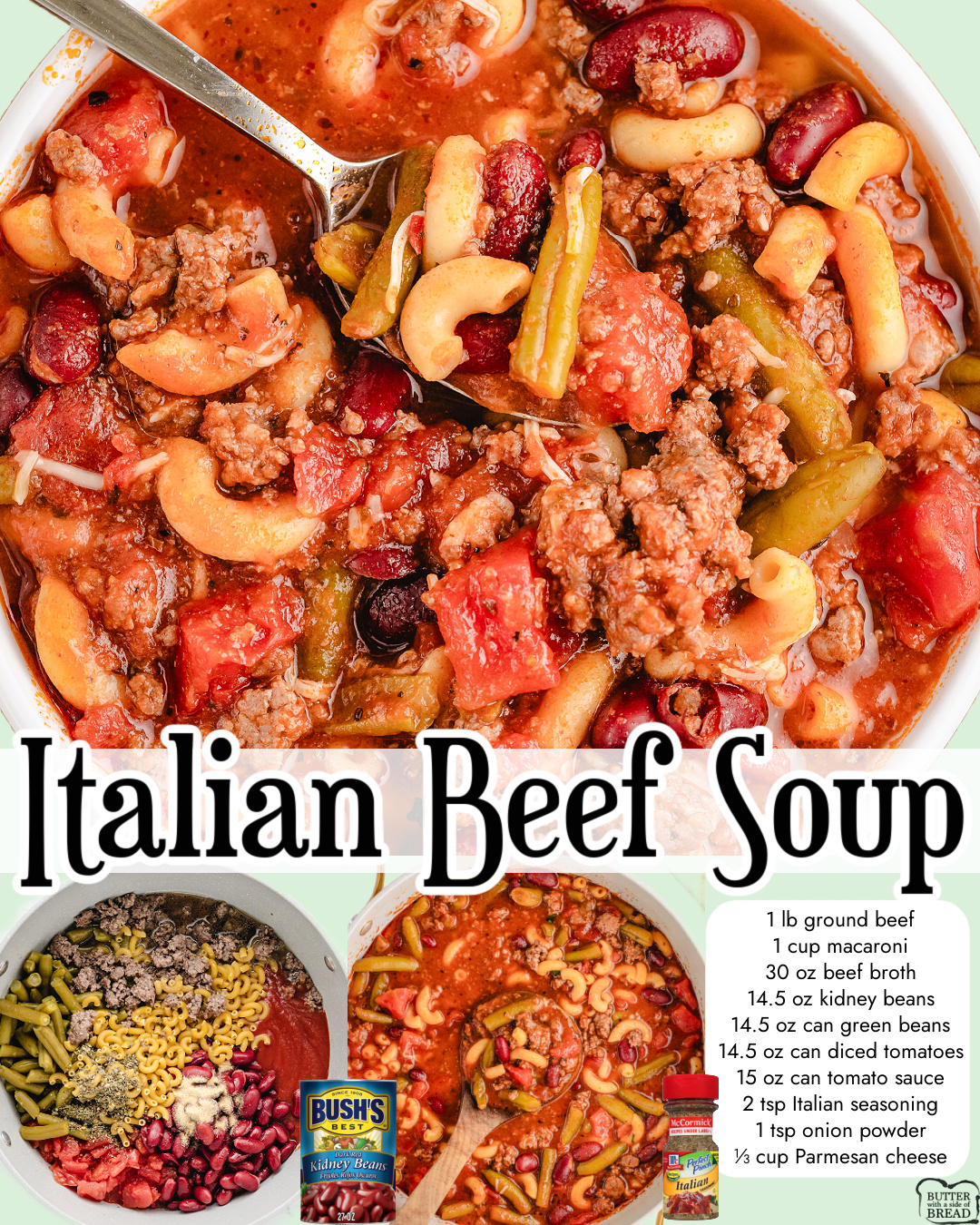
I still remember the first chilly evening when I made this Italian Beef Soup in my kitchen, and the entire house filled with the aromas of tomatoes, garlic, and simmering beef. It was one of those moments when a recipe instantly becomes a tradition. As the pot bubbled gently on the stove, the comforting scent wrapped around me like a warm blanket, and that first spoonful reminded me why I love simple, hearty soups so much. This dish is rich, cozy, and full of the rustic Italian flavors I’ve always adored.
Why You’ll Love This Recipe
You’ll love this Italian Beef Soup because it brings together everything you want in a comforting bowl—savory beef, tender vegetables, perfectly cooked pasta, and a tomato-rich broth that feels like a hug. From my experience, it tastes like something you’d get at a cozy Italian café but with none of the fuss. It’s budget-friendly, family-friendly, and wonderfully forgiving, which is exactly why it stays in my weeknight rotation.
Ingredients
- 1 lb ground beef
- 1 cup macaroni
- 30 oz beef broth
- 14.5 oz kidney beans (drained and rinsed)
- 14.5 oz can green beans (drained)
- 14.5 oz can diced tomatoes
- 15 oz can tomato sauce
- 2 tsp Italian seasoning
- 1 tsp onion powder
- ⅓ cup Parmesan cheese
After testing this recipe several times, I’ve learned that swapping ingredients works beautifully when done carefully. You can use ground turkey instead of beef if you want a lighter version, but make sure to add a pinch more seasoning since turkey is milder. Elbow macaroni gives the soup its classic texture, but any short pasta works, just avoid delicate shapes that overcook easily. Canned tomatoes and beans are essential for convenience, and trust me, using good beef broth instead of water makes a massive difference in flavor.
Equipment Needed
- Large soup pot or Dutch oven
- Wooden spoon
- Measuring cups and spoons
- Ladle
- Colander
I’ve made this soup with different types of pots and the Dutch oven consistently gives the best results because it distributes heat evenly and maintains a steady simmer. A wooden spoon helps break up the beef without damaging the pot, and the colander is important for draining beans and pasta separately when needed. Nothing fancy is required for this recipe, which is why it’s so dependable—you probably already have everything in your kitchen.
Step-by-Step Instructions
When I begin making this Italian Beef Soup, I always start by browning the ground beef in my large pot. I learned early on that if you overcrowd the pot, the beef won’t brown—it’ll steam—so I take my time and let it get nice and caramelized. The moment the onion powder and Italian seasoning hit the hot beef, the aroma becomes absolutely irresistible, and I know I’m off to a great start.
Once the beef is ready, I pour in the broth, diced tomatoes, tomato sauce, kidney beans, and green beans. As the mixture begins to warm, I give everything a gentle stir and take a moment to enjoy the colorful medley. I’ve made this soup enough times to know that simmering really brings all the flavors together. I let it cook low and slow, and each time I smell the herbs blending with the tomatoes, it reminds me why patience is worth it.
Next, I add the macaroni. This step is simple, but it’s also where I’ve learned a few lessons. If you add the pasta too early, it will overcook and become mushy. If you add it too late, it won’t have enough time to absorb the flavors. The sweet spot is giving it about 10 minutes to simmer directly in the soup. Watching the pasta swell and soften in the broth feels almost therapeutic.
Right before serving, I stir in the Parmesan cheese. The first time I tried adding it directly into the pot, I was nervous it would clump or sink, but instead it melted into the broth and added a creamy richness that I’ve never wanted to skip again. A sprinkle of extra cheese on top doesn’t hurt either—it’s the perfect finishing touch.
Pro Tips for Best Results
I’ve tested this soup three different ways—adding pasta at the start, midway, and separately—and trust me, adding it midway gives the best texture and flavor. The noodles soak just enough broth without turning soggy. If you ever feel tempted to cook the pasta in another pot for convenience, I promise you the flavor won’t be the same.
Another trick I learned the hard way is not to drain the tomatoes. All that tomato juice contributes to the depth of the broth. Once I accidentally drained them, and the soup turned out much less flavorful, almost flat. Ever since then, I treat that juice like liquid gold. It makes a noticeable difference.
I also suggest seasoning little by little as the soup simmers. Italian seasoning can vary between brands, and some are stronger than others. I taste as I go, especially toward the end. A tiny pinch of salt or even a dash of Worcestershire sauce (something I occasionally add) can brighten the soup beautifully.
Finally, if you want the soup to taste even better, let it rest for 10 minutes before ladling it into bowls. This small pause allows everything to settle and round out in flavor—almost like the soup takes a breath before it’s enjoyed.
Common Mistakes to Avoid
I made this mistake early on, so let me save you from doing the same: don’t cook the pasta too long. It’s so tempting to let everything sit on the stove, but the pasta keeps absorbing liquid even after the heat is off. The first time I made this, I walked away for too long and returned to what looked more like a stew than a soup.
Another mistake is skipping the step of browning the beef properly. When you rush through this step, the flavor doesn’t develop. Once, when I cooked the beef over medium-low heat, it released too much moisture and turned gray instead of caramelizing. The taste was noticeably less rich. Browning adds depth, and it’s worth the extra few minutes.
Don’t use bland broth. I once tried using a low-quality broth because it was all I had, and wow, the difference was huge. The soup tasted watery and unbalanced. Use a broth you’d feel comfortable sipping on its own because it truly becomes the backbone of your soup.
Finally, don’t forget to drain and rinse the kidney beans. If you skip this step, the soup can turn overly starchy or even slightly metallic in taste. Rinsing them keeps the soup clean and bright in flavor.
Serving Suggestions
I love serving this Italian Beef Soup with freshly grated Parmesan sprinkled on top. There’s something magical about the way the cheese melts slightly and clings to the pasta and vegetables. Sometimes I even add a small swirl of olive oil for extra richness—it gives it that restaurant-style finish.
Honestly, crusty bread is almost mandatory when I make this soup. A warm loaf, fresh from the oven or even just lightly toasted, turns this meal into pure comfort. My family tears off big chunks to dunk into the broth, soaking up every last drop. It’s the kind of simple joy that never gets old.
On colder evenings, I pair this soup with a side salad—usually something bright and crisp, like a lemony arugula salad. The fresh greens balance the richness of the soup beautifully. It feels like a complete Italian-inspired meal without a lot of extra effort.
If I’m hosting guests, I love to serve this soup in big white bowls with a sprinkle of parsley and a bowl of extra cheese on the table. It looks impressive but feels inviting, and people always go back for seconds. This soup truly has a way of bringing everyone together.
Variations & Customizations
I’ve experimented with this recipe many times, and one version I absolutely love is replacing the macaroni with small cheese tortellini. It turns the soup into something a bit more indulgent and very comforting. The tortellini soak up the broth while adding a soft cheesy bite in every spoonful.
Another variation I enjoy is adding zucchini or spinach. If you want more vegetables or a lighter feel, these additions work perfectly. I toss them in during the last 10 minutes of cooking so they stay vibrant and tender. It’s a great way to sneak in extra greens without changing the flavor too much.
Sometimes I’ll switch the beef for Italian sausage when I’m craving something spicier or more robust. If you try this, brown it thoroughly and drain excess grease. The flavor becomes deeper and the soup develops a whole new personality. Just a little change makes a big impact.
For a creamy version, I’ve added a splash of heavy cream or even half-and-half at the end. It softens the acidity of the tomatoes and gives the broth a velvety texture. This isn’t traditional, but it’s absolutely delicious when you’re in the mood for something cozier.
How to Store, Freeze & Reheat
Storing this soup is easy, and sometimes I swear it tastes even better the next day. I let it cool completely before transferring it to airtight containers. In the fridge, it keeps well for up to four days. Just remember that the pasta continues to absorb broth, so you may want to add a splash of extra broth when reheating.
Freezing works beautifully too, especially if you want quick meals ready to go. The trick I learned is to freeze the soup without the pasta. Cook the pasta separately when you’re ready to serve, and you’ll avoid mushy noodles. The soup itself freezes well for up to three months.
When reheating, I always warm it gently on the stove over medium heat. Microwaving works in a pinch, but the stovetop brings the texture back more naturally. If the soup thickens while stored, just add broth until it reaches your desired consistency.
I also try to taste and adjust the seasoning after reheating. Sometimes a little salt, pepper, or Parmesan brings everything back to life. The flavors deepen as it sits, and a quick adjustment ensures it tastes just as good as the day you made it.
Nutrition Information
Italian Beef Soup is hearty but surprisingly balanced. The lean ground beef provides protein, while the beans add both fiber and extra nutrients that make the soup satisfying without being too heavy. It’s the kind of meal that fills you up but doesn’t leave you feeling weighed down, which I appreciate on busy days.
The vegetables—tomatoes, green beans, and the added onion seasoning—not only offer vitamins but also help create a wonderful texture. It’s a great way to sneak in veggies for picky eaters since everything blends seamlessly together. The broth keeps the soup hydrating and soothing.
The macaroni adds carbs for energy, making this a complete meal in one bowl. If you’re watching carbs, you can reduce the pasta a bit or replace it with zucchini noodles. I’ve tried that before and it still tastes delicious, just lighter.
Parmesan cheese adds richness, along with calcium and protein. You don’t need much to get a big flavor impact. It’s one of those ingredients I never skip because even a small sprinkle makes every bite feel special.
FAQ Section
Can I make this soup in a slow cooker?
Yes, and I’ve done it several times! I brown the beef first, then add everything except the pasta to the slow cooker. It cooks on low for 6–8 hours or on high for 3–4. I add the pasta during the last 20–30 minutes and it turns out beautifully every time.
Can I substitute the ground beef with something else?
Absolutely. I’ve made this with turkey, chicken, and even plant-based meat. Just remember that milder meats need a little extra seasoning. Once, I added a pinch of smoked paprika to turkey and it tasted amazing.
What pasta shapes work best for this soup?
Short, sturdy shapes like macaroni, shells, ditalini, or rotini work best because they hold up during simmering. I’ve tried spaghetti pieces once out of curiosity—not recommended. It became stringy and clumped together.
Can I make this soup spicier?
Definitely. I sometimes add crushed red pepper flakes or swap half the ground beef for spicy Italian sausage. A dash of hot sauce works well too. It gives the soup a bold kick without overpowering the other flavors.
Why is my soup too thick?
It’s usually because the pasta absorbed too much broth. This has happened to me before, especially after storing leftovers. Just add more broth or even a bit of water. A gentle simmer helps everything blend back together perfectly.
Conclusion
Making this Italian Beef Soup always reminds me why I love cooking—simple ingredients coming together to create something warm, comforting, and full of flavor. Every time I stir the pot, I feel that familiar sense of satisfaction, knowing a hearty meal is minutes away. I hope you enjoy this recipe as much as I do and that it brings the same cozy joy to your table. If you’re anything like me, it might just become a new family favorite.