
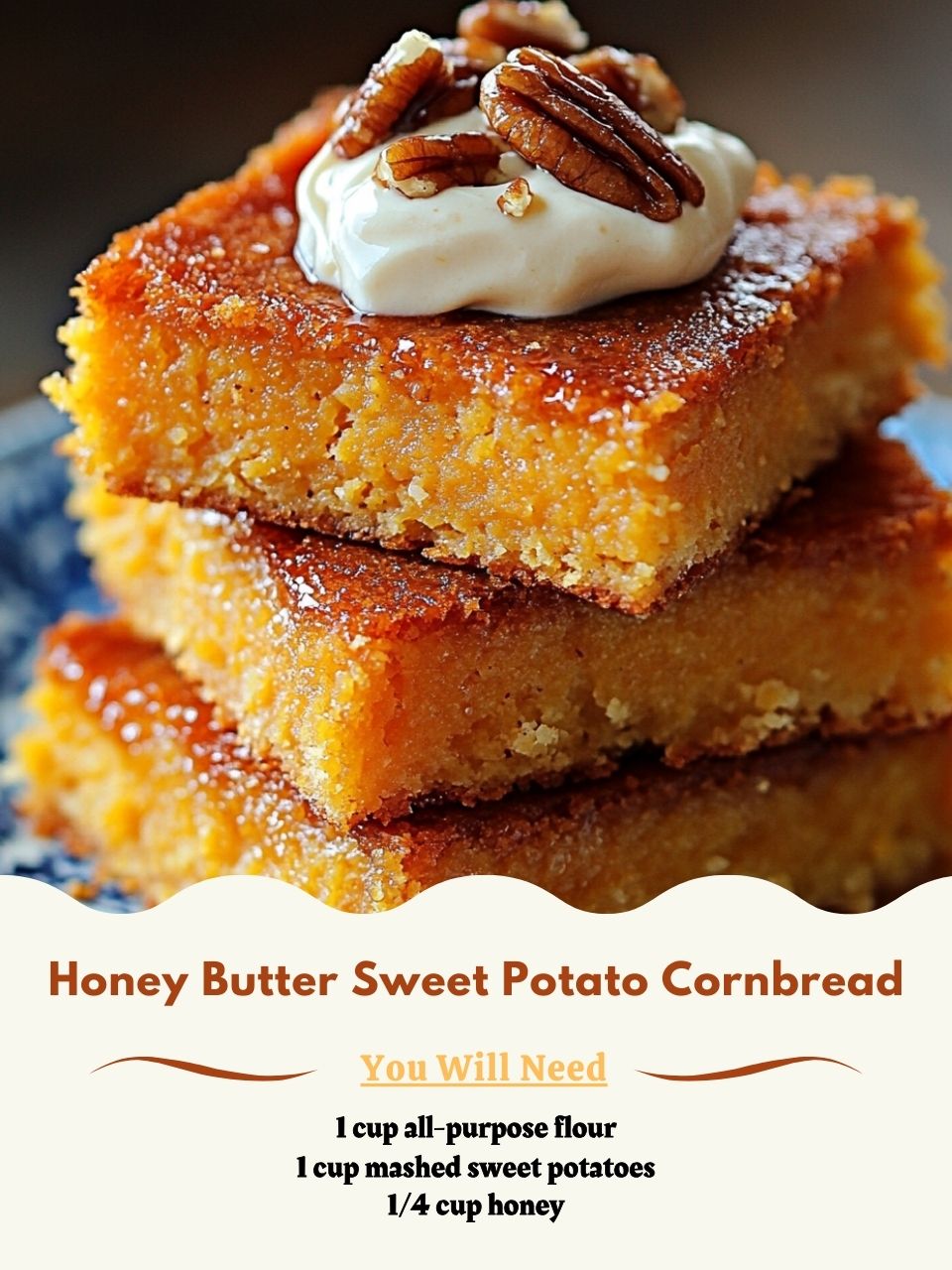
There are few aromas as welcoming as the scent of freshly baked cornbread, but when you infuse that classic staple with the earthy sweetness of roasted sweet potatoes and warm autumn spices, you elevate a simple side dish into the star of the table. This Honey Butter Sweet Potato Cornbread is the perfect marriage of Southern comfort and seasonal flair.
It boasts a moist, tender crumb that avoids the common pitfall of dryness, thanks to the addition of the mashed potato. Topped with a melting layer of whipped honey butter that seeps into every golden crevice, this bread is versatile enough to serve alongside a spicy chili, a holiday turkey, or simply with a cup of coffee for a decadent breakfast.
Ingredients List
For the Sweet Potato Cornbread:
- 1 cup cooked sweet potato, mashed (approx. 1 medium sweet potato)
- 1 cup yellow cornmeal (fine or medium grind)
- 1 cup all-purpose flour
- ½ cup light brown sugar, packed
- 1 tbsp baking powder
- ½ tsp fine sea salt
- 1 tsp ground cinnamon
- ¼ tsp ground nutmeg
- 2 large eggs, room temperature
- 1 cup buttermilk, room temperature
- ½ cup unsalted butter, melted and slightly cooled (plus 1 tbsp for the skillet)
For the Whipped Honey Butter:
- ½ cup unsalted butter, softened to room temperature
- ¼ cup honey (clover or wildflower works best)
- ¼ tsp vanilla extract
- A pinch of sea salt (optional, for a salted honey flavor)
Step-by-Step Instructions
Step 1: Preparing the Sweet Potato
The foundation of this recipe is the sweet potato. While canned sweet potato purée is a convenient option that yields consistent results, roasting your own sweet potato provides a depth of flavor that is unmatched. To roast, preheat your oven to 400°F (200°C). Scrub a medium-sized sweet potato thoroughly and pierce it several times with a fork to allow steam to escape. Place it directly on the oven rack or on a foil-lined baking sheet.
Roast for about 45 to 60 minutes, or until the potato is completely tender and the natural sugars have begun to caramelize, possibly oozing out slightly. Allow the potato to cool until you can handle it safely. Slice it open, scoop out the flesh, and mash it thoroughly until no lumps remain. You need exactly one cup of mash. If the mash feels too fibrous, you can press it through a wire mesh sieve or a potato ricer for a silky smooth texture.
Step 2: Preheating and Skillet Preparation :Once your potato is ready, adjust your oven temperature to 375°F (190°C). It is crucial that the oven is fully preheated before the batter goes in to ensure a good rise. Place your 10-inch cast iron skillet (or baking dish) inside the oven while it preheats.
This step is a secret weapon for cornbread; pouring batter into a hot pan creates an immediate sear on the bottom and sides, resulting in a crust that is delightfully crunchy and contrasts perfectly with the soft interior. Let the skillet heat up for at least 10 to 15 minutes. The pan needs to be scorching hot when you are ready to pour.
Step 3: Mixing the Dry Ingredients : In your large mixing bowl, combine the all-purpose flour, yellow cornmeal, baking powder, salt, ground cinnamon, and ground nutmeg. It is often a good idea to sift these ingredients together, especially the baking powder and brown sugar, as they tend to form hard little clumps in storage.
If you don’t have a sifter, use your wire whisk to vigorously stir the dry mix, breaking up any lumps you see. This aeration process not only mixes the spices evenly but also helps lighten the flour, contributing to a fluffier final product. Ensure the cinnamon and nutmeg are well distributed so you don’t end up with spice pockets in the bread.
Step 4: Whisking the Wet Ingredients : In the medium mixing bowl, place the mashed sweet potato, brown sugar, room temperature eggs, buttermilk, and the melted (but cooled) butter. It is important that the butter is not piping hot, as it could scramble the eggs upon contact. Whisk these ingredients together vigorously.
You want to achieve a homogenous, orange-hued liquid where the sweet potato is fully incorporated into the buttermilk and eggs. The acidity in the buttermilk will eventually react with the baking powder to give the cornbread its lift, so ensure everything is well combined. The mixture should look thick, smooth, and creamy.
Step 5: Creating the Batter : Pour the wet mixture into the bowl with the dry ingredients. Using your rubber spatula, begin to fold the two mixtures together. The technique here is “folding,” not beating. You want to gently bring the flour from the bottom of the bowl over the top of the wet ingredients. Continue this motion just until the dry flour streaks disappear.
It is perfectly fine—and actually preferred—if the batter looks slightly lumpy. Overmixing at this stage will develop the gluten in the wheat flour, which leads to tough, rubbery cornbread rather than the tender, crumbly texture we are aiming for. Stop mixing as soon as the ingredients are combined.
Step 6: The Sizzle Put on your oven mitts and carefully remove the hot cast iron skillet from the oven. Place it on a heat-safe surface. Immediately drop the reserved tablespoon of butter into the hot skillet. It should sizzle and melt rapidly.
Swirl the pan carefully to coat the bottom and the sides with the melted butter. This layer of fat prevents sticking and fries the crust. Pour your batter directly into the center of the hot skillet. You should hear a satisfying sizzle as the batter hits the pan. Use your spatula to gently spread the batter toward the edges, smoothing out the top surface.
Step 7: Baking : Return the skillet to the middle rack of the oven. Bake for 20 to 25 minutes. As it bakes, your kitchen will fill with the smell of toasted corn and warm cinnamon. You are looking for specific visual cues to determine doneness: the cornbread should be risen and firm in the center, and the top should be a deep golden brown, perhaps cracking slightly in the center (which is characteristic of good cornbread). To be absolutely sure, insert a wooden toothpick into the thickest part of the center. It should come out clean or with just a few moist crumbs attached. If it comes out with wet batter, give it another 3 to 5 minutes.
Step 8: Making the Whipped Honey Butter
While the cornbread is baking, prepare the topping. In a small bowl, combine the softened butter, honey, vanilla extract, and pinch of salt. Using a hand mixer (or a whisk and some strong arm muscles), beat the mixture for 2 to 3 minutes.
You want to whip air into the butter until it becomes pale, light, and fluffy. The consistency should be spreadable and airy, almost like a frosting. This step transforms regular butter and honey into a luxurious condiment that feels special.
Step 9: Serving Remove the cornbread from the oven and let it cool in the skillet for about 10 minutes. This resting period allows the structure of the bread to set; if you cut it too soon, it may crumble apart.
While the cornbread is still warm (but not scorching hot), slather a generous amount of the whipped honey butter over the top, allowing it to melt and soak into the crust. Alternatively, you can serve the honey butter on the side so guests can add as much as they like. Slice into wedges and serve immediately.
Expert Tips for Success
The “Room Temperature” rule is the most often ignored instruction in baking, yet it is vital for success. It is imperative that your eggs and buttermilk are at room temperature before you begin. If you add cold eggs or cold milk to melted butter, the butter will instantly seize and re-solidify into tiny, waxy chunks.
This prevents the fat from distributing evenly throughout the batter. To quickly bring eggs to room temperature, place them in a bowl of warm water for 5 minutes. You can microwave the buttermilk for 15-20 seconds to take the chill off.
Handling the sweet potato requires care regarding moisture content. If you choose to boil your sweet potatoes instead of roasting them, be aware that they will retain more water. Watery mashed potatoes can throw off the liquid ratios in the batter, leading to a gummy center that never quite bakes through.
If you boil them, drain them extremely well and perhaps let them sit in the colander for a few minutes to steam off excess moisture before mashing. Roasting is always preferred because it concentrates the flavor and reduces excess water.
You should also check your leavening agent. Baking powder loses its potency over time. If your baking powder has been sitting in the pantry for over six months, test it before using. Drop a teaspoon of powder into a cup of hot water. If it fizzes and bubbles vigorously, it is active. If it does nothing, your cornbread will be dense and flat. Buy a fresh tin for this recipe to ensure a light, fluffy crumb.
Finally, resist the urge to over-sweeten the batter. This recipe uses brown sugar in the batter and honey in the butter. It is designed to be moderately sweet—a side dish, not a dessert cake. If the batter is too sugary, the crust will brown too quickly and burn before the center is cooked. The balance of the savory cornmeal, the earthiness of the potato, and the sweetness of the topping is delicate and intentional.
Variations and Substitutions
If you prefer a savory profile to contrast the sweet potato, you can try the Bacon and Sage variation. Omit the cinnamon, nutmeg, and vanilla. Instead, fold in ½ cup of cooked, crumbled bacon and 1 tablespoon of fresh, chopped sage leaves into the batter.
The salty, smoky bacon pairs beautifully with the natural sweetness of the potato. You can also add ½ cup of sharp cheddar cheese to the batter for a cheesy version that works perfectly with dinner.
For those who enjoy a bit of heat, the Spicy Southwest Twist is a fantastic option. Sweet and heat are a classic combination. Add 1 or 2 minced jalapeño peppers (seeds removed for less heat, kept in for more) to the batter.
You can also add a ½ teaspoon of cayenne pepper or chili powder along with the dry ingredients. Serve this version with a chili or a hearty bean stew to cut through the richness.
To make this recipe gluten-free, substitute the 1 cup of all-purpose flour with a high-quality 1:1 gluten-free all-purpose flour blend. Look for a blend that contains xanthan gum, as this helps mimic the structure of gluten. The cornmeal is naturally gluten-free, but you must check the package to ensure it was processed in a gluten-free facility if you have severe allergies, as cross-contamination is common in grain processing.
You can also lean into the dessert vibes with a Maple Pecan Crunch version. Add ½ cup of chopped pecans or walnuts to the batter for texture. For the topping, swap the honey in the whipped butter for pure maple syrup and add a pinch of cinnamon to the butter mixture. This version tastes like a cornbread cobbler and is fantastic for breakfast.
Serving Suggestions and Pairings
This Honey Butter Sweet Potato Cornbread is a chameleon on the dining table; it fits in with casual weeknight dinners and elaborate holiday feasts alike.
The most traditional way to serve this is alongside a bowl of spicy Beef or Vegetarian Chili. The sweetness of the bread balances the acidity of the tomatoes and the heat of the chili peppers. It is also the ultimate partner for BBQ Ribs or Pulled Pork. The corn flavor complements the smoky meat, and the bread is sturdy enough to mop up extra barbecue sauce.
Because of the sweet potato and warm spices (cinnamon and nutmeg), this dish is a natural fit for Thanksgiving or Christmas dinner. It serves as a fantastic alternative to traditional yeast rolls. It pairs wonderfully with roasted turkey, glazed ham, and cranberry sauce. The bright orange color also adds a beautiful visual element to a holiday spread, looking much more vibrant than standard beige dinner rolls.
Don’t limit this to dinner. A slice of warm sweet potato cornbread is heavenly with a cup of strong black coffee or tea in the morning. You can serve it alongside a savory vegetable frittata to add a sweet carb element, or top it with a poached egg and a drizzle of hot sauce for a sweet-and-savory breakfast hash experience.
Storage, Freezing, and Reheating
Because this cornbread is so moist due to the sweet potato, it requires specific care to prevent it from spoiling.
For short-term storage, if you plan to eat the cornbread within 24 hours, it can be stored at room temperature in an airtight container or wrapped tightly in plastic wrap. However, because of the moisture content in the sweet potato, it is prone to mold faster than dry cornbread. If you are keeping it longer than a day, it is highly recommended to store it in the refrigerator. It will keep in the fridge for up to 4 to 5 days without drying out significantly.
This cornbread freezes exceptionally well, making it a great candidate for meal prep. To freeze, allow the bread to cool completely. You can freeze the whole skillet (removed from the pan) or individual slices. Wrap the bread tightly in plastic wrap, and then again in aluminum foil to prevent freezer burn. Place the wrapped slices in a heavy-duty freezer bag. It will maintain its quality for up to 3 months. Thaw frozen cornbread in the refrigerator overnight or on the counter for a few hours before reheating.
Cornbread is always best served warm. To reheat in the oven, wrap the cornbread in aluminum foil (to prevent it from drying out) and place it in a 350°F oven for 10 to 15 minutes. Open the foil for the last 2 minutes to re-crisp the crust. For a quicker method, use the microwave. Place a slice on a microwave-safe plate and cover it with a damp paper towel. The damp towel steams the bread slightly, keeping it moist. Heat for 20 to 30 seconds.
Frequently Asked Questions
Why is my cornbread dry or crumbly?
If it falls apart excessively, it usually means there wasn’t enough fat or liquid, or you measured the flour incorrectly (packed down). Over-baking is also a common culprit; check the bread a few minutes early.
Can I use pumpkin instead of sweet potato?
Yes. Canned pumpkin purée creates a very similar texture. The flavor will be slightly less sweet and more earthy, so you might consider increasing the brown sugar slightly.
Can I make the batter ahead of time?
No. Baking powder activates upon contact with liquid. If the batter sits, it loses its lifting power, resulting in a dense, heavy bread. Bake immediately after mixing.
What kind of cornmeal should I use?
Fine or medium-grind yellow cornmeal is ideal. Coarse grind (polenta) can be gritty, and white cornmeal lacks the vibrant color and subtle corn flavor of yellow.
I don’t have buttermilk. What can I use?
Add 1 tablespoon of lemon juice or vinegar to 1 cup of regular milk. Let it sit for 5-10 minutes to curdle. This acidity is essential for the baking powder to work.