
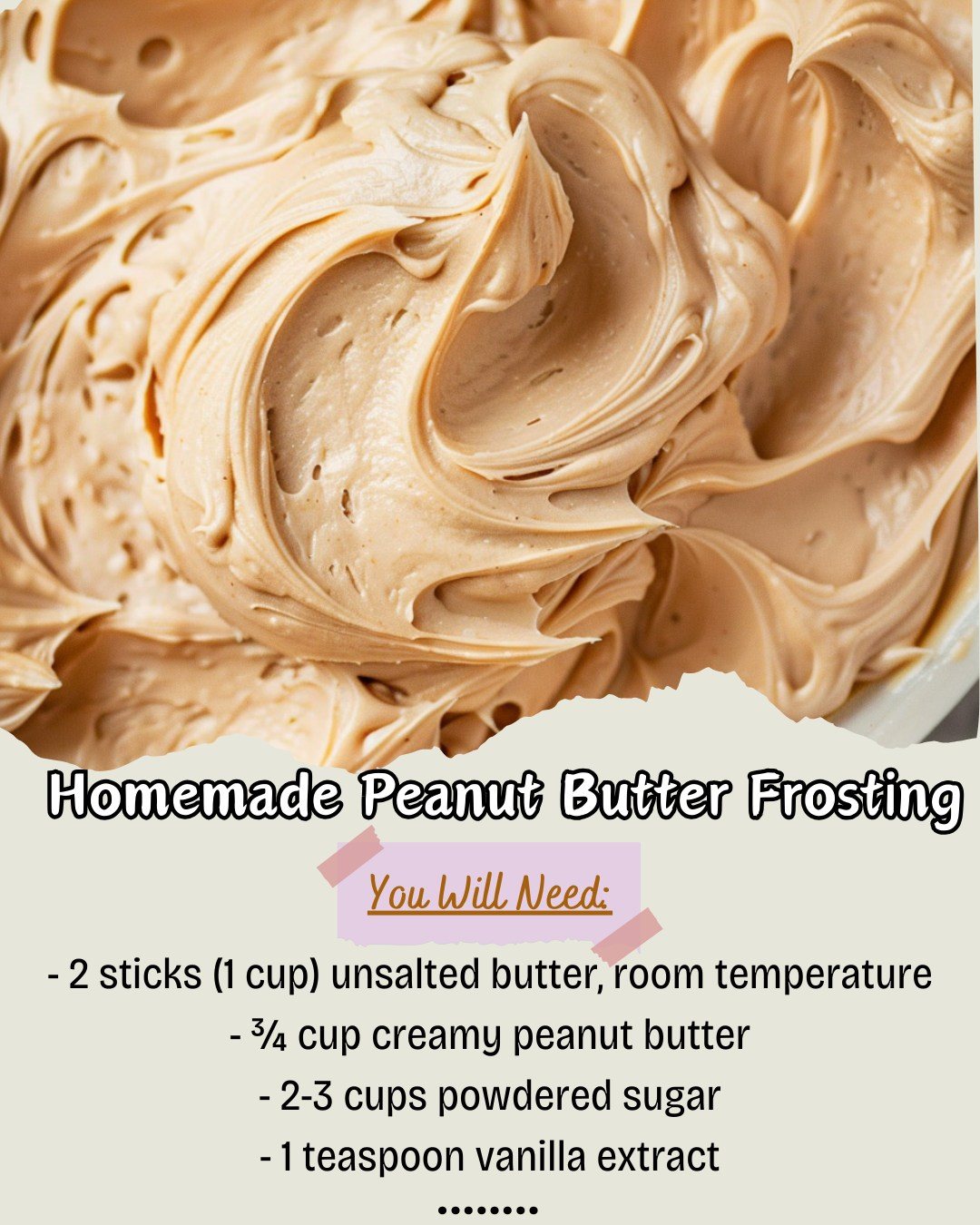
Next, I add the peanut butter, and this is when the magic really happens. As soon as the peanut butter blends with the whipped butter, the smell that rises from the bowl is irresistible—warm, nutty, and rich. I always stop the mixer to scrape down the sides, making sure the mixture stays completely uniform; peanut butter likes to cling to the bowl, and you don’t want streaks hiding at the bottom.
Then comes the powdered sugar, and I add it gradually so it doesn’t explode into a sugary cloud all over my kitchen—because trust me, I’ve done that before. I usually start with two cups and mix on low until it begins to come together, then increase the speed to whip it into a fluffy, satiny frosting. If I need a firmer texture, especially for piping tall swirls on cupcakes, I’ll add the third cup. Finally, the vanilla goes in, bringing just the right hint of sweetness and warmth.
Once everything is whipped together, I give it one last stir with my spatula to release any air bubbles and check the texture. When it’s perfect—light but rich, smooth but stable—I can hardly resist tasting a spoonful. It spreads beautifully on cakes, pipes like a dream, and honestly tastes so good that sometimes I make it just to use as a dip for pretzels or graham crackers.
Pro Tips for Best Results
I tested this recipe three different ways—using cold butter, melted butter, and properly softened butter—and the softened butter version beats the others by miles. Cold butter creates lumps and a chunky texture, while melted butter makes the frosting too thin and glossy. Room-temperature butter is the only way to achieve that fluffy, luscious consistency.
Here’s what I learned the hard way: always use regular creamy peanut butter, not natural. Natural peanut butter separates and introduces too much oil, causing the frosting to break or become greasy. I tried it once because it was all I had on hand, and I ended up with a bowl of frosting that refused to whip properly no matter what I did.
Adding powdered sugar gradually is another tip I swear by. When I used to dump it all in at once, not only did it create a powdered sugar snowstorm, but the frosting never blended quite as smoothly. Adding it in stages gives me full control over texture and sweetness, and the mixer can keep everything airy instead of compacted.
Lastly, I’ve learned that a combination of hand mixing with a spatula and whipping with the mixer produces the best texture. After whipping, folding the frosting gently with a spatula removes any hidden pockets of air and ensures the frosting spreads like satin. This tiny step makes a world of difference, especially when frosting cakes.
Common Mistakes to Avoid
I made this mistake the first time—using peanut butter straight from a nearly empty jar. Dry peanut butter stuck to the sides and bottom made the frosting weirdly textured. Now I always use a fresh jar or at least mix the peanut butter thoroughly before adding it to the mixer.
Another mistake I learned from was adding too much powdered sugar too soon. I once added the full three cups before even checking the texture, and I ended up with frosting so stiff it felt like clay. Starting with less and adding more only if needed keeps the frosting perfectly soft and spreadable.(See the next page below to continue…)