
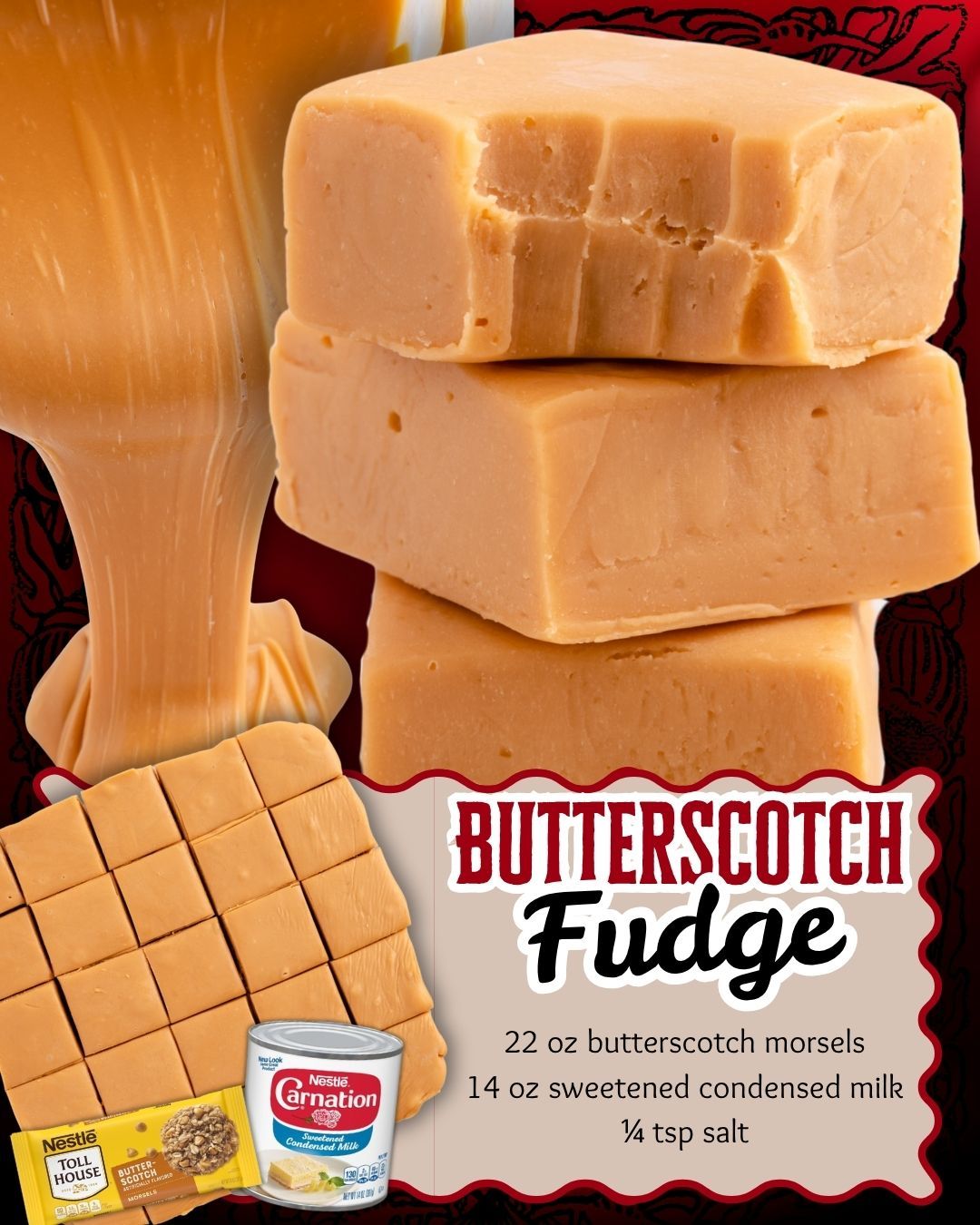
I let the fudge cool at room temperature for a bit before transferring it to the refrigerator. Chilling for at least two hours helps it set completely and gives it that classic fudge firmness when slicing. Once chilled, I lift it from the pan and cut it into small squares. The satisfying feel of slicing into perfectly smooth fudge never gets old—it’s one of those small kitchen joys I appreciate every time I make this recipe.
Pro Tips for Best Results
One thing I learned after testing this recipe several times is that low and slow heat makes all the difference. Butterscotch burns more easily than chocolate, so resist the temptation to turn up the heat to make the chips melt quicker. If you take your time, the fudge stays smooth, creamy, and free of graininess.
Another tip is to avoid over-stirring the mixture once the chips have melted. Stirring too aggressively can introduce air bubbles, which create light spots or crumbly texture in the final fudge. Instead, I use slow, steady motions, keeping everything silky. This one small technique made a huge difference in my finished batches.
I also learned that adding the salt directly into the saucepan (rather than sprinkling it in afterward) helps the flavor distribute evenly. The first time I tried adding it on top at the end, I wound up with a couple of bites that tasted overly salty. Mixing it in right from the start ensures every piece has the perfect balance of sweet and buttery.
Finally, don’t rush the cooling time. I know it’s tempting to try cutting the fudge early—trust me, I’ve done it—but letting it cool completely ensures clean edges and a firm texture. When I cut a warm batch once, it crumbled apart and never looked quite right. That chilled, solid finish makes all the difference.
Common Mistakes to Avoid
One mistake I made the first time was using high heat to melt the chips faster. Big mistake—high heat made the mixture seize up and turn grainy. Always stick to medium-low, even if it feels slow. The smoother the melt, the better the final fudge.
Another common mistake is skipping the parchment paper. I once tried making this fudge in an unlined pan because I thought the mixture would pop out easily—it didn’t. I spent way too long trying to pry pieces out, and the beautiful smooth square shape was totally lost. Always line your pan or lightly grease it.
Using expired or old butterscotch chips can also lead to trouble. They don’t melt as smoothly and sometimes separate in the pot. Fresh chips give the best texture and shine, so always check your packaging before you start. When I used a bag that had been in my pantry forever, the fudge never set correctly.(See the next page below to continue…)