
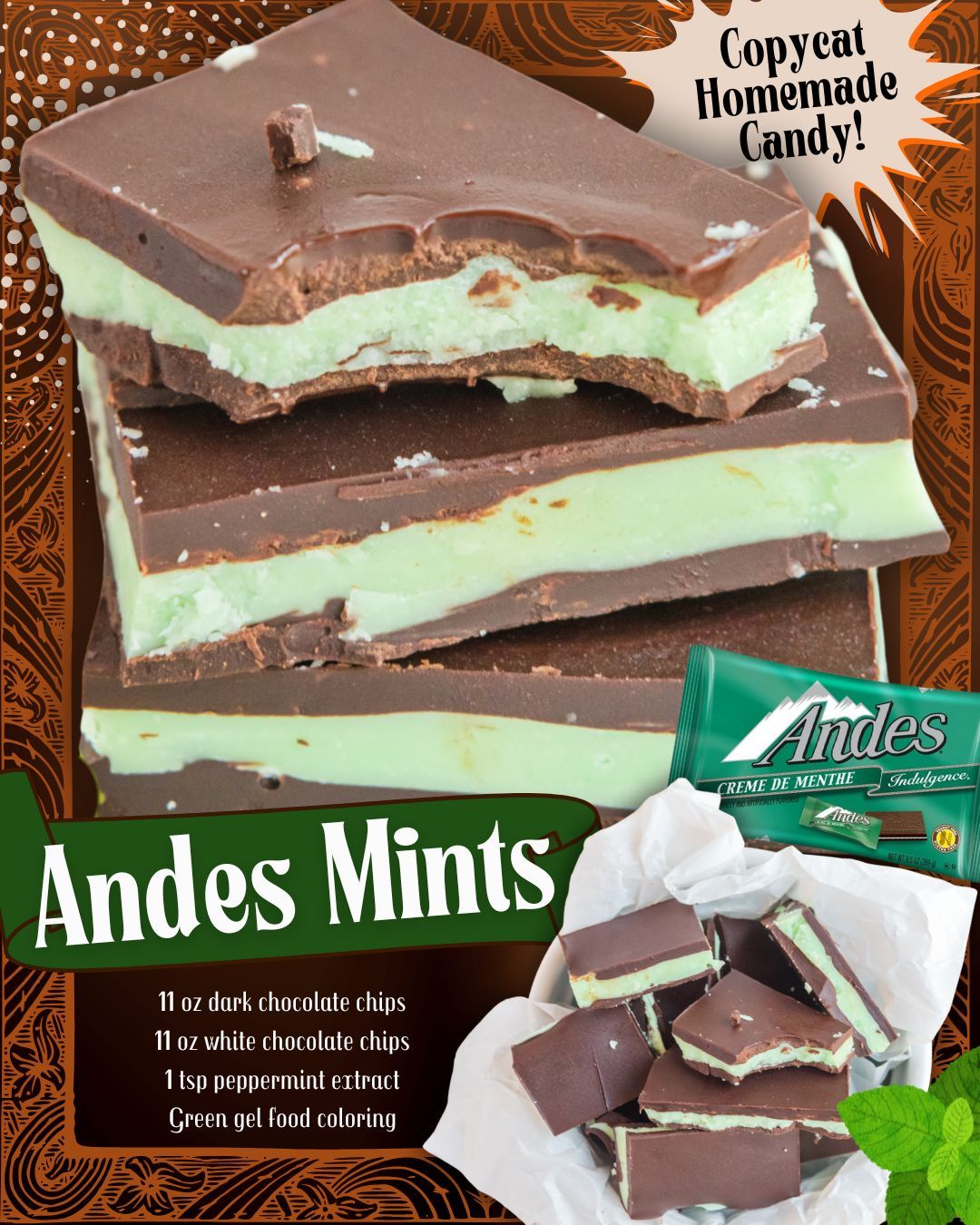
The last mistake is cutting the candy before it’s fully chilled. I tried this once because I was impatient, and the layers slid apart, smearing chocolate everywhere. Waiting for the full chill time ensures clean, crisp cuts that look like real Andes mints. I promise—it’s worth the wait.
Serving Suggestions
I like serving these Homemade Andes Mints after dinner when everyone is relaxing and not too full for a little something sweet. They make the perfect bite-sized dessert that feels elegant without requiring any extra work. The cool minty flavor pairs wonderfully with coffee or hot cocoa, and the combination always feels cozy and satisfying.
When I’m hosting, I love arranging these mints on a small dessert tray with other bite-sized sweets—things like chocolate-covered almonds, peppermint bark pieces, or little shortbread cookies. The layered green center adds such a pretty color contrast, and people always gravitate toward them because they look like something from a fancy chocolate shop.
For holidays, these candies quickly become a favorite addition to cookie trays. They break up the sea of cookies and add something unexpected. I often wrap them in small cellophane bags tied with ribbon and give them as gifts. People are always amazed that homemade Andes mints are even possible, and their reactions alone make this recipe worth making.
Another thing I like to do is chop them up and sprinkle them over ice cream or fold them into brownie batter. That pop of mint with rich chocolate is irresistible, and using homemade mints makes the dessert feel extra special. It’s such a simple way to elevate something ordinary into something memorable.
Variations & Customizations
One of my favorite variations is using semi-sweet chocolate instead of dark chocolate for a sweeter, more classic candy-bar flavor. I’ve made them this way for kids or for people who don’t love the slight bitterness of dark chocolate, and they disappear ridiculously fast. The layers still hold beautifully, and the mint center complements sweeter chocolate nicely.
Another fun version is adding a drop of vanilla extract to the white chocolate layer. It smooths out the peppermint a bit and gives the candy a creamier overall taste. I tried this by accident once when I grabbed the wrong bottle, and it ended up being a happy mistake that I’ve repeated several times since.
If you want a more intense mint flavor, you can sprinkle a touch of crushed peppermint candy into the center layer before it firms up. It adds crunch and a festive look. I don’t do this every time, but during the holidays, it gives the candies a sparkly, snow-kissed effect that’s impossible to resist.
You can even swirl the top layer slightly with the mint layer before it sets to create a marbled effect. It doesn’t look like traditional Andes mints, but it’s a fun variation that makes every piece unique. I’ve done this when making candy trays for parties, and people always comment on how beautiful it looks.
How to Store, Freeze & Reheat
When storing these Homemade Andes Mints, I always keep them in an airtight container layered with parchment paper. This prevents the pieces from sticking together and keeps the edges clean. They store beautifully at room temperature for about a week, though in my house, they rarely last that long because I keep nibbling on them.
If you want them to stay firmer, especially in warmer months, the refrigerator is your best friend. Chilling them gives the chocolate a satisfying snap and keeps the mint center cool and refreshing. I find myself reaching for them after dinner like little chilled treats—it’s almost like having a box of gourmet chocolates in your fridge.
Freezing these candies works surprisingly well. I lay them flat on a baking sheet first so they don’t stick together, then transfer them to a freezer bag. They keep their texture beautifully and can be frozen for up to three months. I like having a stash ready for unexpected guests or sudden chocolate cravings.
There’s no need to reheat these candies, but if you prefer a softer texture, you can let them sit out for a few minutes after taking them from the fridge or freezer. The mint center softens slightly while the chocolate remains firm, and the contrast is surprisingly pleasant. Play around with temperature—you may find you like them best cold or slightly softened.
Nutrition Information
These Homemade Andes Mints are definitely a treat, but what I love is that they’re made from simple, recognizable ingredients. No preservatives, no artificial flavors beyond a tiny bit of food coloring, and no mystery oils. When I make them myself, I know exactly what’s going into each piece, and that makes indulging feel a lot better.
Chocolate, especially dark chocolate, has a reputation for containing antioxidants, and while I don’t pretend these candies are health food, I do appreciate that they’re more wholesome than many packaged versions. The peppermint extract adds that refreshing coolness without adding calories or sugar, and a little goes a long way.
Portion control is easy with these candies because they’re rich and intensely flavored. Just one or two pieces after dinner satisfy my sweet tooth completely. It’s one of those treats where you enjoy the flavor so much that you don’t feel the need to overindulge. That’s always a win for me.
If you’re tracking calories or macros, you can cut the pieces smaller or use a slightly thinner layer of chocolate on top. I’ve done this before when I wanted a lighter version, and it still tasted wonderful. The beauty of homemade candy is that you can customize it however you like.
FAQ Section
Can I use mint extract instead of peppermint extract?
Yes, but peppermint extract gives a flavor closer to authentic Andes mints. Mint extract tends to taste slightly more herbal. I’ve used both, but peppermint is my favorite for this recipe.
Can I skip the food coloring?
Absolutely. I’ve made these without coloring many times, and they taste exactly the same. They simply won’t have the classic green center, but honestly, no one ever complains.
Why did my white chocolate seize up?
White chocolate is extremely sensitive to heat and moisture. If even a tiny bit of water gets in, or if it overheats, it thickens instantly. Melt it slowly and carefully—trust me, patience pays off here.
Can I add the peppermint flavor to the dark chocolate layers too?
You can, but I find the flavor becomes overwhelming. I tried it once, and it completely overshadowed the layered effect. Keeping the mint only in the center creates the perfect balance.
Can I double the recipe?
Yes! Just use a larger pan or make two batches. I’ve doubled it for holidays, and it works beautifully as long as each layer has time to cool properly.
Conclusion
Making Homemade Andes Mints in my kitchen always brings me a sense of nostalgia, creativity, and pure chocolate-peppermint joy. The layers come together like edible magic, and every bite feels smooth, refreshing, and wonderfully indulgent. I love sharing these with friends, gifting them around the holidays, or simply sneaking a chilled piece after dinner. I hope this recipe brings as much delight to your kitchen as it does to mine.