
Another common error is overmixing the batter the moment the flour hits the wet ingredients. Gluten development is what makes bread chewy, but it makes cakes tough. As soon as you add the dry mix, switch from a whisk to a spatula and fold gently. It’s okay if there’s a tiny streak of flour—it will incorporate as you fold in the carrots and nuts. I mixed one batch too vigorously, and the result was a denser, less tender cake.
Underbaking is a sneaky one. Because this cake is so moist, the toothpick test can be misleading. If you pull it out with wet batter, it’s not done. But if it has a few moist crumbs clinging to it, that’s perfect. I’ve found that waiting until the top is uniformly golden brown and the cake has just started to pull from the sides of the pan is my most reliable visual cue. An underbaked center will collapse as it cools.
Finally, cutting into the cake while it’s still warm is a temptation I understand all too well. I’ve done it! But it will crumble and squish. The structure needs time to set as it cools. Letting it cool completely on the rack gives you those beautiful, clean slices. Patience here is rewarded with perfect presentation.
Serving Suggestions
I love serving this cake just as it is, in simple squares with a cup of hot tea or coffee. Its natural sweetness and spice are so satisfying on their own. For a more decadent (but still relatively healthy) treat, I’ll dollop each piece with a generous spoonful of thick, plain Greek yogurt or skyr. The tangy creaminess is a perfect foil for the sweet cake, and it feels like a proper frosting without the sugar crash.
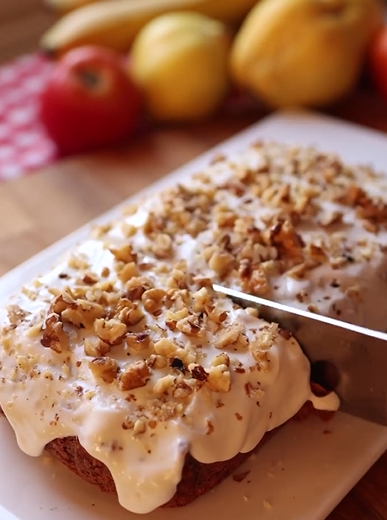
For a special occasion, I make a quick “frosting” by whipping together room-temperature cream cheese with a drizzle of maple syrup and a splash of vanilla until it’s smooth and spreadable. I’ll frost the top of the whole cake lightly with this, then finish it with a final sprinkle of those toasted walnuts. It feels incredibly festive but isn’t overwhelming.
This cake also makes a fantastic breakfast or snack. I’ll often bake it on a Sunday, and all week long, I’ll grab a square for my mid-morning break. It’s far more satisfying and sustaining than any store-bought muffin or bar. Sometimes, I’ll even warm a slice gently and top it with a pat of almond butter for an extra protein boost.
Variations & Customizations
This recipe is wonderfully adaptable. If you need it to be dairy-free, simply swap the Greek yogurt for an equal amount of unsweetened applesauce or a dairy-free yogurt alternative. I’ve made it both ways, and while the yogurt gives a slight tang, the applesauce version is incredibly moist and works beautifully. For a nut-free version, replace the walnuts with sunflower seeds or pumpkin seeds—toast them first for the same flavor effect!
Playing with the add-ins is fun. I love folding in ½ cup of unsweetened shredded coconut along with the carrots for a tropical twist. A handful of raisins or chopped dried pineapple is a classic addition, though I prefer the texture without. If you’re a spice lover, adding a tiny pinch of black pepper or cardamom to the dry mix can really make the warm flavors pop in a new way.
For a different format, this batter makes excellent muffins. Just divide it into a lined muffin tin and reduce the baking time to about 20-22 minutes. They’re perfect for portion control and on-the-go snacks. I’ve also baked it in a loaf pan, which takes a bit longer, around 50-55 minutes, and slices beautifully for toast-style servings.
How to Store, Freeze & Reheat
Once completely cooled, I store the cake right on its plate, wrapped tightly in beeswax wrap or plastic wrap, at room temperature for up to 2 days. Because it’s so moist, it stays perfectly fresh. For longer storage, I keep it in an airtight container in the refrigerator for up to 5 days. The spices actually deepen and meld the longer it sits, so day two is often even more delicious.
This cake freezes like a dream. I wrap individual slices or the whole cake (once fully cooled) tightly in plastic wrap, then in a layer of foil or a freezer bag. It keeps for up to 3 months. To thaw, I simply transfer a slice to the counter for a couple of hours or leave the whole cake in the refrigerator overnight. It tastes freshly baked.
I don’t typically reheat the whole cake. For a warm treat, I’ll place a single slice on a microwave-safe plate and warm it for just 10-15 seconds. It gently softens the crumb and makes the spices aromatic again. You can also warm it in a toaster oven at 300°F for about 5 minutes. Just be careful not to dry it out.
Conclusion
This Healthy Carrot-Walnut Cake has become a staple in my kitchen, a recipe I turn to when I want to treat myself and my loved ones with kindness and flavor. It proves that eating well doesn’t mean sacrificing joy at the table. I hope you bake it, savor it, and make it your own. Here’s to simple, wholesome baking that feels as good as it tastes