
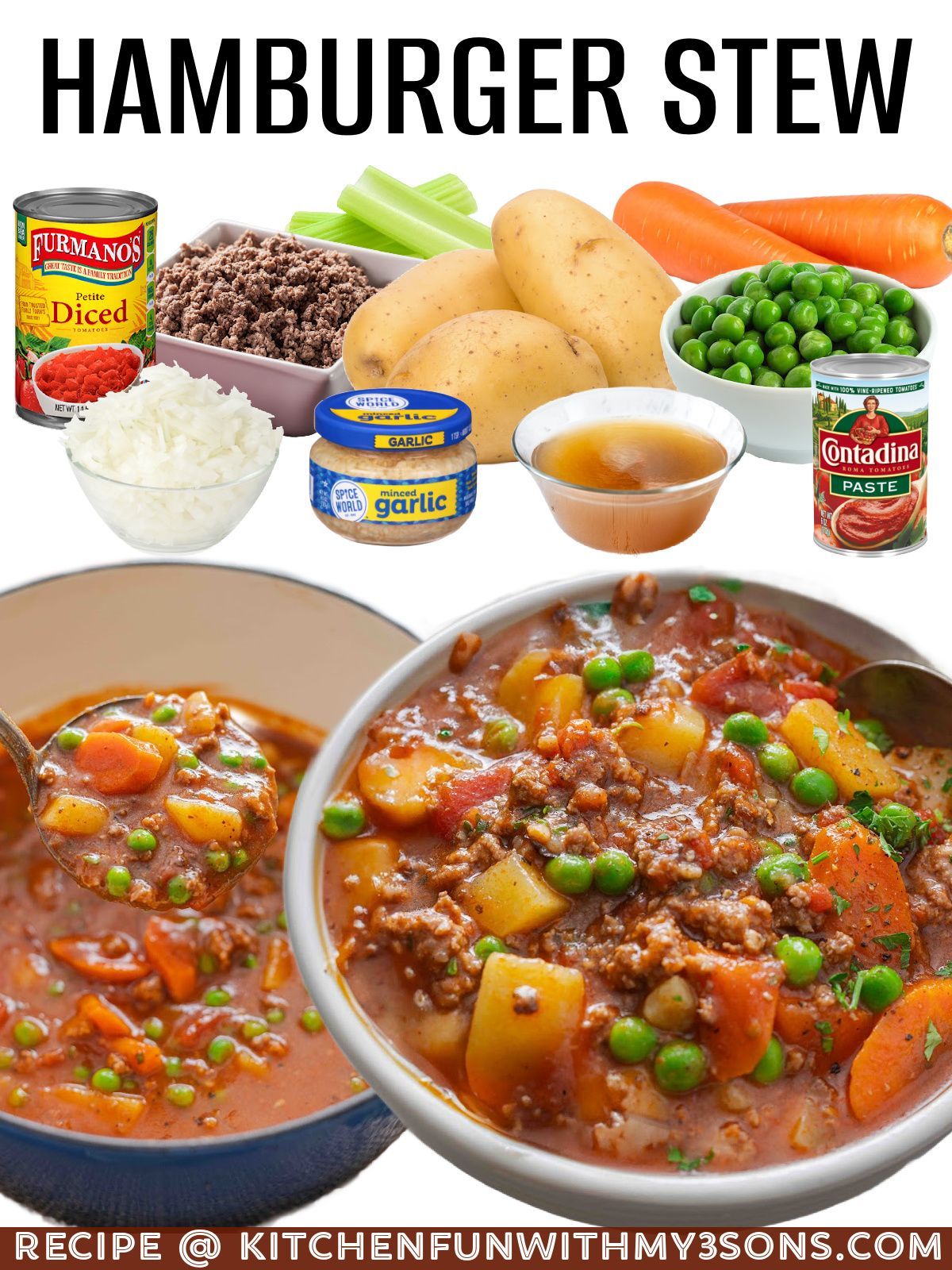
Toward the end of cooking, I add the frozen peas. They brighten the stew with a burst of color and a fresh pop of flavor. I let everything simmer for another five minutes just to heat the peas through. When I ladle the stew into bowls, the aroma is incredible—beefy, savory, tomatoey, and comforting in every way. It’s one of those meals that warms you from the inside out.
Pro Tips for Best Results
I’ve tested this stew three different ways—cooking everything at once, sautéing the vegetables first, and browning the meat before adding anything—and browning the meat first makes the biggest difference in flavor. The caramelized bits create the base that makes the stew taste slow-cooked, even when it isn’t.
Another tip I learned the hard way is to cut the potatoes evenly. One time I chopped them inconsisently, and while some pieces turned mushy, others stayed too firm. Now I always make sure they’re roughly the same size so they cook perfectly in the same amount of time. It makes the texture so much better.
Adding tomato paste is another trick I never skip. I tested the stew without it once, and it lacked depth. The paste adds richness and body, while also balancing the acidity of the diced tomatoes. Just a few tablespoons transform the entire pot.
Finally, don’t rush the simmer. Even though the stew technically cooks quickly, giving it those extra 10–15 minutes helps everything meld together beautifully. It’s the difference between a good stew and a great stew, so trust me—let it simmer.
Common Mistakes to Avoid
I made this mistake the first time: I added the peas too early. They became mushy and lost their color, turning the stew a little dull. Now I always add them in the last few minutes so they stay bright and pop with freshness.
Another common mistake is not seasoning gradually. If you add too much salt at the beginning, the stew becomes overly salty as the broth reduces. Now I start with less salt, taste halfway through, and adjust as needed. It keeps the flavors balanced and prevents overseasoning.
Don’t skip sautéing the onions and garlic. I tried tossing everything into the pot at once once out of convenience, and the flavor simply wasn’t the same. Sautéing builds the base of the stew and deepens the aroma and taste. It’s a small step that makes a huge difference.
Finally, avoid cutting the vegetables too small. Small pieces break down too quickly and disappear into the broth. Leaving the carrots, potatoes, and celery slightly chunky ensures each spoonful has a satisfying bite.(See the next page below to continue…)