
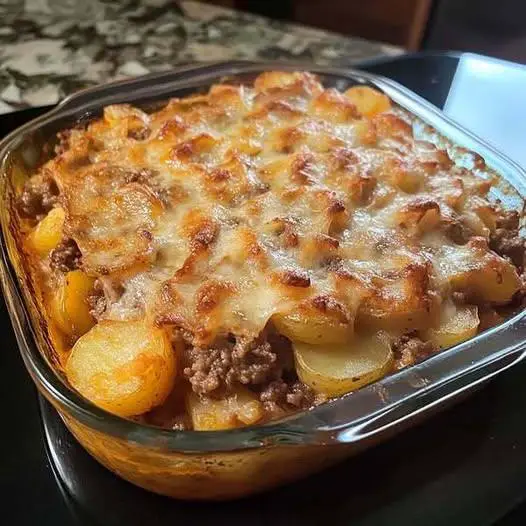
Using pre-shredded bagged cheese for the sauce can lead to a grainy texture. Those cheeses are coated with anti-caking agents that don’t always melt smoothly into a sauce. For the cup of cheese that goes into the sauce, take a minute to shred it yourself from a block. It melts more smoothly. The cheese on top can be pre-shredded for convenience.
Serving Suggestions
I love serving this casserole straight from the baking dish, family-style. I place it in the center of the table with a big serving spoon. All it needs is a simple, crisp side salad with a tangy vinaigrette to cut through the richness. A basket of warm, buttered dinner rolls on the side is perfect for sopping up any extra cheesy sauce left on the plate.
For a cozy weeknight plate, I serve a hearty square of the casserole all on its own. It’s a complete meal with protein, starch, and dairy. Sometimes I’ll add a side of steamed green beans or roasted broccoli for a pop of color and a fresh vegetable element. It’s the kind of meal that requires no fancy sides to feel complete and satisfying.
If I have guests, I might dress it up by garnishing the top with a sprinkle of fresh chopped chives or parsley right before serving. The green adds a beautiful contrast and a hint of freshness. I’ll also set out a bottle of hot sauce or a dish of pickled jalapeños for those who like a little kick with their comfort food.
Leftovers make a fantastic next-day lunch. I reheat a portion and sometimes crumble it over a bed of fresh spinach or lettuce for a warm-casserole-on-salad situation. The heat wilts the greens slightly, and the creamy dressing from the casserole acts as the salad dressing. It’s a delicious and easy way to reinvent the leftovers.
Variations & Customizations
For a “Shepherd’s Pie” style twist, I use cream of onion soup and add a cup of frozen peas and carrots to the beef layer. I might even top it with a layer of mashed potatoes instead of sliced, piping it on with a star tip for a fancy look. It’s a fun way to change the presentation and flavor profile while using the same basic method.
You can easily swap the ground beef for ground turkey, chicken, or even a plant-based ground “meat.” Just adjust the seasoning accordingly, as turkey can be blander. For a spicier kick, use a can of Rotel diced tomatoes with green chiles (drained) in place of one of the soups, and use Pepper Jack cheese.
The potato type can be varied. I’ve made this with thinly sliced Yukon Gold potatoes (no peeling needed) for a buttery flavor, and even with frozen shredded hash browns (thawed and squeezed dry) for a different, more “breakfast casserole” texture. The formula is wonderfully adaptable to what you have.
For a “French Onion” inspired version, I caramelize two large onions slowly until deep brown and sweet, and use those as the base layer instead of the ground beef. I use beef broth in the sauce instead of milk, and top it with a blend of Swiss and Gruyère cheeses. It’s a rich, vegetarian-friendly option that’s absolutely decadent.
How to Store, Freeze & Reheat
Storing leftovers is easy. Once cooled, I cover the baking dish with plastic wrap or transfer portions to airtight containers. It keeps beautifully in the refrigerator for 3-4 days. In fact, the flavors meld and it often tastes even better the next day. The sauce may thicken; a splash of milk when reheating helps loosen it up.
This casserole freezes exceptionally well, both before and after baking. To freeze unbaked, assemble the casserole completely but do not bake. Wrap the dish tightly in both plastic wrap and heavy-duty foil. Freeze for up to 3 months. Thaw overnight in the fridge and bake as directed, adding 10-15 minutes to the bake time.
To freeze after baking, let it cool completely, cut into portions, wrap each individually, and freeze. Reheat from frozen by placing a frozen portion in a baking dish, covering with foil, and baking at 350°F for 30-40 minutes until hot through. The microwave works for single portions (3-4 minutes on medium), but the oven preserves the texture better.
For reheating refrigerated portions, I prefer the oven or toaster oven at 350°F for 15-20 minutes to re-crisp the cheesy top a bit. If using the microwave, cover the dish with a damp paper towel to help keep it from drying out. Adding a tiny pat of butter on top before reheating can also revive the creaminess.
Nutrition Information
Let’s talk about this casserole honestly. It’s a hearty, satisfying dish that’s rich in protein from the beef and cheese, and provides carbohydrates and nutrients from the potatoes. The condensed soups, cheese, and sour cream also contribute significant fat, sodium, and calories. It’s a classic comfort food meal, perfect for an occasional hearty dinner rather than an everyday staple.
You can make lighter adjustments. Use extra-lean ground beef or ground turkey, low-sodium and/or reduced-fat condensed soups, light sour cream, and reduced-fat cheese. These swaps will lighten the dish considerably while keeping its comforting soul. Adding more vegetables (like spinach or zucchini) into the layers can also boost the fiber and vitamin content.
A sensible portion is key. A single square is quite filling. I always pair it with a large green salad or steamed vegetables to create a balanced plate. This allows you to enjoy this delicious, indulgent dish as part of an overall healthy diet, savoring it for the comfort and joy it brings.
In my kitchen, this recipe is about more than nutrients; it’s about ease, warmth, and bringing the family together over a meal everyone enjoys. The value of a stress-free dinner that creates happy, shared moments is a form of nourishment that’s just as important as any vitamin. It’s food that feeds the heart as well as the body.
FAQ Section
Can I make this ahead of time?
Absolutely! You can assemble the entire casserole, cover it tightly, and refrigerate it for up to 24 hours before baking. You may need to add 10-15 extra minutes to the bake time since it will be starting from cold. This is my favorite trick for easy entertaining or busy weeknights.
My potatoes are still hard. What went wrong?
This usually means they were sliced too thick, the oven temperature was off, or you didn’t cover it with foil for the first part of baking. Next time, ensure thin, even slices, use an oven thermometer to check your oven’s accuracy, and don’t skip the covered baking step. To salvage this batch, cover it and bake for another 15-20 minutes.
Can I use frozen potatoes?
Yes, you can use frozen sliced potatoes or even frozen shredded hash browns. There’s no need to thaw them completely, but pat them as dry as possible with paper towels to avoid excess water making the casserole soupy. You may need to add a few extra minutes to the covered baking time to ensure they cook through.
What can I use instead of canned soup?
You can make a quick homemade sauce. Melt 3 tbsp butter, whisk in 3 tbsp flour, cook for 1 minute, then whisk in 1 ½ cups milk until thickened. Season with salt, pepper, and a dash of onion powder. Stir in 1 cup of shredded cheese until melted, then mix with the sour cream. It’s more work, but avoids processed ingredients.
Can I add other vegetables?
Please do! Diced bell peppers, mushrooms, or zucchini can be sautéed with the onion and beef. A cup of thawed frozen mixed vegetables (like peas and carrots) can be stirred into the beef layer or the creamy sauce. Just be mindful of watery veggies; sauté them first to release moisture so they don’t make the casserole wet.
Conclusion
This Hamburger Potato Casserole has earned its place as the most reliable, requested comfort food in my kitchen arsenal. It’s the delicious answer to busy days, the guarantee of a happy dinner table, and proof that the simplest ingredients can create the most satisfying meals. I hope this recipe brings as much easy joy and hearty comfort to your home as it has to mine. Now, go preheat that oven—a pan of bubbling, cheesy, heartfelt dinner is waiting for you.