
In a large mixing bowl, I make the creamy sauce. I combine the cream of mushroom soup, cheddar cheese soup, sour cream, milk, Worcestershire sauce, and the remaining ½ teaspoon of salt. I whisk it all together until it’s smooth and homogeneous. To this bowl, I add the drained potato slices and 1 cup of the shredded cheddar cheese. I gently fold everything together until every potato slice is coated in the luxurious, cheesy sauce.
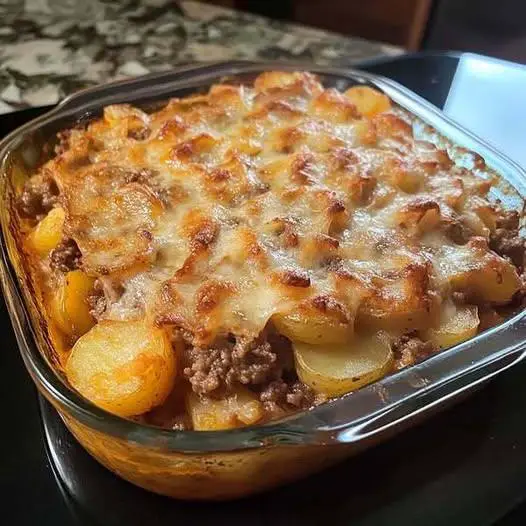
Now, for the assembly. I spread the seasoned, cooked ground beef and onion mixture in an even layer on the bottom of my prepared baking dish. Then, I carefully pour the entire bowl of saucy potatoes over the beef, spreading them out evenly. I cover the dish tightly with aluminum foil and bake for 45 minutes. After that, I remove the foil, sprinkle the remaining cup of cheese on top, and bake uncovered for another 15-20 minutes, until the top is golden brown and bubbly.
Pro Tips for Best Results
Soaking the sliced potatoes in cold water for 10-15 minutes is a step I will never skip again. I tested it with and without, and the soaked potatoes not only prevented grey discoloration but also washed away surface starch. This resulted in a creamier, more cohesive sauce instead of a gluey one. Just be sure to pat them very dry with a clean kitchen towel before mixing with the sauce.
Seasoning the beef layer well is crucial. Because it’s on the bottom, it needs to carry its own flavor. Don’t be shy with the salt, pepper, and garlic. I also like to add a tablespoon of tomato paste to the beef as it cooks sometimes, for a little extra depth and acidity. That beef layer shouldn’t be bland—it’s the savory surprise under the creamy potatoes.
For a golden, crispy top layer of cheese, I switch my oven to broil for the final 2-3 minutes of cooking. I watch it like a hawk! This gives the cheese those beautiful, irresistible browned spots and a slightly crispy texture. It takes the casserole from homely to gorgeous. Just a minute or two under the broiler makes a huge visual and textural difference.
Let the casserole rest for 10-15 minutes after pulling it from the oven. I was too eager the first time and served it immediately; it was delicious but soupy. The resting time allows the sauce to thicken and set, making it much easier to scoop out clean, defined portions that hold their shape beautifully on the plate. Patience makes it perfect.
Common Mistakes to Avoid
The biggest mistake is slicing the potatoes too thick. If they’re more than ⅛-inch thick, they simply won’t cook through in the allotted time, leaving you with a crunchy, unpleasant texture in the middle of your creamy casserole. A mandoline is the best tool for this job, but a sharp knife and careful attention work too. Uniform thinness is non-negotiable.
Not draining the beef properly will make the entire casserole greasy. After browning, I tilt the skillet and spoon out the excess fat, or drain it in a colander. That extra grease has nowhere to go but into your sauce, creating an oily layer on top. I learned this lesson with a slightly unappetizing, shiny surface on an early batch.
Forgetting to cover the dish with foil for the first half of baking is an error. The foil creates a steamy environment that gently cooks the potatoes until tender. Baking it uncovered the whole time can dry out the top and leave the potatoes undercooked. The foil-on, foil-off method is the secret to perfect texture.(See the next page below to continue…)