
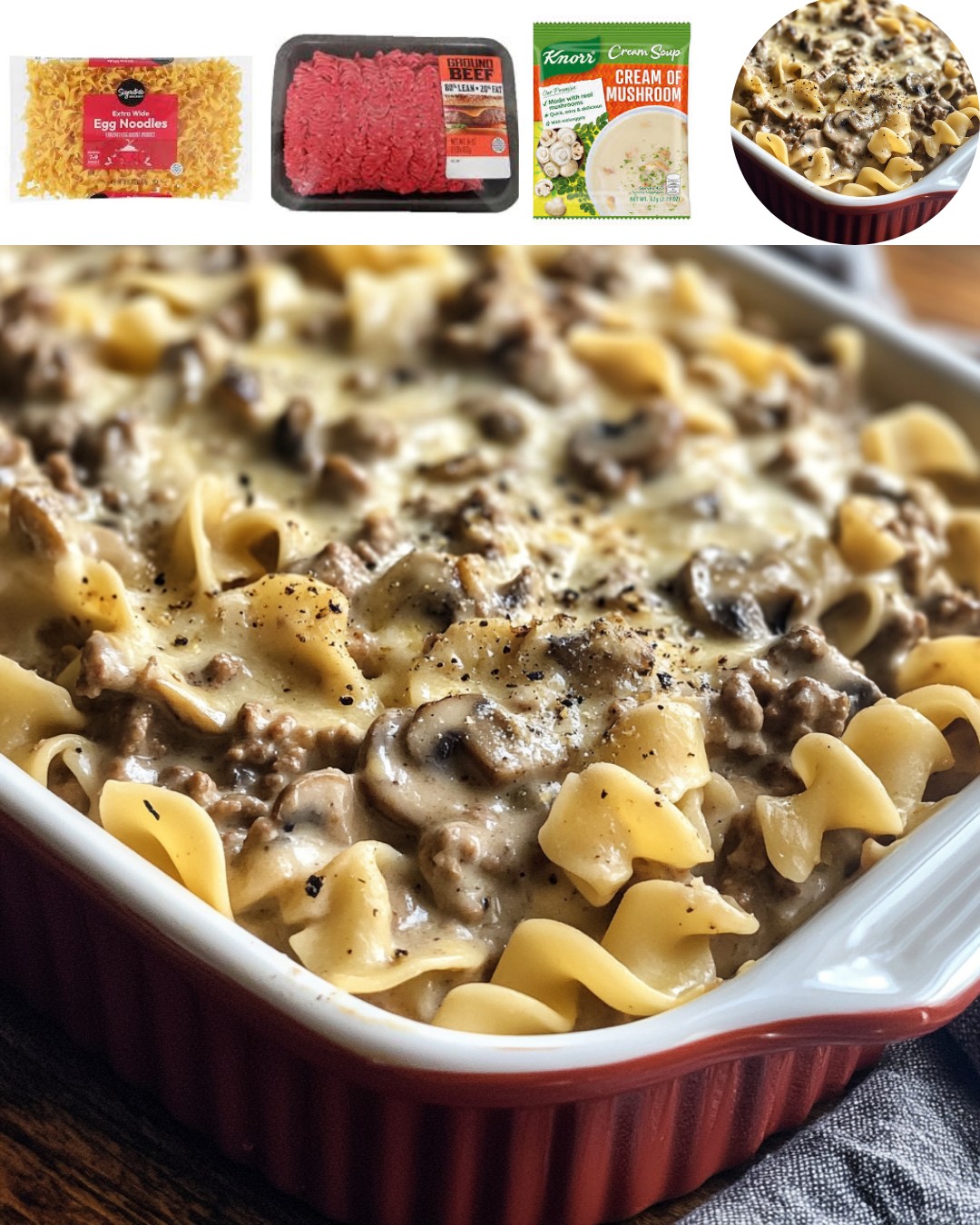
This casserole takes the cozy flavors of beef stroganoff and turns them into the kind of dish that feels right at home on a busy weeknight or a Sunday dinner table. Ground beef gets browned with onions and garlic, mushrooms are cooked until golden, and then everything is coated in a luxurious sauce made from beef broth, cream of mushroom soup, Worcestershire, mustard, and plenty of sour cream.
That silky stroganoff base gets tossed with egg noodles, tucked into a baking dish, and finished in the oven so the sauce thickens and clings to every bite. You get the creaminess and depth of classic stroganoff, but you also get the bonus of a set, scoopable casserole that feeds a crowd with very little babysitting.
Equipment
- Large pot for boiling egg noodles
- Colander
- Large skillet or sauté pan
- Mixing bowl
- 2–3 quart casserole dish or 9×13‑inch baking dish
- Measuring cups and spoons
- Wooden spoon or spatula
- Foil (for covering while baking, if needed)
Ingredients
- 8 ounces wide egg noodles
- 1 pound lean ground beef
- 1 small onion, finely diced
- 2 cloves garlic, minced
- 8–12 ounces fresh mushrooms, sliced (white or cremini)
- 1 tablespoon butter or oil, if needed
- 1 can (10.5 ounces) cream of mushroom soup
- 1 cup beef broth
- 1 cup sour cream (light or full‑fat)
- 1 tablespoon Worcestershire sauce
- 1 teaspoon Dijon or yellow mustard (optional but classic)
- ½ teaspoon paprika or smoked paprika (optional)
- ½ teaspoon black pepper
- ½–1 teaspoon salt, to taste
- ½–1 cup shredded cheese for topping (Swiss, mozzarella, or cheddar, optional)
- 1 cup crispy fried onions for topping (optional)
- Chopped fresh parsley, for garnish
How to Make Ground Beef Stroganoff Casserole
The first step is getting the egg noodles cooked so they are ready to soak up that creamy stroganoff sauce. Bring a large pot of well‑salted water to a boil and add the egg noodles.
Cook them according to package directions until just al dente; stop them a minute or so shy of fully soft because they will continue cooking in the oven. Once they reach that tender‑but‑firm point, drain them well in a colander.
You can toss them with a tiny bit of butter or oil to keep them from sticking while you make the rest of the casserole, then set them aside.
While the noodles are cooking, you can start building flavor in a large skillet. Add the ground beef and diced onion to the pan over medium‑high heat. Break up the beef with a wooden spoon and cook until the meat is fully browned and the onion has softened and turned translucent.
If the pan accumulates a lot of excess fat, drain it off carefully so you are left with just a light coating; this keeps the finished casserole rich without feeling greasy.
Stir in the minced garlic and cook for about 30 seconds, just long enough to become fragrant without browning. At this point you should already have a skillet that smells like the start of classic stroganoff.
Once the beef and onions are cooked through, it is time to add mushrooms. Stir the sliced mushrooms into the skillet and cook them with the beef mixture over medium heat.
At first they will release liquid and seem wet; keep stirring and cooking until that moisture evaporates and the mushrooms start to take on some golden color around the edges. This browning step is important because it concentrates their flavor and keeps the sauce from becoming thin.
As the mushrooms cook, season everything with black pepper, a pinch of salt, and paprika if you are using it. By the time the mushrooms are tender and lightly browned, you should have a deeply savory base of beef, onions, and mushrooms ready for the stroganoff sauce.
To build the sauce, pour in the beef broth and use your spoon to scrape any browned bits from the bottom of the skillet so they dissolve into the liquid.
Stir in the can of cream of mushroom soup and work it into the broth until you have a smooth, creamy mixture. Reduce the heat to medium‑low and let this mixture come up to a gentle simmer. As it warms, stir in the Worcestershire sauce and mustard if you are using it.
Those two ingredients add the characteristic tang and depth that make stroganoff taste like stroganoff rather than just beef and gravy, so do not skip them unless you truly prefer a milder flavor.
Sour cream is what gives stroganoff its signature creamy tang, but it needs to be handled gently so it does not curdle. Take the skillet off the heat for a minute to let the bubbling subside, then stir in the sour cream until the sauce is completely smooth and pale.
If the sauce feels too thick, you can loosen it with a splash more broth or even a bit of milk. Taste a spoonful and adjust the seasoning with more salt and pepper if needed. You want a sauce that tastes rich, savory, and slightly tangy on its own because it will mellow a bit once it is combined with the noodles.
Once the sauce is seasoned to your liking, add the drained egg noodles to the skillet. Use a gentle folding motion to coat every noodle in the stroganoff mixture without breaking them up too much. This is also the moment to stir in any small additions like peas if you are using them, so they can distribute evenly throughout the casserole.
By the end of this step, you should have a pan full of creamy noodles, beef, and mushrooms where every element is coated in sauce and there are no dry pockets of pasta.
Now it is time to move everything to the oven. Preheat the oven to 350°F (175°C) if you have not already. Lightly grease a 2–3 quart casserole dish or a 9×13‑inch baking dish, then transfer the stroganoff noodle mixture into the dish.
Spread it out into an even layer, pressing lightly with a spatula to remove any air pockets and fill the corners. If you prefer a no‑topping, more traditional look, you can bake it as‑is. For a more indulgent take, sprinkle shredded Swiss, mozzarella, or cheddar evenly over the surface so it will melt into a gooey top layer.
If you enjoy a bit of crunch, you can plan to add crispy fried onions partway through baking or toward the end so they toast up without burning.
Cover the dish loosely with foil to keep moisture in and prevent the top from browning too quickly, then slide it into the preheated oven. Let the casserole bake for about 20 minutes, then remove the foil. If you are using crispy fried onions, scatter them over the top at this point.
Continue baking for another 10–15 minutes, or until the casserole is hot all the way through and the top is bubbling and lightly golden. If you like a deeper brown color on a cheese topping, you can turn on the broiler for the last minute or two, watching carefully so it does not scorch.
When the Ground Beef Stroganoff Casserole is done, take it out of the oven and let it rest on the counter for about 5–10 minutes before serving.
This resting time allows the sauce to thicken just a bit more and helps the noodles and beef settle so portions hold together better on the plate. Sprinkle chopped fresh parsley over the top for a pop of color and a hint of freshness.
Then use a large spoon or spatula to scoop generous servings onto plates, making sure each portion gets plenty of noodles, beef, mushrooms, and, if you used them, some of the crispy topping.
Tips and Variations
There are several easy ways to tweak this casserole without losing the stroganoff vibe. One of the simplest is adjusting the mushrooms. If you are a big mushroom fan, using the full twelve ounces or even a bit more will give the dish a more pronounced earthy flavor and extra texture.
If someone at your table is mushroom‑skeptical, you can chop them smaller so they are less obvious, or reduce the amount and rely more on the cream of mushroom soup for that underlying flavor.
The richness of the sauce is also easy to dial up or down. Using full‑fat sour cream makes the stroganoff especially luxurious and silky, while light sour cream will still give you creaminess with a bit less heaviness.
You can replace part of the sour cream with plain Greek yogurt if you want to lighten things up slightly and add a bit more tang, as long as you mix it in off the heat. For an ultra‑indulgent version, a small spoonful of cream cheese blended into the hot sauce before the noodles go in will make it even thicker and more velvety.
Cheese is another lever you can pull. Traditional stroganoff does not include cheese, but in casserole form, a bit of cheese on top can be very appealing. Swiss complements the sour cream and mushrooms nicely, mozzarella adds stretchiness without a strong flavor, and cheddar brings a sharper, more pronounced cheesy note.
You can also tuck a small handful of cheese into the sauce itself as you stir in the sour cream if you want the inside to be extra cheesy, not just the top.
If you want to add more vegetables without changing the core character of the dish, peas are an easy choice. They can be stirred in frozen at the same time as the noodles, then they will cook through in the oven.
Steamed green beans or a small amount of chopped spinach can also be folded in; just make sure any very wet vegetables are drained well so they do not thin out the sauce too much. On the flip side, if you would like to trim a bit of richness, you can cut back slightly on sour cream and rely more on broth and soup, then pair the casserole with lighter sides.
Serving Ideas
Ground Beef Stroganoff Casserole is rich and filling on its own, so it pairs best with sides that add freshness or a bit of crunch.
A simple green salad with a tangy vinaigrette is a classic choice, since the acidity in the dressing cuts through the creamy sauce and refreshes the palate between bites. Steamed or roasted vegetables like green beans, broccoli, or carrots also work very well and bring color to the plate without demanding much extra effort.
If you want to stretch the meal or feed bigger appetites, a basket of warm rolls or slices of crusty bread is perfect for mopping up any remaining sauce.
This casserole is also a good option for buffets or potlucks because it holds its heat well and serves easily. You can set the dish out on a trivet, keep a large spoon in the pan, and let people help themselves. The set, baked structure means it will still scoop nicely even as it cools a bit. Because the flavors are familiar and kid‑friendly, it tends to be one of those dishes that people return to for seconds.
Storage and Reheating
One of the benefits of a baked stroganoff casserole is that leftovers reheat beautifully. After dinner, allow the casserole to cool down to room temperature, then cover the dish tightly with foil or transfer portions to airtight containers.
Stored in the refrigerator, it will keep well for three to four days. When you are ready to reheat, individual portions warm quickly in the microwave; if the sauce seems to have thickened a lot, stirring in a small splash of milk or broth before heating will help restore a creamier texture.
For reheating larger portions or the whole dish, the oven is a good choice. Cover the casserole with foil and warm it at a moderate temperature, around 325°F (165°C), until it is hot in the center. Removing the foil for the last few minutes can help freshen up any crispy topping or lightly re‑brown cheese.
Ground Beef Stroganoff Casserole also freezes well: you can cool it completely, wrap it tightly, and freeze either the whole dish or individual portions. Thaw overnight in the refrigerator, then reheat gently as described.
The noodles hold up nicely, the sauce stays cohesive, and the flavors deepen a bit, making it an excellent make‑ahead option for nights when you want a comforting, from‑scratch dinner with almost no work.