
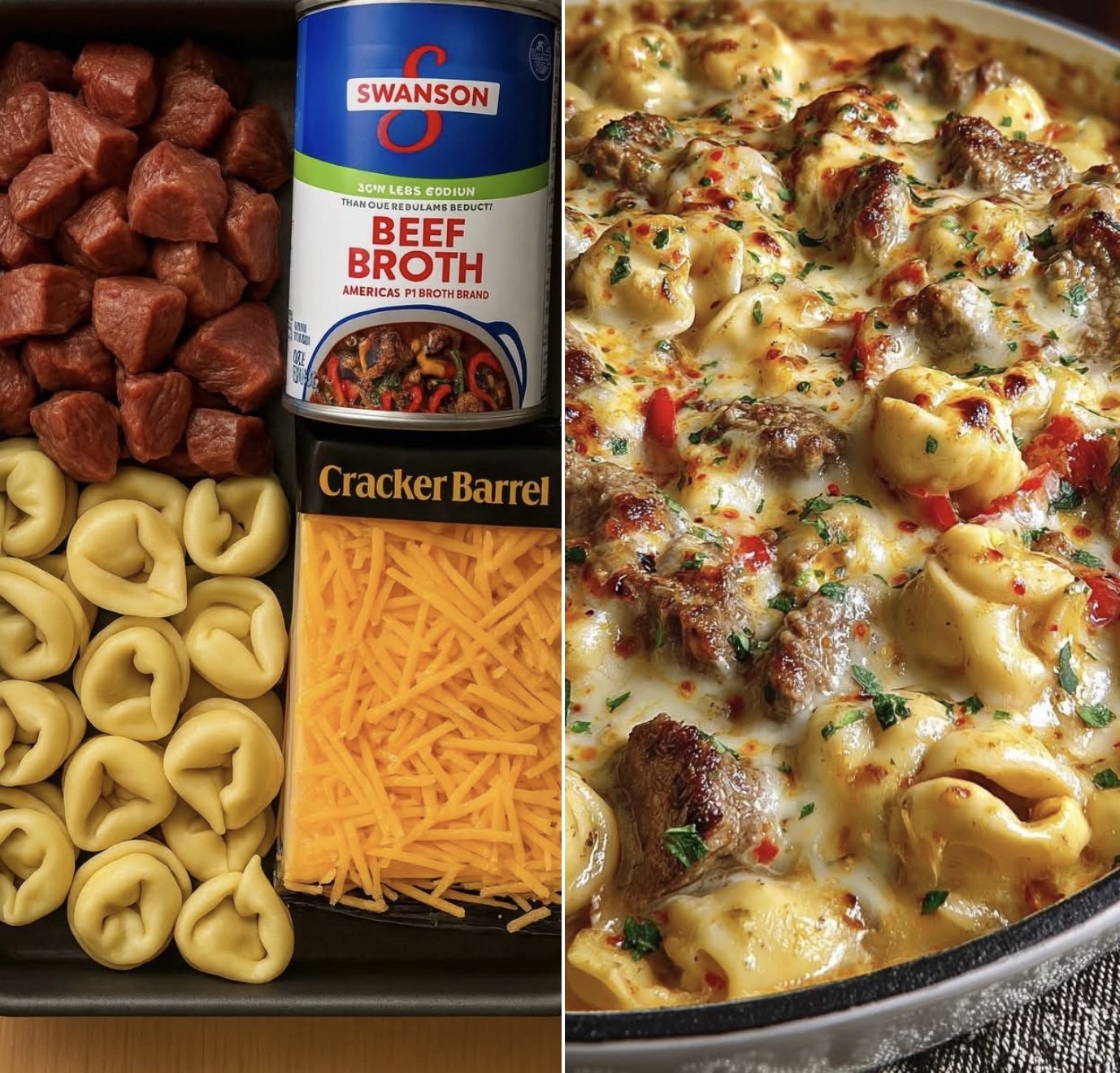
Golden Cheese Steak Tortellini Casserole takes everything you love about a cheesy steak sandwich and tucks it into a bubbling, oven-baked pasta dish. Tender bites of seared steak, pillowy cheese tortellini, and a rich golden cheddar sauce bake together under a melted mozzarella topping until the edges are browned and the whole pan is pure, cozy comfort. It’s hearty, indulgent, and feels like a restaurant-level mashup of Philly cheesesteak and ultra-creamy mac and cheese.
This casserole is built for busy nights and hungry crowds. You’ll sear the steak, whisk together a simple stovetop cheese sauce, cook the tortellini just to al dente, and then combine everything in a 9×13 pan to bake until hot and bubbly. It’s forgiving, very customizable, and exactly the sort of dish that people scoop seconds of without even thinking about it.
Equipment
- Large skillet
- Medium saucepan
- Large pot (for boiling tortellini)
- 9×13-inch baking dish
- Whisk
- Wooden spoon or spatula
- Measuring cups and spoons
Ingredients
- 1 pound sirloin steak or steak tips, cut into bite-size pieces
- Salt and black pepper, to taste
- 1 tablespoon olive oil
- 2 tablespoons butter
- 3 cloves garlic, minced
- 1 tablespoon all-purpose flour
- 2 cups milk (whole or 2%)
- 1 cup beef broth
- 2 cups shredded sharp cheddar or golden cheddar blend
- 1 teaspoon Dijon mustard (optional)
- 1 teaspoon paprika
- 1 package (about 20 ounces) fresh or refrigerated cheese tortellini
- ½ cup shredded mozzarella (for topping)
- 2 tablespoons chopped parsley (for garnish, optional)
Instructions
To make Golden Cheese Steak Tortellini Casserole, start by prepping the steak so it sears beautifully. Pat the steak pieces dry with paper towels and season them liberally with salt and black pepper.
Set them aside while you bring a large pot of salted water to a boil for the tortellini; you’ll cook the pasta a bit later, but having the water ready keeps things moving smoothly. Grease a 9×13-inch baking dish with a little butter or nonstick spray and set it near the stove.
Heat the olive oil in a large skillet over medium-high heat. When the oil shimmers and just begins to smoke lightly, add the steak pieces in a single layer. Let them sear without moving them for 2–3 minutes so a deep golden-brown crust can form, then flip and sear the other sides until browned and just cooked to your liking.
You may need to work in two batches to avoid overcrowding the pan; crowded steak will steam instead of sear. Once the steak bites are browned, transfer them to a plate and set aside, leaving any tasty browned bits in the skillet.
In a medium saucepan, melt the butter over medium heat. Add the minced garlic and cook for about 30 seconds, just until fragrant and lightly golden at the edges. Sprinkle the flour over the butter and garlic and whisk to form a smooth paste, cooking this roux for about a minute to remove any raw flour taste.
Slowly pour in the milk while whisking constantly, then add the beef broth, continuing to whisk until the mixture is smooth and beginning to thicken. Let it gently bubble for a few minutes, stirring often, until it coats the back of a spoon.
Once the sauce has thickened, reduce the heat to low and stir in the shredded cheddar, a handful at a time, whisking until each addition is fully melted and incorporated before adding more. Add the Dijon mustard and paprika and whisk again until the sauce is creamy, glossy, and a rich golden color.
Taste and adjust the seasoning with additional salt and pepper if needed; the sauce should be deeply savory and cheesy at this point, since it will be coating both the steak and the tortellini.
While the cheese sauce is coming together, cook the cheese tortellini in the pot of boiling salted water according to the package directions, but undercook them slightly by a minute or two since they’ll finish in the oven.
Drain the tortellini well and, if you like, toss them with a tiny drizzle of olive oil to prevent sticking. You want them tender but still a bit firm so they hold their shape and don’t go mushy once baked in the sauce.
In the greased 9×13-inch baking dish, add the cooked tortellini and the seared steak pieces. Pour the warm golden cheese sauce over everything and use a spatula or wooden spoon to gently stir and fold until the steak and tortellini are evenly coated and distributed throughout the pan.
Try not to break up the tortellini as you mix; a gentle hand keeps all those cheese-filled pillows intact. Once everything looks evenly combined, smooth the top into an even layer.
Sprinkle the shredded mozzarella evenly over the surface of the casserole. This extra layer of cheese will melt into a stretchy, golden top that contrasts nicely with the sharper cheddar sauce underneath. Preheat your oven to 375°F (190°C) if it isn’t already heated, then place the baking dish on the center rack and bake, uncovered, for about 20–25 minutes, or until the cheese on top is melted and bubbling and the edges of the casserole are just starting to brown.
If you prefer a deeply golden top, you can switch the oven to broil for the last couple of minutes, watching carefully so the mozzarella doesn’t burn.
When the casserole is done, remove it from the oven and let it rest for about 5–10 minutes. This short rest allows the sauce to settle and thicken slightly, which makes it easier to scoop neat servings that still feel creamy and luscious.
Finish with a sprinkle of chopped parsley over the top if you like a fresh pop of green against all that golden cheese. Use a large spoon to dish out generous portions, making sure every serving gets plenty of steak, tortellini, and sauce under that melted cheese cap.
Tips & Variations
This casserole is easy to customize depending on what you have and how you like your cheesesteak flavors. For the steak, sirloin or steak tips are great because they’re flavorful and tender without being too fussy, but strips of ribeye or even thinly sliced shaved steak work beautifully as well.
Just keep cooking times in mind; thinner pieces will sear and cook through more quickly, so you’ll want to sear them over high heat for a very short time to keep them tender. You can also add sautéed onions and bell peppers to the mix if you want to lean harder into the classic cheesesteak profile—cook them in the same skillet after you sear the steak, then fold them into the tortellini with the meat.
The golden cheese sauce is built on cheddar, but you can tweak the cheese blend to your taste. A mix of sharp cheddar and provolone gives a more traditional cheesesteak flavor, while adding a small handful of Parmesan adds a salty, nutty edge.
The Dijon mustard in the sauce is optional but recommended; it doesn’t make the sauce taste like mustard, but instead adds depth and a subtle tang that cuts through the richness. If you like a little heat, a pinch of red pepper flakes or a dash of hot sauce whisked into the sauce can give a gentle kick without turning it into a spicy dish.
You can also play with the pasta element if you want a slightly different texture. Cheese tortellini give you soft, stuffed “pockets” of cheese throughout, but meat tortellini or even plain tortellini mixed with a handful of cooked penne or rotini would work.
Just remember that the more pasta you add, the more the sauce will be absorbed, so if you increase the starch, you may want to increase the milk and cheese slightly to keep everything creamy. For an extra decadent version, stir some caramelized onions into the sauce or fold in a few dollops of ricotta before baking for little pockets of extra creaminess.
If you’d like to include vegetables right in the casserole, sliced mushrooms and strips of sautéed bell peppers are natural fits and soak up the cheese sauce beautifully.
Just make sure to cook off their moisture in the skillet after the steak so they don’t thin out the sauce. A handful of fresh spinach stirred into the hot sauce will wilt gently and tuck some greens into the mix without changing the overall indulgent feel of the dish.
Serving & Storage
Golden Cheese Steak Tortellini Casserole is rich and filling, so it doesn’t need much on the side to feel like a complete meal. A simple green salad with a bright vinaigrette balances the heaviness nicely and adds fresh crunch to each bite.
Garlic bread or warm rolls are optional but always welcome if you’re serving big eaters or want something to mop up the extra sauce. Roasted or steamed vegetables like broccoli, green beans, or asparagus also pair well and bring some color and texture contrast to the plate.
Leftovers keep well and make for a luxurious next-day lunch. Let the casserole cool to room temperature, then cover the dish tightly with foil or transfer portions to airtight containers and refrigerate for up to three or four days.
To reheat a larger portion in the baking dish, cover it with foil and warm in a 325°F (165°C) oven until the center is hot and the cheese has remelted. If the pasta seems to have absorbed a lot of the sauce and looks a bit dry, you can stir in a small splash of milk or beef broth before reheating to loosen it slightly. Individual servings can be reheated in the microwave in short bursts, stirring halfway through for even heating.
This casserole can also be made ahead and baked later, which makes it a great option for entertaining or busy days. You can assemble the dish completely up to the point of baking, cover it tightly, and refrigerate for up to a day.
When you’re ready to cook, let it sit at room temperature while the oven heats, then bake, adding a few extra minutes as needed until it’s hot and bubbly. It also freezes well: assemble the casserole, wrap it tightly in plastic and foil, and freeze for up to a couple of months.
Thaw overnight in the refrigerator, then bake as usual. With that kind of flexibility and all that golden, cheesy goodness, this is the kind of casserole that quickly becomes a go-to when you want big comfort in one pan.