
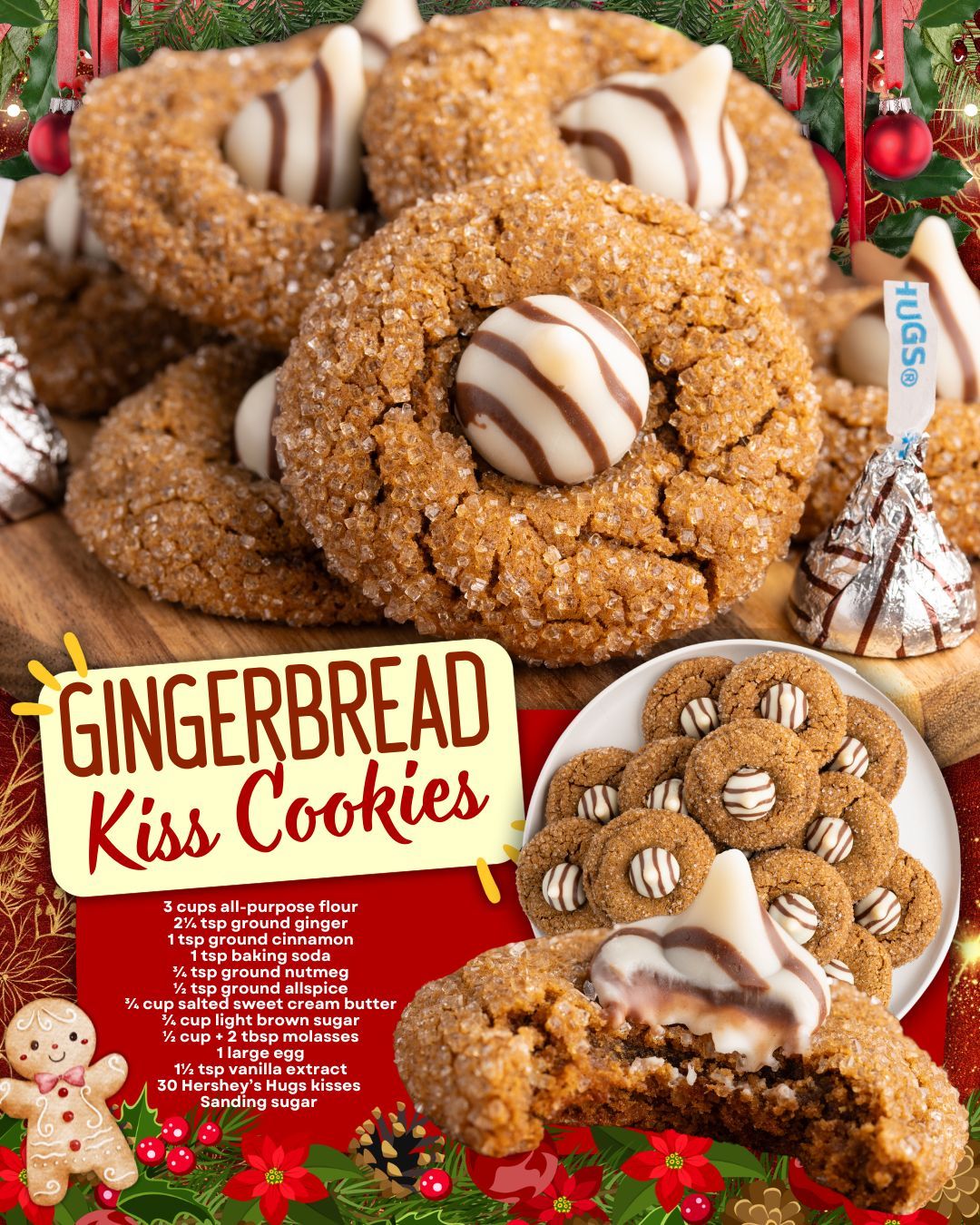
Gingerbread Kiss Cookies start with a classic gingerbread cookie dough: butter and brown sugar are creamed together, then enriched with molasses, egg, and vanilla for moisture and that deep, old‑fashioned gingerbread flavor.
The wet ingredients are combined with flour, baking soda, salt, and a blend of spices—typically ginger, cinnamon, nutmeg, and sometimes allspice or a ready‑made gingerbread spice mix—until a soft dough forms that’s sturdy enough to roll into balls.
Each ball is rolled in granulated or sanding sugar for a sparkly, lightly crisp exterior, baked until just set, and then topped immediately with a Hershey’s Kiss pressed into the center, creating that signature blossom shape with chocolate nestled in a warm, spiced cookie.
Equipment
- Large mixing bowl for the wet ingredients (butter, sugar, molasses, egg, vanilla).
- Medium mixing bowl for whisking together the dry ingredients (flour, spices, baking soda, salt).
- Hand mixer or stand mixer with paddle attachment to cream butter and sugar and beat in egg and molasses.
- Measuring cups and spoons for accurate flour, spices, molasses, and sugar measurements.
- Rubber spatula for scraping the bowl and folding the dough together.
- Small bowl or shallow dish for rolling dough balls in granulated or sanding sugar.
- Baking sheets lined with parchment paper or silicone baking mats to prevent sticking and promote even baking.
- Cookie scoop or tablespoon for portioning even dough balls (usually about 1–1½ tablespoons each).
- Wire cooling racks for cooling cookies after baking so they don’t overbake on hot pans.
- Airtight containers or cookie tins for storing cooled cookies.
Ingredients (with measurements)
Most gingerbread kiss cookie recipes follow the same structure with minor variations in spice levels. A representative batch looks like this.
- 3 cups (375 g) all‑purpose flour.
- 2–2¼ teaspoons ground ginger (many recipes use 2 to 2¼ teaspoons for strong gingerbread flavor).
- 1–1½ teaspoons ground cinnamon.
- ¼–½ teaspoon ground nutmeg.
- ½ teaspoon ground allspice or a tablespoon of gingerbread spice mix instead of individual spices in some recipes.
- 1 teaspoon baking soda.
- ½ teaspoon kosher salt.
- ¾ cup (170 g) unsalted butter, softened to room temperature (some versions use 12 tablespoons, which is the same amount).
- ¾ cup (150 g) packed light or dark brown sugar.
- ½ cup (120 ml) molasses (often unsulphured).
- 1 large egg, room temperature.
- 1 teaspoon vanilla extract.
- ¼–⅓ cup (50–70 g) granulated sugar or white sanding sugar, for rolling dough balls.
- About 40–60 Hershey’s Kisses or Hugs, unwrapped (plain milk chocolate, dark chocolate, or white‑and‑milk‑chocolate striped Hugs).
This quantity yields around 40–60 cookies, depending on how large the dough balls are scooped.
Instructions and steps
The dough begins with combining the dry ingredients so the spices and leavening are evenly distributed. In a medium bowl, the flour, ground ginger, cinnamon, nutmeg, allspice (if using), baking soda, and salt are whisked together until there are no obvious streaks of spice or clumps of flour. This ensures each cookie has consistent flavor and texture and helps prevent any pockets of baking soda.
In a separate large mixing bowl, softened butter and brown sugar are creamed together with a hand mixer or stand mixer on medium speed until the mixture looks lighter in color and fluffy, usually about 2–3 minutes.
Creaming creates air pockets in the dough that contribute to a softer, thicker cookie. Once the butter and sugar mixture is fluffy, molasses is added, and the mixture is beaten until fully combined and smooth, scraping down the sides of the bowl as needed; this step gives the dough its signature dark color and deep flavor.
Next, the egg and vanilla extract are added and beaten in just until the mixture is homogeneous. Over‑beating at this stage is not necessary and can cause the dough to incorporate too much air, so the egg is mixed only until it disappears into the batter.
At this point, the wet mixture smells strongly of molasses and spices and has a glossy, cohesive texture.
The spiced flour mixture is then added to the wet ingredients. Most recipes suggest adding the dry mixture all at once or in two additions with the mixer on low speed to avoid sending flour everywhere, mixing only until a soft dough forms and no dry streaks remain.
The dough should be soft but not sticky; if it seems very sticky, a brief chill in the refrigerator (20–30 minutes) can make it easier to roll, though many recipes do not require chilling.
Once the dough is ready, the sugar‑rolling station is prepared. Granulated sugar or white sanding sugar is poured into a small bowl or shallow dish.
Using a cookie scoop or tablespoon, portions of dough about 1–1½ tablespoons in size are scooped and rolled between the palms to form smooth balls. Each ball is then rolled in the sugar until completely coated; the sugar adds sparkle and a slight crunch to the exterior.
The sugared dough balls are placed on parchment‑lined baking sheets, spaced about 2 inches apart to allow for spreading. The oven, preheated to around 350°F (175–180°C), is ready at this point.
The cookies typically bake for 8–10 minutes, depending on size and oven, until the edges look set and the tops appear slightly cracked but still soft; the centers may look a little underdone, which is ideal for a chewy texture. Because the dough is dark, it’s easy to overbake, so recipes often advise relying on timing and feel rather than color.
As soon as the cookies come out of the oven, the Hershey’s Kisses are pressed into the centers. The unwrapped Kisses are ready nearby, and one Kiss is pressed straight down into the middle of each hot cookie while the tops are still soft.
The heat from the cookie melts the base of the chocolate slightly, helping it adhere, while the rest of the Kiss softens and takes on a slightly glossy look. Some bakers note that the Kiss may look very soft and lose its sharp tip initially but will firm up again as the cookies cool.
The cookies are left on the baking sheet to cool for about 5 minutes, giving them time to firm up and preventing them from breaking when moved.
After that, they are carefully transferred to a wire rack to cool completely; the chocolate needs at least a couple of hours at room temperature, or a brief stint in the fridge, to fully reset so the Kisses aren’t gooey when stacked. Once fully cooled, the cookies can be stored in airtight containers at room temperature, often staying soft for several days and making them great for gifting or assembling ahead of time for cookie exchanges.
Variations
Gingerbread Kiss Cookies are very easy to adapt with different Kisses, coatings, and spice blends. Many recipes use Hershey’s Hugs (white‑and‑milk‑chocolate striped Kisses) instead of plain milk chocolate, which adds a creamy vanilla‑chocolate flavor and a pretty striped look on top of the dark gingerbread cookie.
Others stick with classic milk chocolate Kisses or opt for dark chocolate for a slightly less sweet, more intense chocolate note that balances the molasses.
The spice profile can also be customized. Some bakers prefer a simpler mix of just ginger and cinnamon for a milder gingerbread, while others add nutmeg, allspice, and cloves or use a pre‑made gingerbread spice mixture to amplify the warmth.
Dark brown sugar in place of light brown sugar and robust molasses instead of mild can enhance the toffee and molasses notes for a more old‑fashioned flavor. A pinch of black pepper, sometimes found in traditional gingerbread recipes, can even be added for a subtle, spicy kick.
Coatings and decorations are another place for variation. While granulated sugar or white sanding sugar is standard, some recipes roll the dough balls in coarse sparkling sugar for extra crunch and shine.
Others drizzle the cooled cookies with melted white chocolate or add holiday sprinkles around the Kiss for extra color. For a slightly less sweet finish, a light dusting of powdered sugar instead of a full sugar roll can soften the look and taste.
There are also structural twists. A few versions chill the dough before baking to help the cookies hold a more domed shape, resulting in thicker, pillow‑like blossoms.
Some bakers press the Kisses in after the cookies have cooled a bit more to keep the chocolate from melting too much, or chill the cookies right after adding the Kisses to help the points stay sharp for a cleaner look in photos or on platters. For extra chocolate, some recipes stir mini chocolate chips into the dough itself, making the cookies double‑chocolate gingerbread blossoms.
No matter how they are tweaked, gingerbread kiss cookies keep the same core appeal: soft, warmly spiced gingerbread rounds rolled in sugar, each crowned with a piece of chocolate that melts slightly into the center. They bring together the nostalgia of classic gingerbread with the crowd‑pleasing simplicity of Kiss blossoms, making them a reliable, festive favorite on any holiday cookie table.