
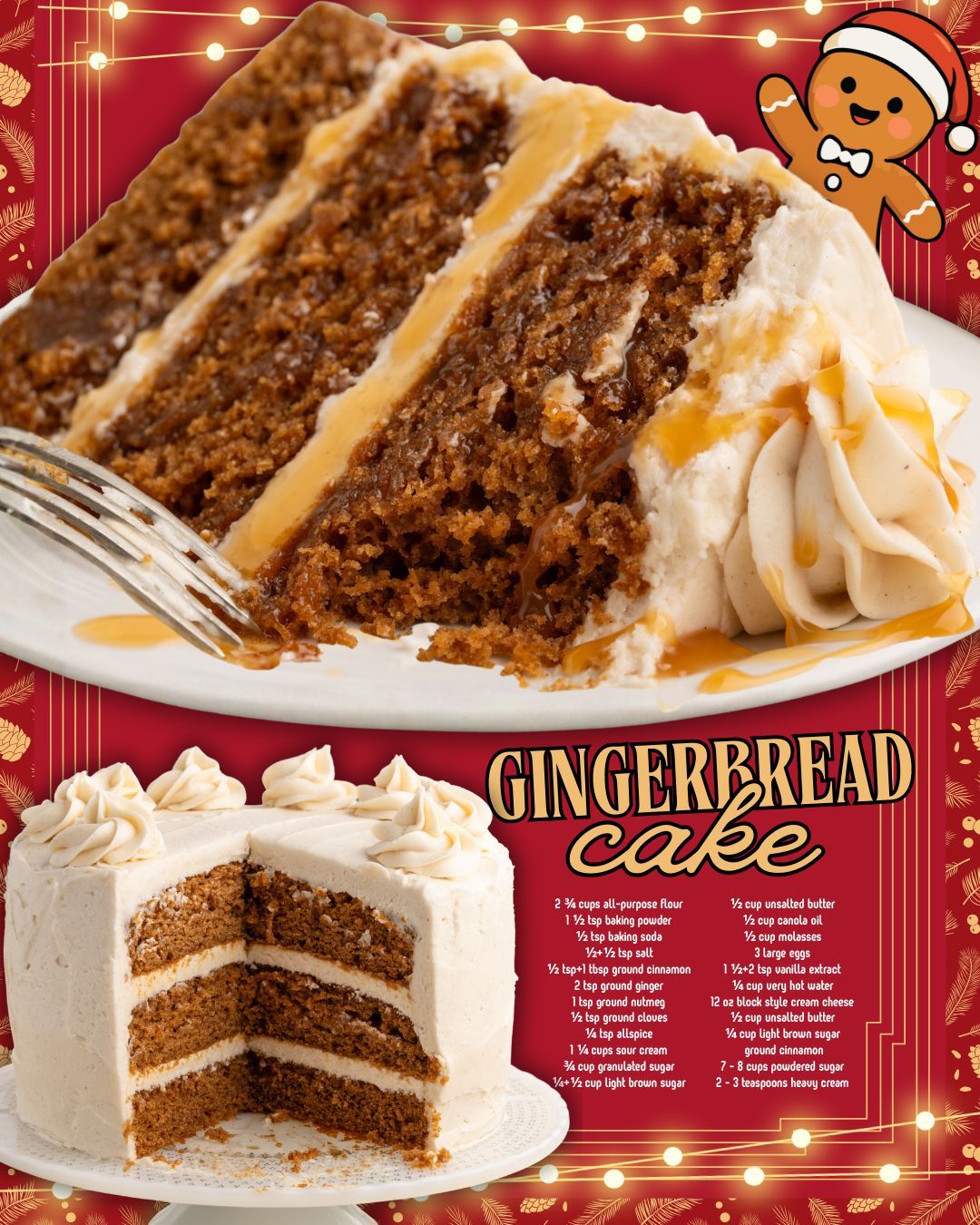
Unlike a light vanilla or yellow cake, gingerbread cake leans into dark sweeteners and bold spices to create a dense‑yet‑tender crumb that tastes like the cake version of a gingerbread cookie or old‑fashioned gingerbread loaf. Most recipes rely on a generous amount of molasses for color, moisture, and that distinct, slightly smoky sweetness, along with brown sugar to reinforce the caramel notes.
A blend of ground ginger, cinnamon, cloves, and sometimes nutmeg or allspice adds warmth and complexity, while hot water, milk, or buttermilk is stirred in to create a thin batter that bakes up soft and even. The finished cake is often served as a single layer cut into squares, dusted with powdered sugar or topped with whipped cream, vanilla sauce, or cream cheese frosting to balance the richness of the molasses and spices.
Equipment
- 9×13‑inch baking pan or 8‑ to 9‑inch square/round cake pan, greased and lined with parchment.
- Mixing bowls (one for wet, one for dry ingredients).
- Whisk and spatula (or hand/stand mixer if preferred).
- Measuring cups and spoons for flour, sugar, molasses, spices, and liquids.
Ingredients
Exact formulas vary, but a classic gingerbread cake typically includes:
- All‑purpose flour.
- Baking soda (sometimes plus baking powder) for leavening.
- Salt.
- Ground ginger, cinnamon, and cloves, plus optional nutmeg or allspice.
- Molasses (unsulphured or fancy), the star sweetener.
- Granulated and/or brown sugar.
- Butter or oil for richness and moisture.
- Eggs to bind and add structure.
- Hot water, hot milk, or buttermilk, which thins the batter and reacts with baking soda.
If you add a cream cheese frosting, you’ll need:
- Cream cheese, softened.
- Butter, softened.
- Powdered sugar.
- Vanilla extract and a pinch of salt, sometimes cinnamon or nutmeg for a spiced version.
Instructions and steps
Most gingerbread cakes follow a straightforward mix‑and‑bake method, with the only unusual step being combining molasses with hot liquid so it blends smoothly and helps activate the leavening.
Begin by preparing your pan and oven. Preheat the oven, often to 350°F (175–180°C), and grease your pan well, lining the bottom with parchment to prevent sticking. In one bowl, whisk together the dry ingredients: flour, baking soda (and baking powder if using), salt, and the spices (ginger, cinnamon, cloves, and any nutmeg or allspice). Mixing the spices thoroughly into the flour helps them disperse evenly in the batter, so you don’t get pockets of intense spice.
In another bowl, combine the wet ingredients. Many old‑fashioned recipes instruct you to whisk molasses with hot water (or hot milk) to loosen its thick texture, then add sugar, melted butter, and eggs.
Other modern versions whisk together brown sugar, oil, eggs, and vanilla first, then add molasses and finally hot milk or hot water. The hot liquid not only thins the molasses but also reacts with the baking soda later, giving the cake a good rise and contributing to a tender crumb.
Once you have a smooth wet mixture, add the dry ingredients in stages. Pour about half to two‑thirds of the dry mix into the wet, whisking gently until mostly combined, then add the remaining dry and stir just until you don’t see streaks of flour.
Some recipes specifically state that the batter will look quite thin, especially when a full cup of hot water or milk is involved, and that this is normal for gingerbread cake. As with most cakes, over‑mixing at this stage can make the texture tougher, so stop as soon as everything is incorporated.
Pour the batter into your prepared pan, smoothing the top with a spatula so it’s level. Bake until the top is set and springs back lightly when touched in the center, and a toothpick inserted in the middle comes out clean or with just a few moist crumbs.
Depending on pan size and recipe, this can range from about 25–35 minutes for a thinner sheet cake to 40–50 minutes for thicker or smaller pans. Let the cake cool in the pan on a wire rack; serving it slightly warm is traditional, but it should not be piping hot if you plan to frost it.
If you’re adding cream cheese frosting, prepare it while the cake cools. Beat softened cream cheese and butter together until completely smooth, then gradually mix in powdered sugar, vanilla, and any extra spices until you reach a fluffy, spreadable consistency.
Spread the frosting over the cooled cake in swoops, dust with a little cinnamon if you like, then slice into squares to serve. For unfrosted, old‑fashioned gingerbread, simply dust with powdered sugar and serve warm or at room temperature with whipped cream, vanilla ice cream, or a warm vanilla or caramel sauce.
Tips and tricks
The type of molasses you use affects flavor. Most recipes specify unsulphured or “fancy” molasses for a balanced, not too bitter taste, and caution against using blackstrap unless you specifically want a more intense, slightly bitter cake.
Because molasses is acidic, it plays well with baking soda, contributing to both flavor and rise; that’s why you’ll frequently see baking soda instead of, or in addition to, baking powder in gingerbread cake formulas.
Hot water or hot milk is another recurring technique you’ll see across gingerbread cake recipes. Stirring hot liquid into the wet ingredients helps dissolve sugar and blend molasses, and combining that hot mixture with the baking‑soda‑containing dry ingredients kicks off leavening quickly, leading to a lighter crumb than you might expect from such a dark cake.
That said, over‑baking is one of the main ways gingerbread cake can go wrong; because it’s dark, it’s easy to underestimate how quickly it’s browning, so rely on touch and a toothpick test rather than color alone.
For make‑ahead and storage, gingerbread cake is particularly forgiving. Multiple sources note that the flavor actually improves after a day as the spices bloom and meld, and the cake stays moist for several days when wrapped well at room temperature.
Frosted cakes should be stored in the refrigerator after a few hours, especially cream cheese‑topped versions, but can usually sit out for serving without issue.
Variations
Gingerbread cake is highly adaptable. Some recipes make it a snacking cake with a simple dusting of powdered sugar, others turn it into an impressive layer cake filled and frosted with spiced cream cheese frosting.
Sheet cake versions bake in a 9×13 pan and are topped with a relatively thin layer of cream cheese frosting, making them easy to slice and serve at potlucks or office parties. Layer cakes use the same batter divided between two or three round pans, then stacked for a more celebratory presentation.
Flavor variations can also shift the profile. Some bakers add orange zest or a splash of orange juice to the batter or frosting for a bright citrus note that pairs beautifully with ginger and molasses. Others incorporate finely chopped candied ginger for little bursts of spicy chew in the crumb.
For a lighter, slightly less intense cake, a portion of the molasses can be swapped for honey or dark brown sugar, while for a deeper, more robust flavor, a small amount of blackstrap molasses can be blended in.
Serving variations abound as well. Classic old‑fashioned recipes suggest serving warm gingerbread cake with a pourable vanilla or molasses caramel sauce and whipped cream or sliced bananas. More modern takes lean on cream cheese frosting, maple‑spiked frosting, or even a simple vanilla glaze.
However it’s dressed, Gingerbread Cake remains one of those timeless holiday bakes that brings together spice, molasses, and a tender crumb into a nostalgic dessert that feels like Christmas on a plate.