
Another critical error is using cold ingredients. Adding cold eggs or butter to the dough will inhibit the yeast and prevent a proper rise. I now always take my eggs and butter out at least two hours before I start. The butter should be soft enough that your finger leaves a deep indent, but not melted or oily. Room temperature ingredients are key to a successful, well-risen dough.
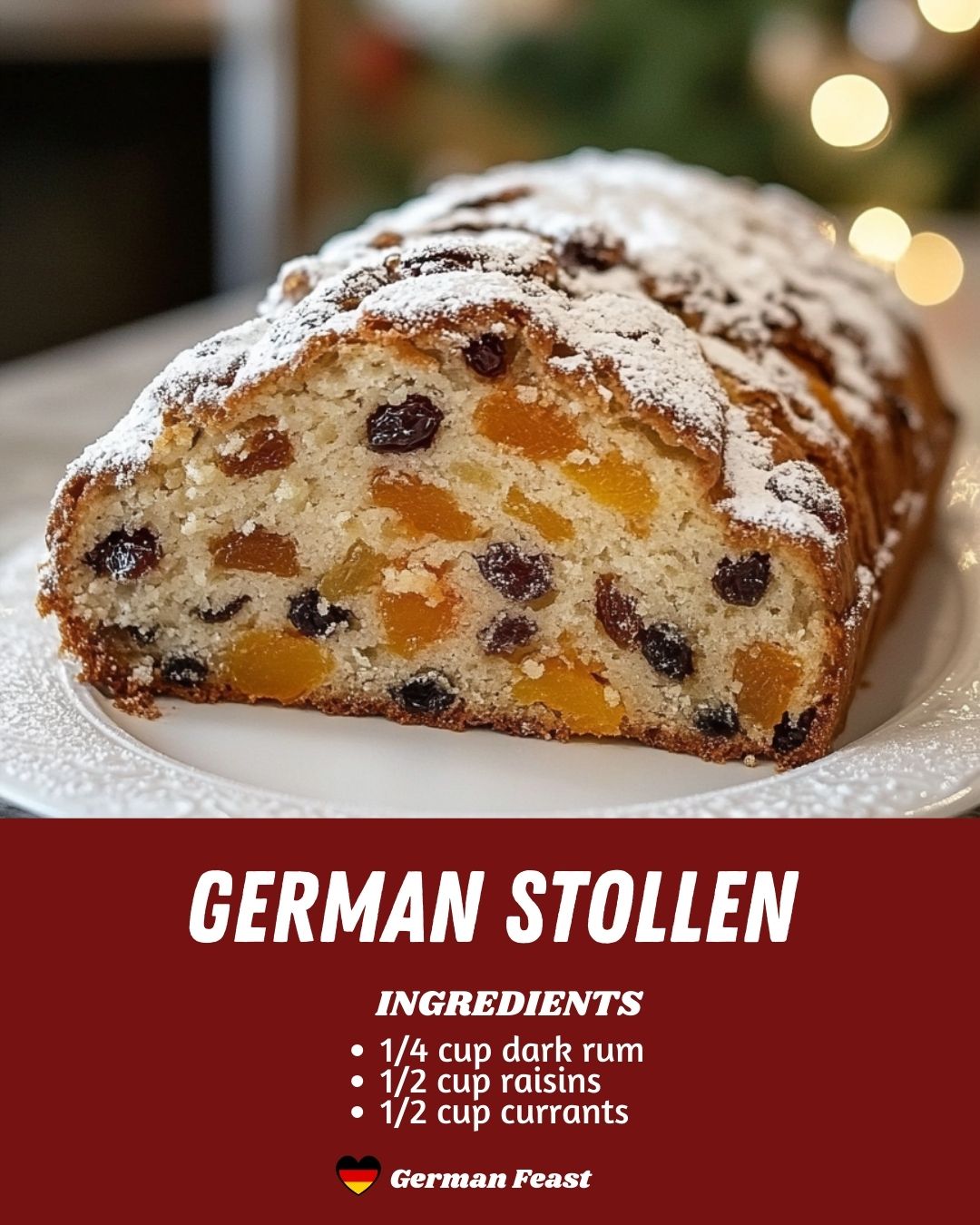
Don’t skip the final butter and sugar coating. This isn’t just for decoration; it’s a preservation technique that seals the loaf, keeping it moist for weeks. The butter soaks into the warm crust, and the powdered sugar forms a protective, sweet layer. If you apply the sugar while the butter is still wet, it will dissolve into a glaze instead of a snowy dusting. Wait until the butter has soaked in and is just tacky to the touch.
Finally, avoid baking at too high a temperature. Stollen is a large, dense loaf that needs moderate, even heat to bake through without burning the exterior. My sweet spot is 350°F. If the top is browning too quickly, tent it loosely with foil for the last 15-20 minutes of baking. An instant-read thermometer inserted into the center should read at least 190°F for doneness.
Serving Suggestions
I love serving Stollen as the centerpiece of a holiday breakfast or afternoon Kaffee und Kuchen (coffee and cake). I slice it thickly and serve it simply on its own, with a steaming cup of strong coffee or a pot of spiced tea. The rich, fruity bread is sweet and satisfying enough that it needs no accompaniment, though a pat of good butter never hurts.
For a festive dessert, I sometimes serve a slice alongside a small glass of dessert wine, a rich port, or a snifter of brandy. The alcohol complements the rum-soaked fruits beautifully. A dollop of lightly sweetened whipped cream or a scoop of vanilla ice cream can also turn a simple slice into a decadent treat.
Stollen makes the most wonderful homemade gift. Once fully cooled and sugared, I wrap the whole loaf or pre-sliced portions in cellophane, tie it with a ribbon, and add a holiday tag. Giving a homemade Stollen is a gift of time, care, and tradition that is always deeply appreciated.
Variations & Customizations
While the classic fruit mix is beloved, you can customize it to your taste. I’ve made a version with dried cranberries and apricots instead of raisins and currants, which is lovely. For a nuttier version, substitute the almonds with chopped hazelnuts or pecans. You can also add a tablespoon of poppy seeds to the dough for a traditional German twist.
If you want to include a marzipan center—a popular variation—roll about 7 ounces of marzipan into a log. After the first rise and shaping the oval, place the marzipan log in the off-center crease before folding the dough over. It bakes into a delicious, almond-packed heart. Just be sure your marzipan is high-quality.
For a dairy-free version, you can use plant-based milk and a high-quality vegan butter stick. The texture will be slightly different, but it can still be delicious. The rum soak for the fruit is naturally dairy-free and carries most of the flavor.
How to Store, Freeze & Reheat
Stollen is designed to be stored. Once completely cooled and finished with butter and sugar, I wrap it tightly in cheesecloth, then in plastic wrap or foil, and store it in a cool, dark place (like a pantry) for up to 2 weeks. The flavors improve over time. Do not refrigerate, as it will dry out.
It freezes exceptionally well for long-term storage. Wrap the cooled, unsugared loaf tightly in plastic wrap, then in foil, and place it in a freezer bag. It will keep for up to 3 months. To serve, thaw it overnight at room temperature, then brush with melted butter and dust with powdered sugar.
Reheating is not usually necessary, but if you want to serve it warm, wrap individual slices in foil and warm in a 300°F oven for 10-15 minutes. You can also toast slices lightly in a toaster or dry skillet, which brings out a wonderful buttery, crispy edge.
Conclusion
Making a German Stollen is a beautiful holiday ritual—a slow, thoughtful process that results in a loaf filled with history, spice, and sweetness. It connects us to generations of bakers and fills our homes with the most welcoming aromas. I hope this recipe encourages you to don an apron, soak some fruits, and create your own edible holiday tradition. The reward is not just in the eating, but in the joyful, fragrant journey of making it. Frohe Weihnachten and happy baking