
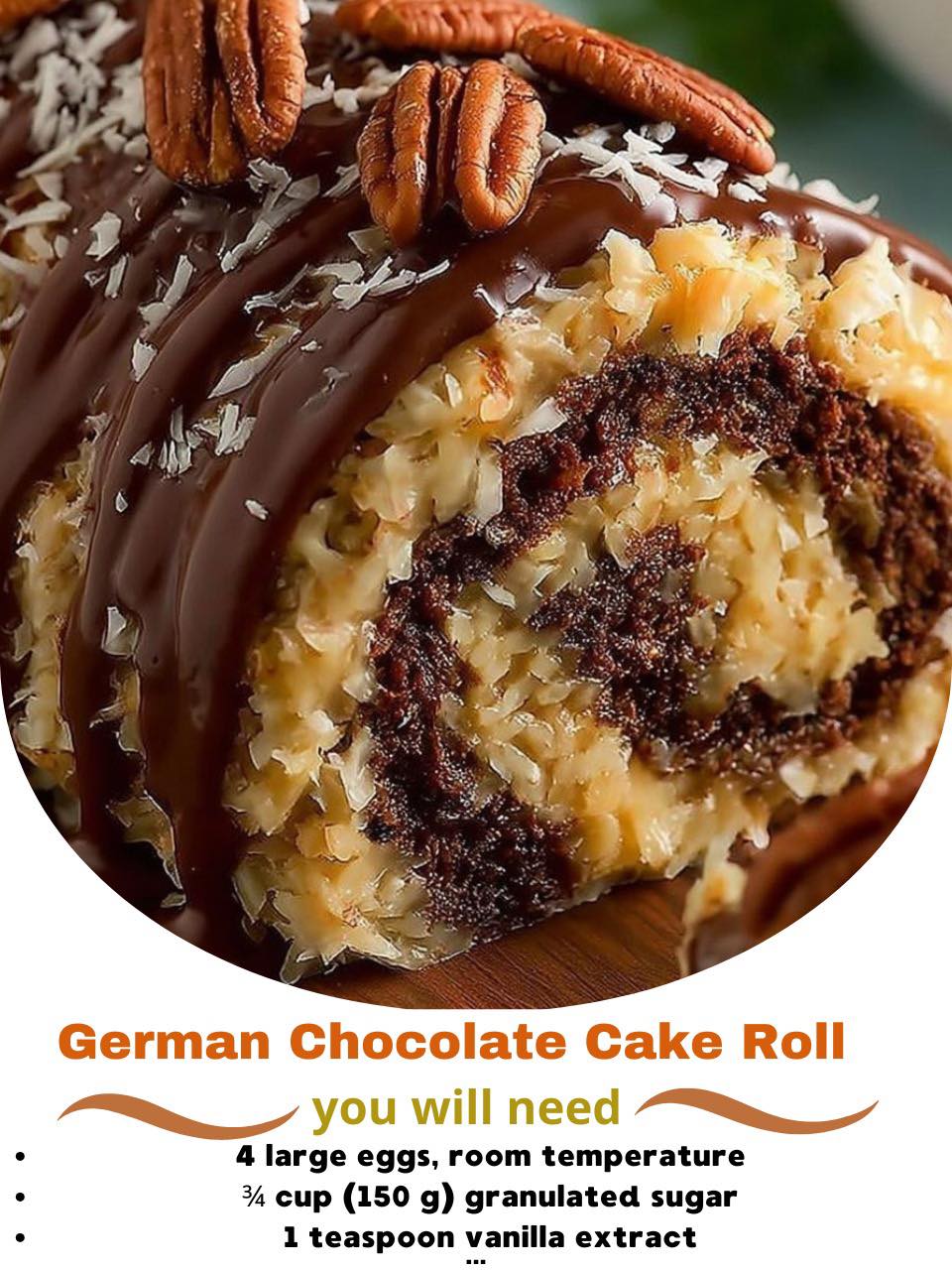
German Chocolate Cake Roll takes all the nostalgic flavors of classic German chocolate cake—soft chocolate sponge, gooey coconut pecan filling, and rich chocolate coating—and wraps them into an elegant swirl.
Instead of stacking layers, you bake a thin chocolate sheet cake, roll it around a decadent coconut-pecan center, and finish with a glossy ganache or simple dusting of cocoa. It looks bakery-fancy on a platter but is very doable at home with a few smart techniques to keep the cake flexible and crack-free.
Equipment You Will Need
- 10×15-inch jelly roll pan
- Parchment paper
- Stand mixer or hand mixer
- Large mixing bowls
- Medium saucepan
- Whisk
- Rubber spatula
- Kitchen towel (thin, lint-free)
- Fine-mesh sieve (optional, for sifting)
- Offset spatula or knife (for spreading)
- Wire cooling rack
- Sharp knife for slicing
Ingredients List
For the chocolate sponge cake
- 4 large eggs, at room temperature
- ½ cup granulated sugar
- 1 teaspoon vanilla extract
- ⅔ cup all-purpose flour
- ¼ cup unsweetened cocoa powder
- 1 teaspoon baking powder
- ¼ teaspoon salt
- 2–3 tablespoons powdered sugar or cocoa powder (for dusting towel)
For the coconut pecan filling
- ¾ cup brown sugar (light or dark, packed)
- 4 large egg yolks
- 1 cup evaporated milk (or 8 oz / about 240 ml)
- 6 tablespoons unsalted butter
- ½ teaspoon salt
- 1–1½ teaspoons vanilla extract
- 1½ cups sweetened shredded coconut, lightly toasted if desired
- ½–1 cup chopped pecans, toasted
Optional chocolate ganache topping
- 8 oz dark or semisweet chocolate, finely chopped
- 1 cup heavy cream
- 1 tablespoon butter (for shine)
- Extra toasted coconut and pecan pieces for garnish
Step-by-Step Instructions
Start with the coconut pecan filling so it has time to cool and thicken. In a medium saucepan, combine the brown sugar, egg yolks, evaporated milk, butter, and salt. Place the pan over medium-low heat and whisk until the mixture is smooth and the butter begins to melt.
Continue to cook, stirring constantly with a whisk or spatula and scraping the sides and bottom of the pan, until the mixture thickens to a custard-like consistency and turns glossy and slightly deeper in color. You want it thick enough to coat the back of a spoon and leave a trail when you drag a spatula through it.
Once thickened, remove the pan from the heat and stir in the vanilla, shredded coconut, and chopped pecans. Mix until everything is evenly distributed.
Transfer the filling to a bowl and let it cool to room temperature, then chill it slightly if needed; it should be thick, spreadable, and not runny when it goes onto the cake. Toasted coconut and nuts will add extra flavor and texture, but you can use them untoasted if you prefer a softer bite.
While the filling cools, make the chocolate sponge cake. Preheat your oven to 350°F (175°C). Grease a 10×15-inch jelly roll pan, line it with parchment paper, and then lightly grease the parchment as well. This helps the thin cake release cleanly later.
Prepare your kitchen towel by laying it flat on the counter and dusting it generously with powdered sugar or cocoa powder—this will keep the warm cake from sticking when you roll it.
In a mixing bowl, sift or whisk together the flour, cocoa powder, baking powder, and salt. Set aside. In the bowl of a stand mixer fitted with the whisk attachment (or in a large bowl with a hand mixer), beat the eggs, granulated sugar, and vanilla on high speed until the mixture becomes very thick, pale, and voluminous.
This can take 4–6 minutes; you’re looking for the “ribbon stage,” where the batter falls from the whisk in thick ribbons that sit on the surface for a few seconds before sinking back in.
Sprinkle about half of the dry ingredients over the whipped egg mixture. Using a rubber spatula, gently fold them in with light, sweeping motions, turning the bowl as you go. Add the remaining dry ingredients and continue folding just until no streaks of flour remain. Take care not to deflate the batter; the air whipped into the eggs is what gives the cake its light structure and flexibility.
Pour the batter into the prepared jelly roll pan and spread it evenly to the corners with an offset spatula. Tap the pan lightly on the counter to pop any large air bubbles.
Bake for about 8–10 minutes, or until the cake springs back lightly when touched and a toothpick inserted in the center comes out clean. Avoid overbaking; a dry sponge is more likely to crack when rolled.
Immediately after removing the cake from the oven, run a knife around the edges to loosen it from the sides of the pan. Working quickly, place the prepared towel (sugared side down) over the top of the cake or invert the cake onto the towel. Carefully peel off the parchment paper.
Starting from a short end, roll the warm cake up with the towel inside, forming a tight log. The towel prevents sticking and helps the cake “remember” its rolled shape as it cools. Let the rolled cake cool completely on a wire rack.
Once the cake and filling are cool, it’s time to assemble. Gently unroll the cake; it will still have a curve but should lie mostly flat.
If there are minor cracks, don’t worry—the filling and later ganache will help hide them. Spread the coconut pecan filling evenly over the surface of the cake, leaving a small border along the outer edge so it doesn’t squeeze out too much when rolling.
Starting from the same short end you rolled before, re-roll the cake, this time without the towel, keeping it snug but not so tight that the filling spills out.
Use the towel underneath to help guide and support the cake as you roll. Once rolled, wrap the cake roll gently in parchment or plastic wrap to help it hold its shape, and chill for at least 1–2 hours so it firms up and is easier to slice and glaze.
If you’re adding chocolate ganache, place the chopped chocolate in a heatproof bowl. Heat the heavy cream in a small saucepan just until it begins to steam and small bubbles form around the edges.
Pour the hot cream over the chocolate and let it sit for a minute, then whisk until smooth and glossy. Stir in the butter until melted for extra shine and richness. Allow the ganache to cool slightly until it’s thickened but still pourable.
Set the chilled cake roll on a wire rack placed over a baking sheet to catch drips. Slowly pour the ganache over the top of the roll, letting it cascade down the sides to coat the cake. Use an offset spatula if needed to smooth and spread it evenly.
While the ganache is still soft, sprinkle extra toasted coconut and chopped pecans along the top for decoration. Let the cake sit until the ganache is set—about 20–30 minutes at room temperature or a shorter time in the refrigerator.
When ready to serve, trim a thin slice from each end of the roll with a sharp knife to reveal a clean swirl. Cut the cake into slices about 1 inch thick, wiping the knife between cuts for neat edges. Serve at cool room temperature so the cake is soft, the filling is creamy, and the ganache is just slightly firm but not hard.
Expert Tips for Success
For a flexible, crack-resistant sponge, focus on properly whipped eggs and precise baking time. Beat the eggs and sugar long enough to reach ribbon stage; under-whipped eggs won’t hold enough air, and overbaking the thin cake makes it dry and brittle.
As soon as it comes out of the oven, roll it up while it’s still warm—this “training roll” is crucial for a smooth final spiral.
The coconut pecan filling needs gentle heat and constant stirring so it thickens without scrambling the yolks.
If you see any signs of curdling or the mixture cooking too fast, pull the pan off the heat and keep stirring; you can return it to low heat once it’s smoothed back out. Toasting the nuts and coconut before stirring them into the custard deepens their flavor and helps them stay pleasantly chewy rather than soggy.
Chilling is your friend at every stage. Let the rolled, filled cake chill well before glazing so it holds its shape and doesn’t sag under the warm ganache.
If the ganache is very hot, let it cool a bit before pouring to avoid melting the surface of the cake or filling. Using a rack over a tray when glazing keeps things neat and lets excess ganache drip away instead of pooling unevenly.
Variations and Substitutions
You can tailor this German Chocolate Cake Roll to your preferences. For a deeper chocolate flavor, use Dutch-process cocoa in the sponge and a darker chocolate for the ganache.
A teaspoon of instant espresso powder whisked into the dry ingredients or dissolved into the cream for ganache will intensify the chocolate without making it taste like coffee.
If you prefer a slightly richer, denser roll, you can brush the cooled sponge lightly with a chocolate or coconut simple syrup before spreading the filling.
This adds moisture and an extra hit of flavor. For a lighter finish, skip the ganache and simply dust the rolled cake with cocoa powder or powdered sugar, or drizzle with a thinner chocolate glaze instead of a full coating.
To adapt for different tastes, adjust the coconut and pecan levels in the filling—use more pecans for extra crunch, or more coconut for a chewier texture.
You can also swap pecans for walnuts or almonds if that’s what you have on hand. For a less sweet version, reduce the sugar slightly in the filling and use a higher-percentage dark chocolate in the ganache.
Serving Suggestions
German Chocolate Cake Roll makes a beautiful centerpiece dessert for holidays, birthdays, or special dinners.
Serve slices on small plates with a drizzle of leftover ganache or a few extra toasted nuts and coconut scattered around for texture and visual appeal. A dollop of lightly sweetened whipped cream or a scoop of vanilla or coconut ice cream alongside each slice balances the richness and adds a cool, creamy contrast.
This roll pairs especially well with coffee, espresso, or a glass of cold milk, highlighting the chocolate and toasted coconut notes.
Because it slices cleanly and serves many, it’s ideal for potlucks and buffets: guests can see the eye-catching swirl on the platter and easily help themselves to a slice. Leftover slices also make an indulgent treat with afternoon tea or as a next-day dessert straight from the fridge.
Storage, Freezing, and Make-Ahead Tips
German Chocolate Cake Roll is an excellent make-ahead dessert. Once the ganache is set, transfer the roll to a platter, cover it loosely with plastic wrap or a cake dome, and refrigerate for up to 3–4 days. For the best texture, let slices sit at room temperature for 15–20 minutes before serving so the cake softens slightly and the filling becomes creamy again.
You can also freeze the roll for longer storage. For best results, freeze the cake roll (with or without ganache) until firm, then wrap it tightly in plastic wrap and a layer of foil. It will keep in the freezer for about 2–3 months.
To serve, thaw overnight in the refrigerator, then bring to near room temperature before slicing. If you prefer a freshly glazed look, freeze the roll without ganache, thaw it, then make and pour the ganache the day you plan to serve. This flexibility makes German Chocolate Cake Roll a great option when you want an impressive dessert without last-minute stress.