
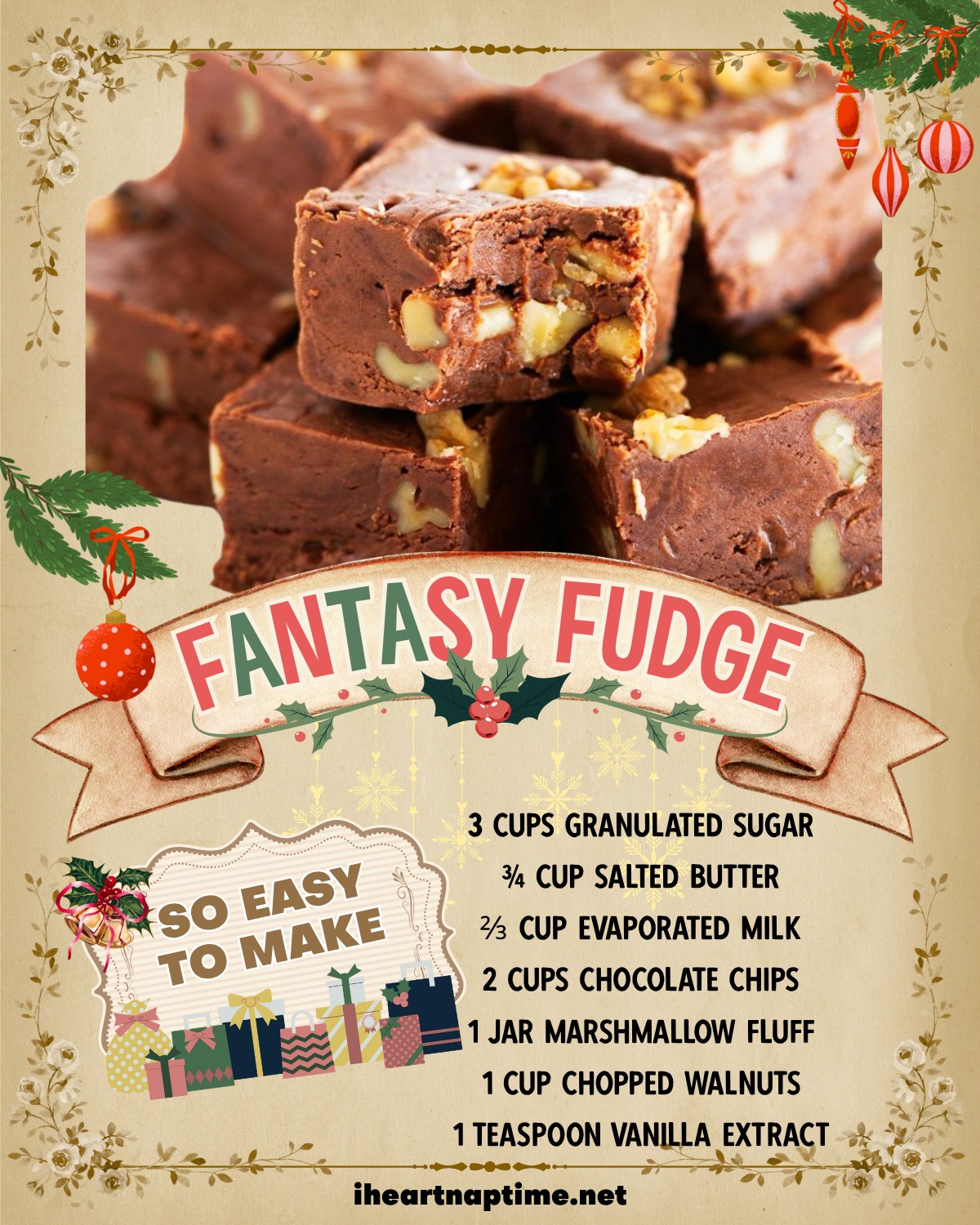
Next comes the marshmallow fluff. The moment I fold it in, the mixture lightens in texture and becomes irresistibly creamy. I used to underestimate how important this ingredient is until I tried making fudge without it once—never again. With the fluff incorporated, I stir in the vanilla and the chopped walnuts, and suddenly the fudge becomes beautifully speckled with nutty bits. At this stage, I’m always tempted to take a spoonful, but the mixture is molten hot, so I resist.
Finally, I pour the fudge into a parchment-lined pan and smooth the top with a spatula. It sets fairly quickly, but I always leave it at room temperature for at least two hours to make sure it firms up properly. As it cools, the top becomes matte and slightly firm to the touch. Cutting it into squares is incredibly satisfying; each piece turns out smooth, dense, and absolutely perfect.
Pro Tips for Best Results
I tested this recipe several different ways, and the biggest lesson I learned is to measure your boiling time carefully. If you under-boil the mixture, your fudge will turn out too soft and won’t hold its shape. If you boil it too long, it becomes dry and crumbly. Four minutes at a rolling boil is truly the sweet spot, and once I committed to that timing, I never had a batch go wrong again.
Another tip I learned the hard way is to use evaporated milk—never substitute regular milk. Evaporated milk has less water content, which helps the fudge set with that classic firmness. When I first started experimenting, I tried using whole milk once, and the fudge never set properly. It stayed sticky and overly soft. Now I never stray from evaporated milk.
I also recommend prepping the pan with parchment before you start cooking. Once the fudge mixture is finished, it thickens quickly, and you won’t have time to scramble around lining the pan. If the parchment hangs over the edges, you can lift the entire batch out at once, and the cleanup is effortless. It’s such a small step, but it makes everything easier.
Finally, don’t stir the fudge once it’s in the pan. I used to try smoothing the top after it started cooling, and it always ruined the texture. Once you pour it in and gently level the surface, leave it alone. Letting it cool undisturbed gives you a creamy, uniform consistency with no grainy patches.
Common Mistakes to Avoid
I made the mistake of rushing the melting process once, thinking I could melt the butter and sugar on high heat to save time. Instead, it scorched the bottom of the pan and added a burnt flavor that ruined the whole batch. Medium heat is ideal because it gives you control and even heating, which fudge absolutely needs.
Another mistake I made early on was trying to cut the fudge before it was fully cooled. I was so excited to taste it that I sliced into it after just 20 minutes, and of course, it smeared and collapsed into a sticky mess. Letting it cool for the full two hours—or even longer—ensures clean, beautiful cuts.(See the next page below to continue…)