
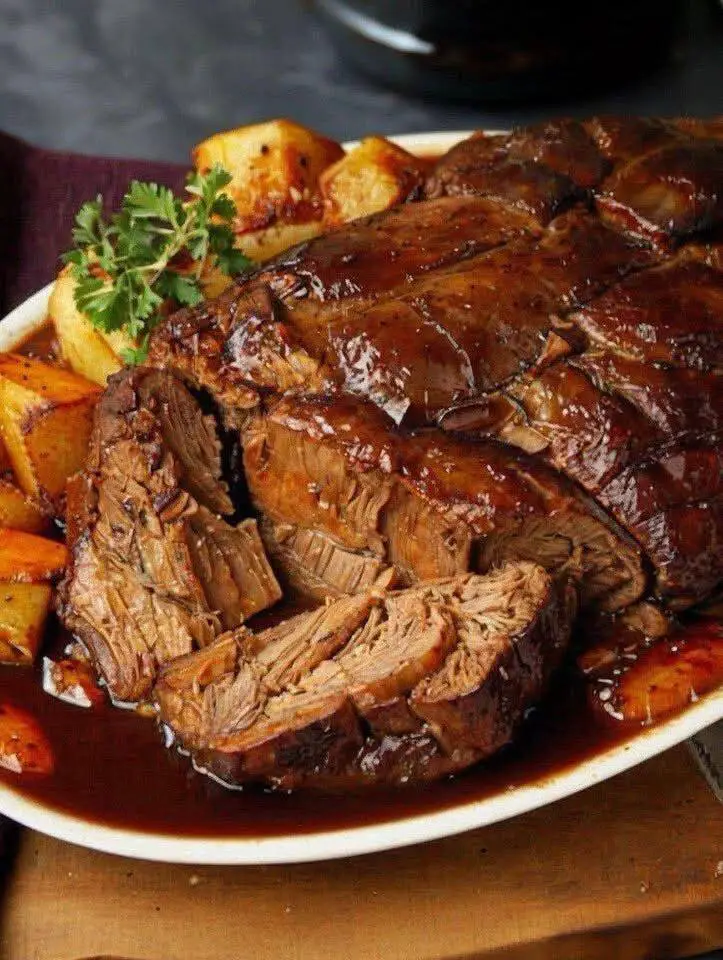
I carefully transfer the roasting pan to the oven. I let it bake, undisturbed, for about 4 hours for a 3-4 lb roast. The low heat and sealed environment work their magic. About 30 minutes before I think it’s done, I carefully open one end of the foil (watch out for the hot steam!) and insert a meat thermometer into the thickest part of the meat. For beef, I’m looking for at least 200-205°F for that fall-apart tenderness. For pork, 195-200°F is perfect. Once it hits temp, I remove the pan from the oven and let the roast rest, still wrapped, for at least 30 minutes. This rest allows the juices to redistribute.
Pro Tips for Best Results
I tested the initial sear three different ways: searing hard in a skillet, not searing at all, and just using the oven without the envelope. Skipping the sear but using the envelope method was the winner for ease and moisture. A hard sear adds flavor, but it’s an extra step and pan. The envelope method creates such a flavorful, concentrated gravy that you don’t miss the sear. For maximum ease, I skip it.
Here’s what I learned the hard way about the foil: use heavy-duty and double-check your seals. Regular foil can tear from the long cook time and the weight of the meat and liquid. A poor seal lets steam escape, which can lead to a drier roast. I make my initial fold, then go back and double-fold it for absolute security. A tight seal equals a juicy roast.
For the richest, most luxurious gravy, after removing the roast and veggies, pour all the juices from the foil packet into a saucepan. Let it settle, skim off the excess fat from the top, then bring it to a simmer. Make a slurry with 2 tablespoons of cornstarch and 2 tablespoons of cold water, then whisk it into the simmering juices. Cook for 2-3 minutes until thickened. This gravy is liquid gold.
Common Mistakes to Avoid
My first-time mistake was using a lean roast. I thought a sirloin tip would be fine. It was dry and tough, no matter how long I cooked it. Don’t do what I did! This method is designed for tough, fatty cuts like chuck, brisket, or pork shoulder. The fat and collagen render down over hours, basting the meat internally and creating that signature tenderness.
Don’t skimp on the foil or the sealing step. I once tried to wrap a roast in a single layer of standard foil. Halfway through cooking, a small tear appeared, and precious steam escaped. The result was a roast that was tender on one end and dry on the other. Heavy-duty foil and a meticulous seal are non-negotiable for perfect results.
Avoid peeking! The temptation to open the oven and check on the roast is strong, but every time you do, you let out heat and steam, which increases the cooking time and can affect the texture. Trust the process, the time, and the internal temperature. Use your oven light to look in if you must.(See the next page below to continue…)