
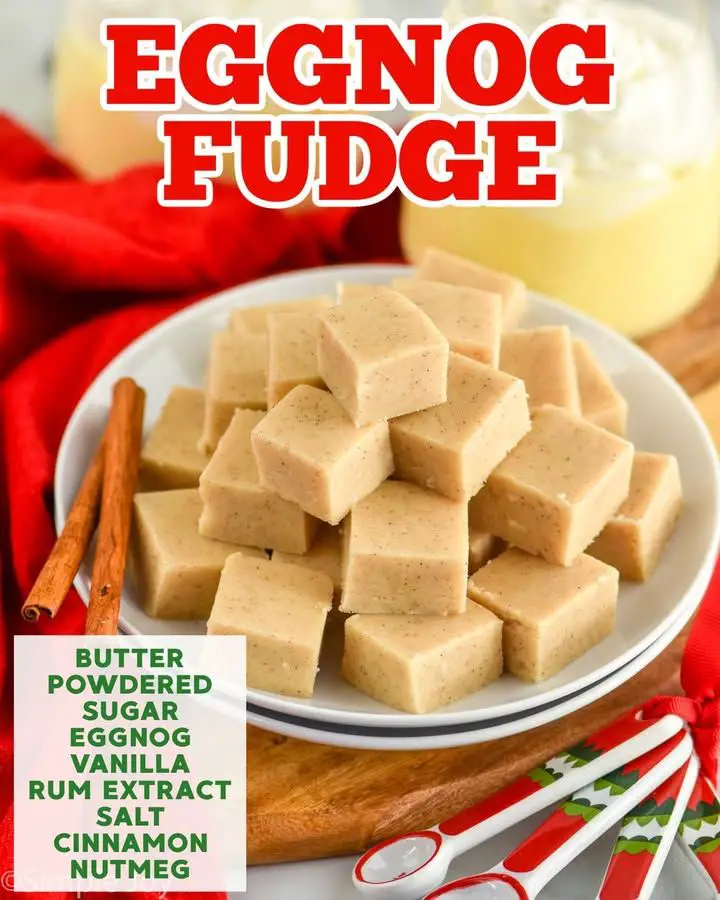
Finally, I pour the fudge into the prepared pan, smoothing the top with a spatula. At this stage, it’s warm, soft, and smells like the holidays in the most magical way. I let it cool at room temperature before transferring it to the fridge to firm up. When I finally slice it into little squares, each bite is creamy, sweet, and richly spiced—the essence of eggnog, but in candy form.
Pro Tips for Best Results
One of the biggest things I learned while testing this recipe is that eggnog fudge behaves differently than traditional chocolate fudge. It needs time to thicken properly, so don’t crank the heat or walk away. I’ve tried rushing it before, and the fudge turned grainy because the sugar didn’t dissolve correctly. Gentle heat and constant stirring really do make a difference.
Another tip is to sift the powdered sugar before adding it. It might seem unnecessary, but powdered sugar clumps easily, and once those lumps hit hot liquid, they’re impossible to whisk out. The one time I skipped sifting, I ended up with little white specks in my fudge—not the end of the world, but not the smooth finish I love.
Freshly grated nutmeg truly elevates this recipe. I didn’t realize how much until I made it with pre-ground nutmeg one year and the flavor just wasn’t the same. Fresh nutmeg has a warm, almost floral aroma that makes the fudge taste more complex and bakery-quality. It’s worth the extra few seconds of grating.
Lastly, don’t try to cut the fudge before it’s fully set. I’ve made that mistake more than once when I was impatient, and the fudge dragged and smeared instead of slicing cleanly. Letting it rest overnight in the fridge gives you perfect, clean squares that look as good as they taste.
Common Mistakes to Avoid
One mistake I used to make early on was using low-fat or flavored eggnog. It’s tempting to use what’s already in the fridge, but this recipe genuinely needs the richness of classic, full-fat eggnog. Anything else produces a runny or gritty fudge that never sets quite right.
Another common issue is skipping the simmering step too soon. If the mixture doesn’t cook long enough to reach soft-ball stage, you’ll end up with a fudge that stays soft like frosting rather than firming into proper squares. I’ve had entire batches turn into eggnog caramel sauce because I underestimated the importance of simmering.
Over-stirring after adding powdered sugar can also cause problems. It’s important to whisk until smooth, but once it’s combined, avoid constant stirring as it cools. Repeated agitation affects the sugar crystals and can make the fudge grainy. Smooth it into the pan and let it rest peacefully.
And the last big mistake—don’t store the fudge uncovered in the refrigerator. Eggnog fudge absorbs fridge odors like a sponge, and once it does, there’s no saving it. Always wrap it tightly or keep it in a sealed container.
Serving Suggestions
One of my favorite ways to serve Eggnog Fudge is on a big holiday dessert platter surrounded by cookies, chocolates, and sugared nuts. The fudge stands out with its creamy color and dusting of warm spices, and people always reach for it first. Something about eggnog feels nostalgic, and it makes the platter feel festive and cozy.(See the next page below to continue…)