
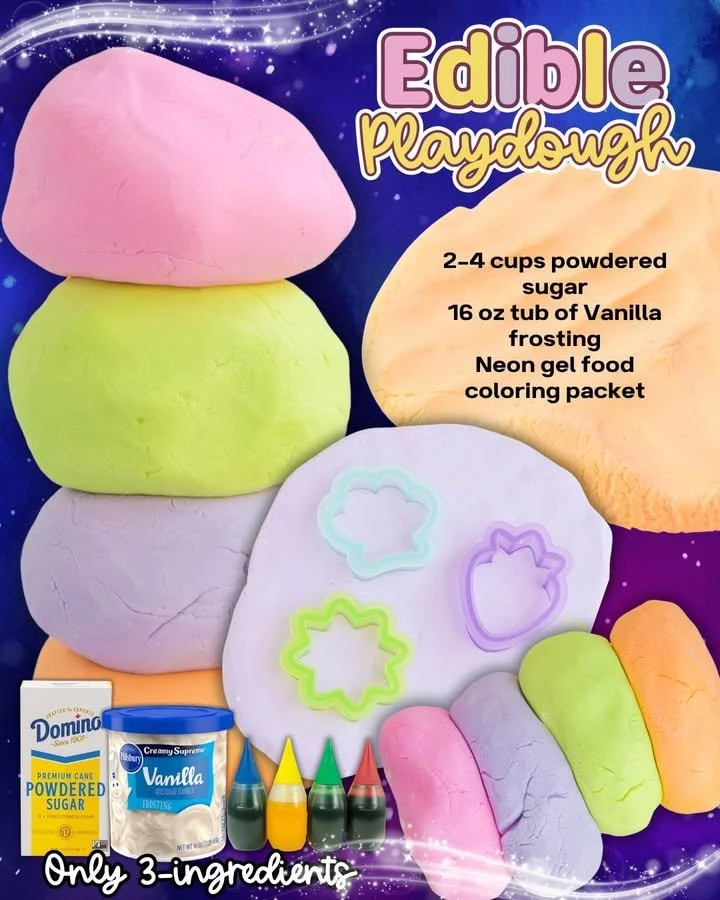
Finally, turn your mixture onto a clean surface and knead it gently for about 5 minutes. If it’s too sticky, feel free to sprinkle a bit more flour until you reach a nice, doughy consistency that’s easy to handle. During this part, I love to let my kids join in. They adore getting their hands in there and feeling the textures shift as it transforms into a soft, pliable dough. Once you’ve reached the desired consistency, feel free to store the playdough in an airtight container to keep it fresh. If you’ve chosen to add any flavor extracts, the scents will fill your kitchen with warmth, and your kids will love it even more!
Pro Tips for Best Results
When I first started making edible playdough, I tested this three ways: with varying amounts of salt and flour. I found that the two cups of flour with one cup of salt really strikes the right balance. If you add too much salt, the flavor becomes overwhelming, which can be off-putting, even for a playful snack! I also suggest letting it cool down a little before letting the kids dive in; it can be hot straight off the stove.
Another tip is to experiment with different food coloring. I once tried natural beet juice for a lovely reddish hue, and the vibrant color made the playdough even more inviting. The kids were thrilled to craft little red hearts for a Valentine’s Day activity! Don’t be afraid to mix it up, as this can lead to great colors and interests during play.
Lastly, if you’re looking to make this a standout party treat, consider creating a themed playdough station. You could set out various molds, cookie cutters, and even some edible glitters. Watching the kids’ creativity take flight is such a joy, and I can guarantee you’ll be the coolest parent on the block!
Common Mistakes to Avoid
One common mistake I’ve made in my early experimenting is not measuring my ingredients accurately. It’s essential to use a proper measuring cup for both the flour and the salt. I once estimated and ended up with a sticky mess that was more mush than dough! I learned that precise measurements are key to achieving the right texture. (See the next page below to continue…)