
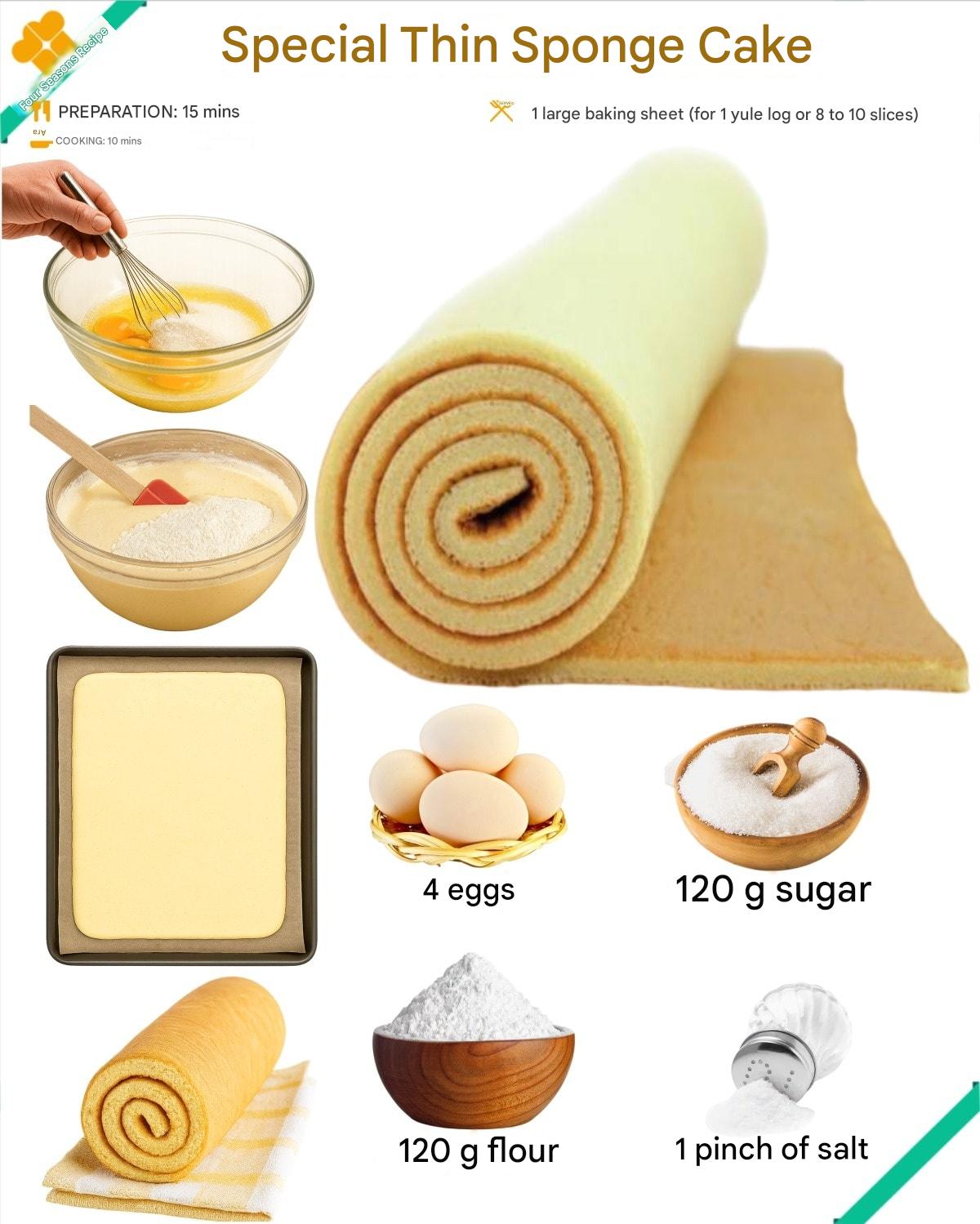
After baking, I immediately turn the sponge out onto a clean kitchen towel, peel off the parchment, and gently roll the cake while it’s still warm. This step felt intimidating at first, but now it’s second nature, and rolling while warm prevents cracking later when you add the filling.
Pro Tips for Best Results
I tested this recipe with cold eggs once, and the difference was noticeable, so I always emphasize letting them come to room temperature first. Warmer eggs whip better and hold more air, which directly affects how well the sponge rolls later.
One hard-earned lesson was overbaking the sponge. Even an extra minute can dry it out, so I now check for doneness early and look for a lightly golden surface that springs back gently when touched.
I’ve also learned that sifting the flour isn’t optional. Skipping this step resulted in small lumps and uneven texture, which made rolling less smooth.
Finally, rolling the sponge while warm is non-negotiable. I tried waiting until it cooled once, and it cracked immediately, so trust me, do it while it’s still pliable.
Common Mistakes to Avoid
The first mistake I made was whisking the eggs and sugar too little, which resulted in a flat, dense cake. You really need to see volume and lightness before moving on.
Another common issue is folding too aggressively. I’ve been guilty of this, and it deflates the batter faster than you realize, so gentle movements are key.
Using an uneven baking sheet caused one side of my sponge to bake faster than the other, making rolling awkward. A flat, sturdy tray makes a big difference.(See the next page below to continue…)