
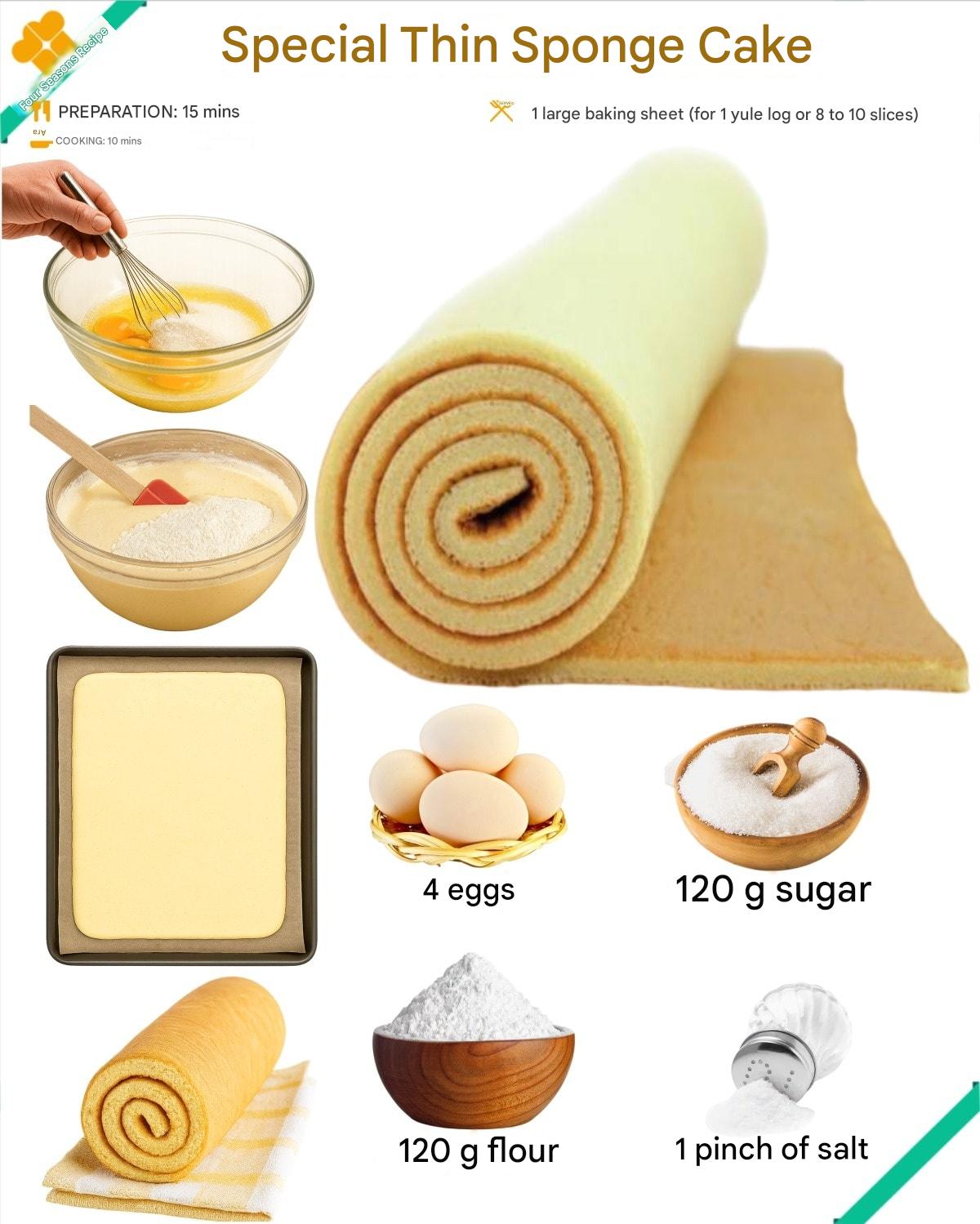
I still remember the first time I made this easy rolled sponge cake, standing in my kitchen with the oven preheating and that unmistakable smell of sugar and eggs already filling the air. I had always thought rolled sponge cakes were tricky and unforgiving, but this recipe completely changed my mindset. As I whisked the eggs and watched the batter turn pale and airy, I felt that quiet confidence that comes when something just feels right, and ever since then, this sponge has been my go-to base for countless desserts.
Why You’ll Love This Recipe
You’ll love this recipe because it removes the fear from rolled sponge cakes, and I say that from real experience, not theory. I’ve made this sponge more times than I can count, and every time it bakes up light, flexible, and ready to roll without cracking. It’s simple, reliable, and forgiving, which means you can focus on enjoying the process instead of stressing. Whether you’re filling it with cream, jam, or chocolate, this sponge adapts beautifully to whatever you want to create.
Ingredients
- 4 large eggs, at room temperature
- 120 g granulated sugar
- 120 g all-purpose flour
- 1 pinch of salt
I’ve learned that with a recipe this simple, ingredient quality really matters. Room-temperature eggs whip up far better than cold ones, giving you more volume and a softer crumb. I always use plain all-purpose flour and sift it to avoid lumps, and that tiny pinch of salt is essential because it balances the sweetness and enhances the overall flavor more than you might expect.
Equipment Needed
- Large mixing bowl
- Whisk or electric mixer
- Rubber spatula
- Fine mesh sieve
- Baking sheet
- Parchment paper
- Clean kitchen towel
- Cooling rack
This recipe doesn’t require fancy tools, which is one of the reasons I love it so much. A simple whisk works perfectly if you don’t want to use a mixer, and a rubber spatula helps keep the batter airy when folding. The kitchen towel is surprisingly important for rolling, and after trying it both with and without one, trust me, using it makes the whole process smoother and less stressful.
Step-by-Step Instructions
I start by cracking the eggs into a large bowl and adding the sugar and salt, then whisking vigorously until the mixture turns pale, thick, and slightly foamy. This step sets the foundation for the entire sponge, and I’ve learned not to rush it because proper aeration here is what gives the cake its light, flexible texture. When I lift the whisk and see ribbons forming, I know it’s ready.
Next, I sift the flour directly over the egg mixture in two additions, folding gently with a spatula each time. I use slow, sweeping motions from the bottom of the bowl upward, being careful not to knock out the air I worked so hard to create. I’ve tried stirring too quickly before, and the sponge came out dense, so patience really pays off here.
Once the batter is smooth, I spread it evenly onto a parchment-lined baking sheet, taking a moment to level it properly. An even layer ensures uniform baking, which is crucial for rolling later. I tap the tray lightly on the counter to release large air bubbles, then slide it into the oven and keep a close eye on it.(See the next page below to continue…)