
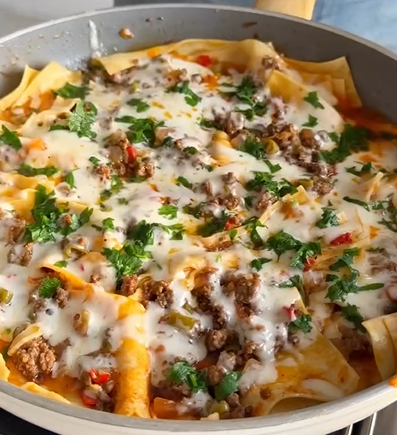
Not cooking the tomato paste with the aromatics is a missed opportunity for flavor. If you just stir it into the water, the sauce will taste flat and one-dimensional. Taking that full minute to fry the tomato paste with the garlic and vegetables caramelizes it slightly, unlocking a rich, sweet, and complex base note that defines the entire sauce. Don’t skip this step.
Using the wrong amount of liquid is a common pitfall. Too little, and the noodles won’t cook; too much, and you’ll have lasagna soup. The 3.5 cups is a guideline. Your noodles should be just submerged. Different brands of no-boil noodles absorb liquid differently. If you check at the 15-minute mark and the pan looks dry but the noodles are still hard, add ¼ cup of warm water. If there’s a lot of excess liquid at the end, simmer uncovered for a few more minutes.
Stirring the dish after adding the noodles but before they are fully cooked is a no-go. You’ll break the noodles and make a starchy, mushy mess. Let them simmer undisturbed under the lid. The only stir happens at the end, after they’re tender, to mix the sauce from the bottom throughout. I ruined the texture of my first attempt by being impatient and stirring too soon.
Serving Suggestions
I love serving this lasagna directly from the skillet at the table, with a big, crisp green salad dressed in a simple vinaigrette on the side. The freshness of the salad cuts through the richness of the cheesy pasta perfectly. A slice of warm, crusty garlic bread is also a classic and beloved companion for scooping up any saucy bits left in the pan.
For a more complete Italian-inspired meal, I’ll start with a simple appetizer like marinated olives or bruschetta. This makes the pan lasagna feel like more of an event. A light, red wine like a Chianti or a Sangiovese pairs beautifully with the tomato and meat sauce, making a weeknight dinner feel special.
Leftovers (if you have any!) are fantastic for lunch the next day. The flavors meld and deepen overnight. I sometimes chop up any leftover portions, fry them in a little butter in a small skillet until crisp on the edges, and top with a fried egg for an incredible breakfast-for-lunch treat.
Variations & Customizations
This recipe is wonderfully adaptable. For a vegetarian version, simply omit the meat and add a can of drained, rinsed lentils or another diced vegetable like zucchini or mushrooms when you add the peppers. You’ll get the same hearty texture and flavor. I’ve also made it with plant-based ground “meat” with great success.
Feel free to play with the cheeses. A layer of ricotta mixed with an egg and some parsley, dolloped over the noodles before adding the water, creates a more traditional layered texture. Combining mozzarella with provolone or fontina also adds a more complex cheesy flavor. The basic method remains the same.
For a creamier twist, replace one cup of the water with whole milk or cream when you add the liquid. It creates a richer, more decadent sauce. You can also stir a handful of fresh spinach into the pan right before adding the cheese for a boost of color and nutrients.
How to Store, Freeze & Reheat
Leftovers can be stored in an airtight container in the refrigerator for up to 4 days. The pasta will continue to absorb moisture, so it may become drier. When reheating, add a tablespoon or two of water or broth to the portion in a saucepan over low heat, or cover it and microwave in 30-second intervals, stirring in between, until hot.
You can freeze the fully cooked and cooled pan lasagna. Portion it into individual containers or freeze the whole block in a freezer-safe dish. It will keep for up to 3 months. Thaw overnight in the refrigerator before reheating. Note that the texture of the noodles may become a bit softer upon thawing and reheating, but the flavor will still be excellent.
The best way to reheat for optimal texture is on the stovetop. Place a portion in a small skillet with a splash of water or sauce, cover, and warm over low heat, stirring occasionally. The microwave is convenient but can make the edges rubbery. If using the microwave, cover the dish with a damp paper towel to help keep it moist.
Conclusion
This Easy Pan Lasagna is my testament to the idea that incredible comfort food doesn’t have to be complicated. It has saved countless busy evenings in my home, filling the kitchen with wonderful smells and my family with happy smiles. I hope it becomes a trusted, go-to recipe in your kitchen as well, proving that sometimes the simplest methods yield the most satisfying results. Here’s to delicious, one-pan miracles and more time enjoying the meal around the table.