
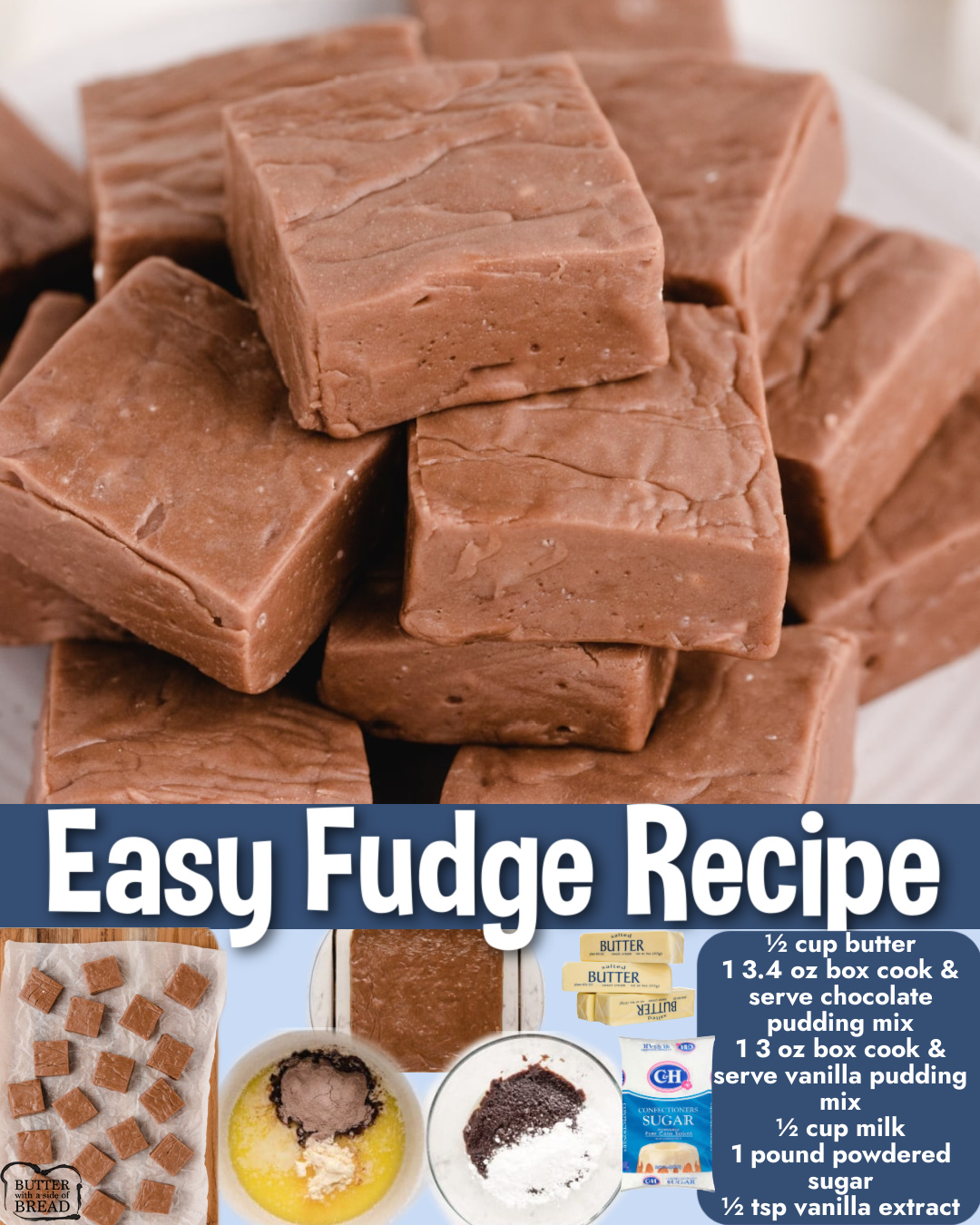
While the mixture is still piping hot, I add the powdered sugar gradually. I stir vigorously after each addition because it melts right into the warm pudding base. It may look like too much sugar at first, but trust me: it all incorporates beautifully. The texture becomes thick, rich, and very fudge-like. Once the sugar is fully mixed in, I stir in the vanilla extract for just a hint of extra warmth.
Finally, I transfer the thick fudge mixture into the prepared baking dish. I smooth the top with my spatula, pressing lightly to remove air pockets. The fudge sets surprisingly quickly—within an hour, it’s firm enough to cut. When I lift it from the pan and slice it into squares, each piece comes out smooth and perfectly shaped, and biting into it reveals that soft, creamy, melt-in-your-mouth texture that makes this recipe such a keeper.
Pro Tips for Best Results
I tested this recipe a few different ways, and one of the biggest lessons I learned is to use cook-and-serve pudding—never instant. The cook-and-serve pudding is what gives the fudge structure. Instant pudding results in a grainy, loose mixture that never truly sets. Trust me, the cook-and-serve version makes all the difference.
Another tip is to sift the powdered sugar before adding it. I used to skip this step and always wondered why my fudge sometimes had tiny lumps. Sifting eliminates clumps and makes stirring the sugar in much easier. It also gives the finished fudge a smoother consistency, which makes it feel more like traditional homemade fudge.
I also learned to work quickly once the pudding mixture thickens on the stove. If you let it cool too much before adding the powdered sugar, the fudge becomes harder to stir and slightly less smooth. Stirring the sugar into the mixture while it’s still hot keeps everything velvety and even.
For perfectly cut squares, refrigerate the fudge for at least 20 minutes before slicing. I don’t chill it to set it—that happens at room temperature—but chilling it briefly makes cutting clean, neat pieces much easier.
Common Mistakes to Avoid
The biggest mistake I made the first time was using instant pudding. I didn’t realize how different the two types were until the fudge refused to set and stayed soft and mushy. Cook-and-serve pudding mix thickens through heat activation, and that process is essential for this recipe to work.
Another mistake is melting the butter on too high of a heat. Butter burns easily, and even slightly scorched butter changes the flavor of the entire batch. I always melt my butter on medium or medium-low to keep the flavor pure and smooth. Burned butter adds a bitterness that really doesn’t complement fudge.(See the next page below to continue…)