
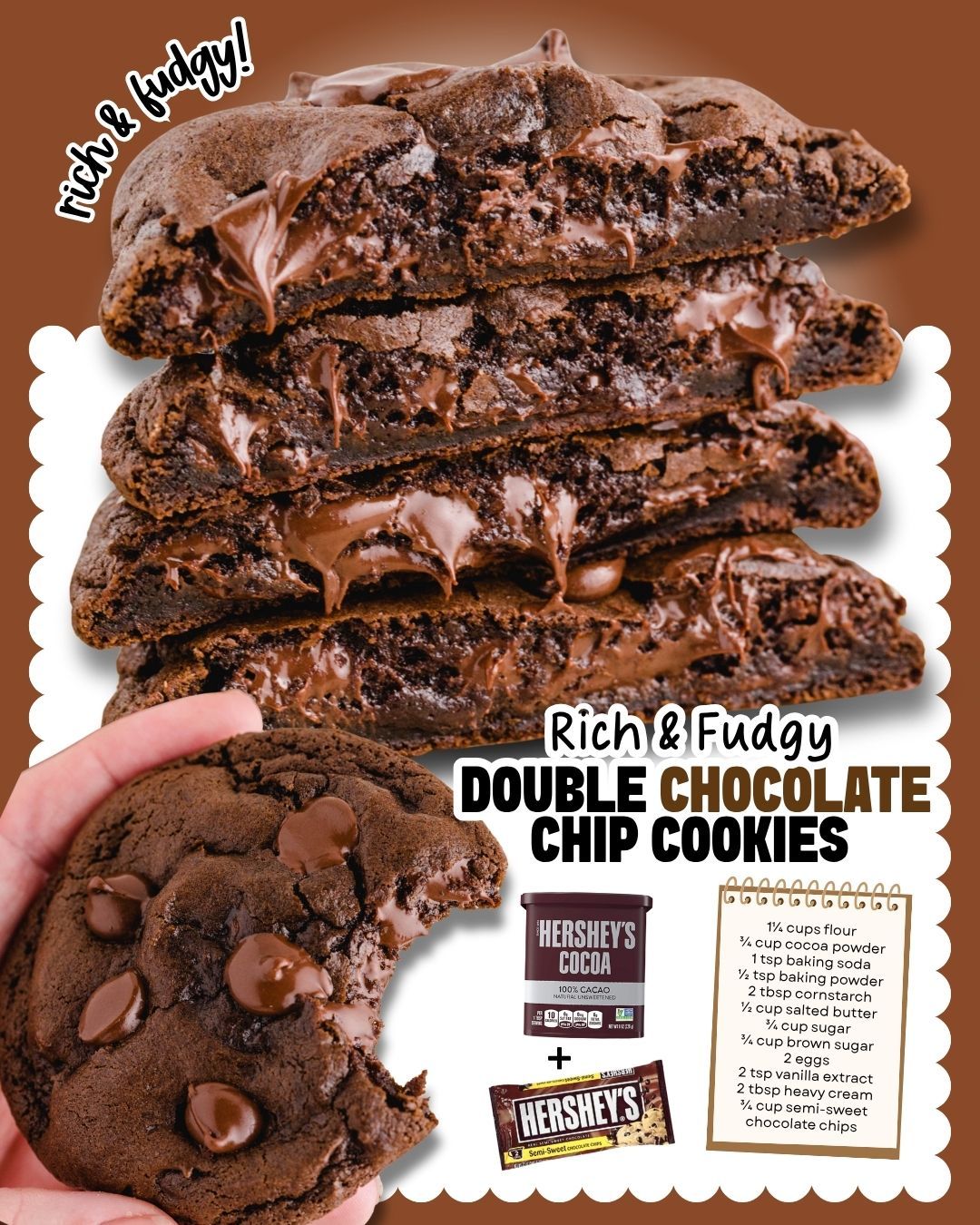
At their core, double chocolate chip cookies start with a classic butter‑and‑sugar cookie base that gets a generous dose of cocoa powder mixed into the dry ingredients, turning the dough itself chocolatey before any chips are added.
The dough is creamed, enriched with egg and vanilla, then stirred together with flour, cocoa, leavening, and salt just until combined before being packed with chocolate chips or chunks. Some recipes lean toward a brownie‑like texture with melted chocolate in the dough and a rest period to let it firm into thick, fudgy scoops, while others use no‑chill methods with slightly thinner, chewy cookies you can bake right away. Either way, the result is a cookie that delivers deep chocolate flavor and a soft, indulgent bite.
Equipment
- Large mixing bowl for creaming butter and sugars and mixing dough.
- Hand mixer or stand mixer with paddle attachment to cream butter and sugar and beat in egg.
- Medium bowl for whisking together flour, cocoa powder, baking soda (or baking powder), and salt.
- Measuring cups and spoons for dry and liquid ingredients.
- Rubber spatula for scraping the bowl and folding in chocolate chips.
- Baking sheets lined with parchment paper or silicone baking mats.
- Cookie scoop (about 1½ tablespoons) or tablespoon for portioning dough balls evenly.
- Wire cooling racks for cooling baked cookies.
Ingredients
Here is a clear, measured base recipe for classic double chocolate chip cookies, adapted from several chewy, fudgy styles.
- 1 cup (120 g) all‑purpose flour.
- ⅓ cup (30–35 g) unsweetened cocoa powder (natural).
- ½ teaspoon baking soda.
- ½ teaspoon salt.
- ½ cup (113 g) unsalted butter, softened to room temperature.
- ½ cup (110 g) packed light brown sugar.
- ⅓ cup (65–70 g) granulated sugar.
- 1 large egg, room temperature.
- 2 teaspoons vanilla extract.
- 1–2 tablespoons milk, only if needed to soften a very stiff dough (used in some thick, chilled‑dough recipes).
- 1 to 1½ cups (180–270 g) semisweet or dark chocolate chips or chunks.
This yields about 18–22 medium cookies, depending on scoop size.
Instructions and steps
To make the dough, the dry ingredients are combined first so the cocoa distributes evenly. Flour, cocoa powder, baking soda, and salt are whisked together in a medium bowl until there are no streaks of cocoa or clumps of flour, which helps ensure an even texture and rise.
In a separate large bowl, softened butter, brown sugar, and granulated sugar are beaten with a hand mixer or stand mixer on medium speed until the mixture looks lightened and fluffy, usually about 2–3 minutes; this step incorporates air that helps build a softer, thicker cookie.
Once the butter and sugars are creamed, the egg and vanilla are added. The egg is beaten in until fully combined and the mixture is smooth and slightly creamy, scraping down the sides of the bowl as needed to ensure nothing is stuck to the edges.
At this stage, the dough base should look like a standard chocolate‑chip cookie batter but without the flour yet. The dry mixture is then added gradually with the mixer on low speed, mixing just until the flour and cocoa are absorbed and no dry pockets remain. Overmixing at this point can make the cookies tougher, so most recipes emphasize stopping as soon as the dough comes together.
The chocolate chips or chunks are folded in last. Using a spatula or mixing on low, the chips are stirred through the dough until they are evenly dispersed. If the dough seems exceptionally thick and dry, a tablespoon or two of milk can be beaten in to loosen it slightly, as suggested in some thick, chilled‑dough recipes; the dough should be thick and scoopable but not crumbly.
Many bakers also recommend pressing a few extra chips onto the tops of the scooped dough balls before baking so the finished cookies look extra studded with chocolate.
Depending on the style, the dough may be baked right away or chilled first. Some recipes call for chilling the dough for at least 1–3 hours or even overnight to firm it up and deepen the flavor, especially when the dough is sticky from added milk or extra cocoa; this chilling helps the cookies bake thicker and more fudge‑like instead of spreading thin.
Other “no‑chill” recipes are formulated with colder butter or more flour so the dough can go straight into the oven without refrigeration, yielding slightly flatter but still chewy cookies in under 30 minutes.
When ready to bake, the oven is preheated to about 350°F (175–180°C), and baking sheets are lined with parchment paper or silicone baking mats. Using a cookie scoop or tablespoon, about 1½‑tablespoon portions of dough are scooped and placed on the prepared sheets, spaced about 2 inches apart to allow for spreading.
If the dough was chilled, the scoops may be slightly mounded and thick; gently flattening the tops a bit can help them bake more evenly if a smoother surface is desired.
The cookies bake for around 9–12 minutes, depending on size and oven, until the edges look set and slightly firm but the centers still appear a bit soft and matte rather than glossy.
Double chocolate cookies can be easy to overbake because their dark color hides browning, so many recipes advise pulling them when they still look a touch underdone in the center; they continue to cook on the hot baking sheet after leaving the oven. The cookies are left on the baking sheet for about 5 minutes to firm up, then transferred carefully to a wire rack to cool completely.
Once cooled, the cookies should have chewy centers, crisp or slightly firm edges, and lots of visible melted chocolate chips. They can be stored in an airtight container at room temperature for several days, and many bakers mention that the dough balls freeze well; frozen dough can be baked straight from the freezer with a minute or two added to the baking time.
Variations
Double chocolate chip cookies are a versatile base for other flavors and mix‑ins. Some recipes bump up the chocolate intensity by adding melted chocolate to the dough along with cocoa powder; this creates a very fudgy, brownie‑like cookie that can be studded with extra chips or chunks and sometimes chilled to hold its shape.
Others use Dutch‑process cocoa for a deeper, smoother chocolate taste, adjusting the leavening with baking powder instead of baking soda to account for the cocoa’s alkalinity.
Mix‑ins can be swapped to customize the cookies for holidays or different tastes. Peppermint double chocolate cookies add crushed candy canes or peppermint chips, often on top or folded in, for a minty Christmas twist.
White chocolate chips or peanut butter chips can be used in place of or alongside semisweet chips for inside‑out or peanut‑butter‑chocolate versions. Some holiday versions stir red and green M&M candies into the dough or press them on top, turning the cookies into double chocolate M&M Christmas cookies that look especially festive on cookie trays.
A light sprinkle of flaky sea salt on top, added right after baking while the cookies are still warm, is another popular upgrade; the salt contrasts with the sweetness and sharpens the chocolate flavor. However they are tweaked, the core formula remains the same: a chocolate cookie dough made with cocoa, enriched with plenty of chocolate chips, baked until just set for a soft, deeply chocolatey cookie that feels like a cross between a brownie and a classic chocolate chip cookie.