
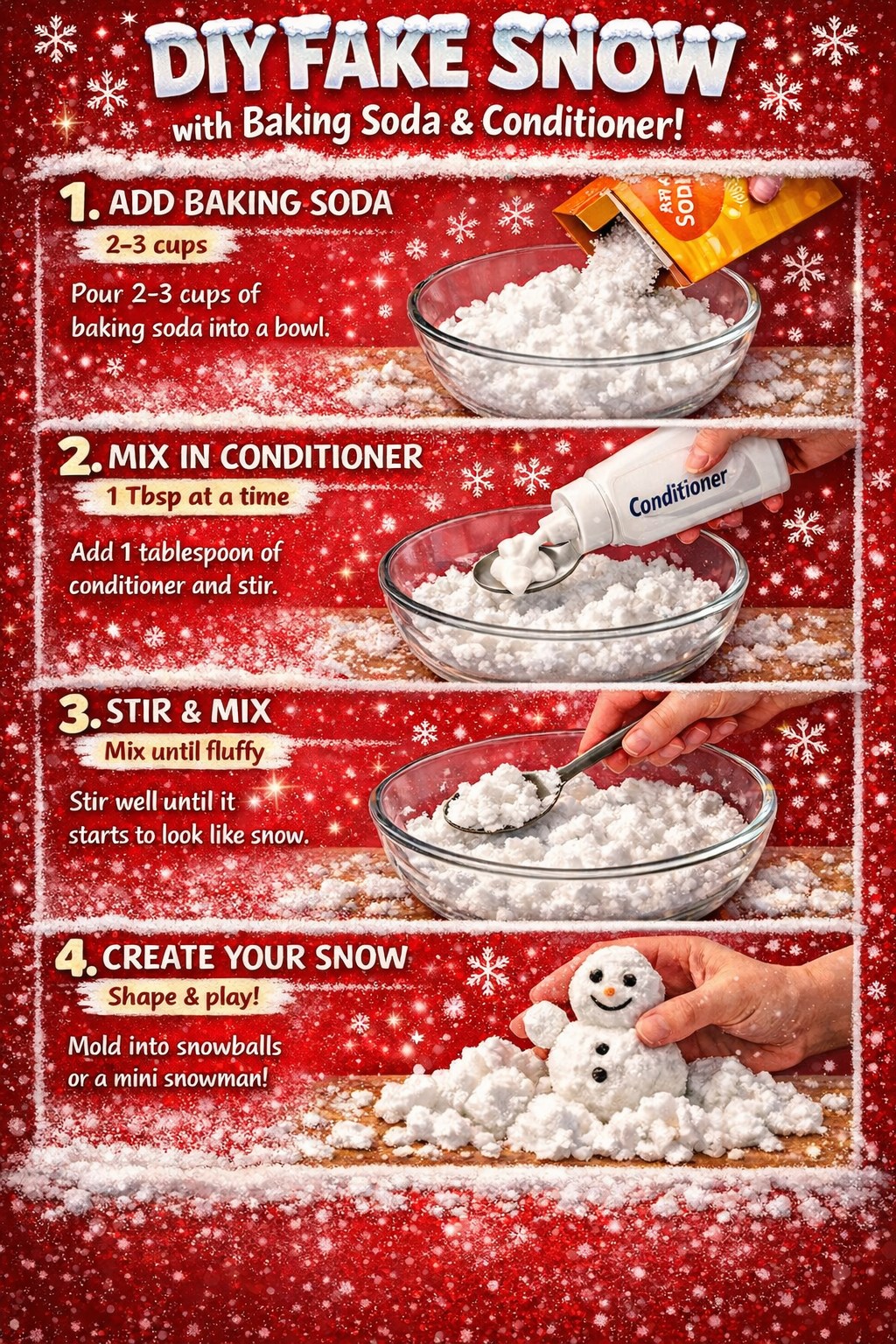
Don’t use a colored conditioner unless you want pastel snow. This seems obvious, but in a pinch once, I used my daughter’s pink strawberry-scented conditioner. We ended up with a lovely batch of pink “winter wonderland” snow, which was fun but not the classic look we were going for. Stick to plain white for that true snowy aesthetic. The same goes for glitter conditioners—they can be fun for a festive sparkle, but they change the classic look.
Avoid playing on a porous surface without a mat. We once built a magnificent snow village directly on our wooden kitchen table. While it cleaned up mostly fine, a slight oily residue from the conditioner was left behind and required an extra scrub. Now, I always use a rimmed baking sheet, a plastic craft mat, or even a vinyl tablecloth. It contains the mess, makes clean-up a breeze, and you can lift the whole snowy scene to move it if you need to.
Finally, don’t expect it to behave exactly like wet, slushy snow. This is a dry, moldable sensory material. It won’t make a slick ice ball for a snowball fight, and if you try to add water to make it more “real,” you’ll trigger a baking soda reaction (it will fizz!) and end up with a gooey, unusable mess. Embrace it for what it is: a fantastic, no-mess, indoor-friendly imitation that sparks imagination without the puddles.
Serving Suggestions
I love setting this up as a themed play station. On a large tray, I’ll place the bowl of snow alongside some small toy animals (arctic creatures are perfect!), little pine cones, smooth glass gems as “ice,” and some mismatched cookie cutters. It becomes an invitation to create a miniature frozen world, and it’s amazing to watch the stories unfold.
For a festive holiday decoration, I pack the snow into clear glass ornaments, apothecary jars, or around the base of a mini Christmas village. It looks so pretty and wintry, and since it’s scented, it adds a subtle freshness to the room. I’ve even used it in a shallow dish as a base for placing tea light candles for a serene winter centerpiece.
Sometimes, the simplest way is the best. I just pour the fluffy snow into a big, shallow plastic tub, give my kids a few measuring cups and spoons, and let them dig, pour, and shape to their hearts’ content. It’s a fantastic activity for developing fine motor skills, and the clean, contained mess is a parent’s dream.
Variations & Customizations
For a glittering winter wonderland, mix in fine, white or silver glitter as you combine the baking soda and conditioner. I’ve found that chunky glitter doesn’t mix as well, but a fine iridescent glitter makes the snow shimmer magically when it catches the light. It’s perfect for a New Year’s Eve or princess-themed play session.
If you want to add another sensory layer, try a minty twist! Use a peppermint-scented conditioner, or add a drop or two of peppermint extract to your white conditioner before mixing. The cool scent paired with the cool feel of the snow is incredibly refreshing and really enhances the wintery illusion. It makes the whole room smell like a candy cane.
For a “sparkly ice” effect, you can substitute the conditioner with white hair gel. The texture is slightly different—more gel-like and translucent—and it holds shapes like igloos incredibly well. It’s also very shiny, which gives it a slick, icy appearance. It’s a fun experiment if you want to compare textures and see which one your kids prefer.
How to Store, Freeze & Reheat
To store any leftover snow, simply place it in an airtight container or a large ziplock bag. It will keep its texture beautifully for several weeks. I’ve had batches last over a month with no issues. If it feels a tad dry when you take it out, just knead it with your hands for a minute; the warmth and moisture from your skin can often revive it perfectly.
You can freeze this snow, but it’s not necessary for preservation and can sometimes introduce ice crystals that alter the texture slightly. If you do freeze it, let it thaw completely in the sealed container at room temperature before playing with it again. This prevents condensation from making it soggy. I find storing it in a cool, dark cupboard is perfectly sufficient.
There’s no “reheating” this snow, but if it dries out over a long period, you can revive it. Sprinkle a few drops of water over it (not conditioner!) and mix thoroughly. The water will react slightly with the baking soda but can bring back a pliable texture. If it becomes too wet or stale, it’s best to compost it and whip up a fresh, new batch—which is half the fun anyway.
Conclusion
This DIY fake snow recipe is more than just a craft; it’s a little jar of winter magic you can open anytime. It has saved countless rainy afternoons at my house and brought so much imaginative, hands-on joy. I hope it brings the same spark of wonder and creativity to your home. Now, go grab that baking soda—your perfect, no-shovel-required snow day is waiting