
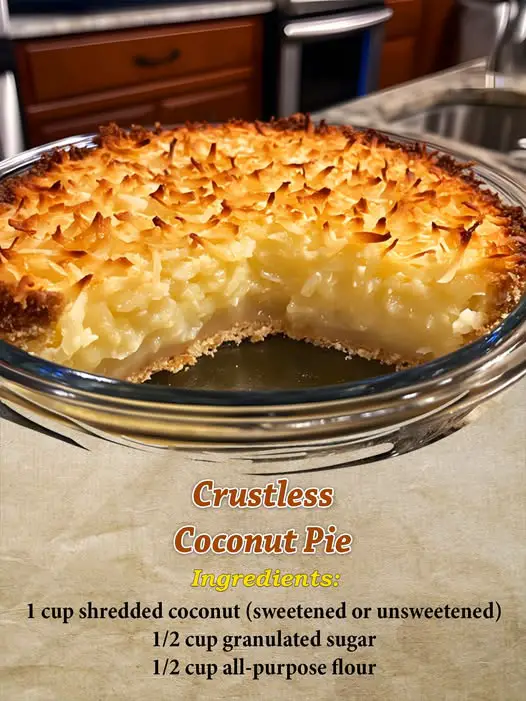
Crustless Coconut Pie is a marvel of simplicity and nostalgic flavor—a dessert that brings together the tropical allure of coconut, creamy custard texture, and irresistible sweetness, all with shockingly little effort. This pie, sometimes called “Impossible Coconut Pie,” forms its own magical layers during baking, delivering a lightly crisp top, melt-in-your-mouth middle, and sweet, chewy base without the need for a traditional crust.
Beloved in family kitchens, potluck tables, and church picnics across America, it’s a treat that recalls generations of home cooks using pantry staples to create happiness, bite after bite. Whether you’re seeking a fuss-free dessert or a gluten-free treat, this pie blends tradition and convenience with classic delight.
Why You’ll Love It
Few desserts deliver such remarkable flavor and texture for so little effort. The batter whisks together in minutes, using just one bowl and a handful of everyday ingredients. As it bakes, the mixture separates and thickens—the coconut floats and browns, forming a tantalizing top layer, while the custardy center sets luxuriously beneath.
This pie is elegant enough for company yet practical for quick weeknight gatherings, equally well suited to breakfast, snack, or special occasions. It keeps beautifully for days, features natural gluten-free appeal, and welcomes infinite customizations.
Key Ingredients
- 4 large eggs
- 1 3/4 cups granulated sugar
- 1/2 cup unsalted butter, melted
- 1 cup whole milk (or coconut milk for deeper flavor)
- 1 teaspoon pure vanilla extract
- 1/2 cup all-purpose flour (or GF blend; see subs for alternatives)
- 2 cups sweetened shredded coconut
- 1/2 teaspoon salt
- Optional: zest of 1 lemon or lime, 1/2 teaspoon almond extract
Preparation
This pie’s genius is in its simplicity. Begin by preheating your oven to 350°F (175°C) and greasing a deep-dish pie plate or 9-inch round pan. In a large bowl, beat the eggs until lightly frothy, then whisk in sugar until combined and slightly thickened. Pour in melted butter, milk, and vanilla, stirring gently, then add flour and salt, mixing just until smooth.
Fold in the shredded coconut and any optional zest or flavorings. The mixture will be runny—don’t worry, this is the secret to the pie’s self-layering magic. Pour batter into the prepared dish and tap gently on the counter to release air bubbles. Bake for 40–50 minutes, or until the top is golden brown and the center barely jiggles. Remove to a cooling rack and let set at least one hour before slicing; time allows the pie to finish setting and makes cutting cleaner.
Serve warm for gooey softness and intense coconut aroma, or chill for a firmer, sliceable treat that pairs perfectly with whipped cream or fruit.
Technique, Tips & Tricks
For best results, start with room-temperature eggs to improve emulsification and a uniform texture. Melted butter, not hot, blends smoothly without cooking the eggs or seizing the batter. Mixing gently—but thoroughly—is key; overmixing develops gluten and can make the pie tough, while undermixing leads to floury spots or dense coconut patches.
If using coconut milk, shake the can vigorously, then measure; full-fat yields the richest flavor. Sweetened coconut provides chew and caramelization, but unsweetened can be swapped for lower sugar.
Watch baking closely—oven temperature and pan depth affect time. Insert a knife near the center; it should come out mostly clean, with the edges set and the center barely sticky. If the top browns too quickly, tent with foil after 30 minutes to avoid burning.
Chill the baked pie for firmer slices—perfect for lunchboxes and make-ahead entertaining. For extra crunch, sprinkle a spoonful of coconut atop before baking, or broil briefly to finish with an extra crisp layer.
Substitutions and Variations
Crustless coconut pie is famed for its adaptability. For gluten-free baking, use a 1:1 gluten-free flour blend or replace flour with 1/2 cup finely ground almond meal or coconut flour (reduce to 1/3 cup, as it’s more absorbent). Dairy-free versions sub coconut milk or almond milk for regular milk and coconut oil or vegan butter for the real thing; the flavor becomes even more tropical.
Swap half the coconut for chopped pecans, walnuts, or pineapple for texture and new taste. Add mini chocolate chips for a “Mounds” pie flavor, or orange, lemon, or lime zest for citrus brightness. Almond extract pairs beautifully with coconut, echoing the classic French “macaroon” aroma.
For a custardy twist, use cream instead of milk or blend in cream cheese for richness. Stir in rum or coconut liqueur to make a grown-up, celebratory dessert. For more sweetness, top cooled pie with a glaze made from powdered sugar and citrus juice. Or, serve squares with warm caramel or chocolate sauce for a decadent plate.
Mini pies are easy: pour batter into greased muffin cups and bake 20–25 minutes for individual servings.
Serving Suggestions
Crustless coconut pie is at home in both casual and elegant settings. Serve sliced with fresh berries for breakfast or with coffee as a mid-day snack. For dinner parties or festive gatherings, garnish slices with dollops of whipped cream, a dusting of cinnamon, and toasted coconut shavings for appealing presentation.
At brunch, pair with tropical fruit salad and mimosas, letting the pie anchor the sweet table. For picnics, cut chilled pie into bars and wrap in parchment—no fork required! On holidays, offer alongside pecan pie, lemon bars, and classic pound cake for a vintage, Southern-inspired dessert buffet.
As an afterschool treat, provide pie squares with fresh pineapple chunks and a drizzle of honey; for late-summer evenings, enjoy with iced tea and slices of juicy melon.
Story & Origins
Crustless Coconut Pie has roots in the mid-century trend for “impossible” pies, popularized by baking mix brands like Bisquick in the 1960s and ‘70s. So named for their miraculous ability to create layered crusts and custards from single bowls of batter, impossible pies invoked baking science and kitchen romance, becoming a favorite of busy homemakers and novelty-seeking cooks alike.
Coconut pie itself dates centuries earlier, with coconut’s arrival to American markets via Caribbean trade. Recipes appeared in Southern cookbooks and family gatherings, often featuring pie shells, custards, and meringues. The crustless adaptation responded to the need for simplicity, speed, and suitability for gluten-free or low-carb lifestyles, gaining fame among communities where coconut’s sweet, chewy texture was prized.
Modern cooks refine and adapt the basic formula, creating crustless pies that blend tradition and modern convenience—a perfect union of thrift, flavor, and joy.
Nutrition Notes
Crustless coconut pie, while an indulgent treat, offers a few nutritional benefits. Coconut is high in dietary fiber, iron, and minerals, though sweetened coconut boosts sugar content. Using unsweetened coconut, coconut milk, or nut flours can reduce added sugars and carbohydrates. The eggs deliver protein, vitamin D, and choline, while milk or coconut milk adds calcium and creamy mouthfeel.
For lighter versions, use skim milk, sugar substitutes (erythritol, monkfruit), and reduce butter, or swap with heart-healthy oils. Gluten-free bakers find easy success with almond or coconut flour, and slicing modest portions keeps treats satisfying without excess.
Plant-based eaters replace eggs with aquafaba (chickpea brine) or flax “eggs,” vegan butter, and non-dairy milk to build texture, though the filling may be slightly softer.
Moderation is the secret—enjoy as a treat alongside fruit or yogurt for balanced snacking.
Flavors & Pairings
The rich, tropical flavor of crustless coconut pie loves pairing with tangy and creamy notes. Serve with pineapple or mango salsa, lime or lemon curd, or fresh berries for a fruity zing. Vanilla ice cream, whipped cream, or coconut yogurt add lusciousness.
On coffee tables, offer with espresso, dark-roast java, or Vietnamese iced coffee—the bitterness accents the sweet, nutty pie. For cocktails or brunch, pair with champagne, sparkling rosé, or piña coladas for full vacation vibes.
On dessert platters, arrange beside lemon bars, chocolate brownies, and almond cake for a mix of textures and flavors. Toasted pecans, macadamia nuts, or a drizzle of chocolate sauce elevate each slice, while fresh mint offers color and refreshing aroma.
Frequently Asked Questions
Will the pie really make its own crust?
Yes—the flour and coconut arrange during baking to form a chewy base and crisp top, though not a classic flaky crust. Texture varies with ingredient proportions.
Can I make ahead and refrigerate?
Absolutely—pie keeps well, slices cleanly when cooled, and maintains perfect texture for up to five days refrigerated.
Is it gluten-free?
With GF flour or almond/coconut flour, yes. Be sure to check the coconut (sometimes processed with wheat).
Can I use unsweetened coconut?
Definitely—reduce sugar to 1 1/2 cups if desired, and expect less caramelization and chewiness.
Can I include fruit or chocolate?
Yes—stir in pineapple, mango, mini chocolate chips, or nuts before baking for playful variation.
Does it freeze well?
Yes—wrap slices tightly and thaw overnight for best texture.
Is this a good breakfast pie?
Perfectly! High in protein and fiber, and pairs well with fruit and coffee.
Can I bake as mini pies or bars?
Certainly—muffin tins or square pans produce easy, portable versions; adjust baking time accordingly.
Why is my pie soggy?
Too much milk or underbaking. Use full-fat coconut or cow’s milk, and bake until set in the center for best results.
Final Thoughts
Crustless Coconut Pie is a triumph of simplicity, flexibility, and flavor—an homage to time-honored kitchen ingenuity and the pure pleasure of coconut in every bite. Whether enjoyed warm and gooey or cool and sliceable, it’s the kind of dessert that inspires new traditions while honoring old ones, perfectly at home in bustling modern kitchens or shared at gatherings where good food means good company. Easy, comforting, and endlessly adaptable, this pie proves that sometimes the best magic happens in the simplest of bowls.