
Overbaking is another issue. If the custard bakes too long, it becomes rubbery instead of creamy. I always pull the cake from the oven while the center still jiggles slightly. It continues setting as it cools. Trust the process and resist the urge to wait until it’s fully firm in the oven.
And finally, be careful when torching the sugar. Holding the flame too close burns the sugar before it has time to melt evenly. Move the flame in slow circles several inches away from the surface. This method caramelizes the sugar gently and prevents scorching.
Serving Suggestions
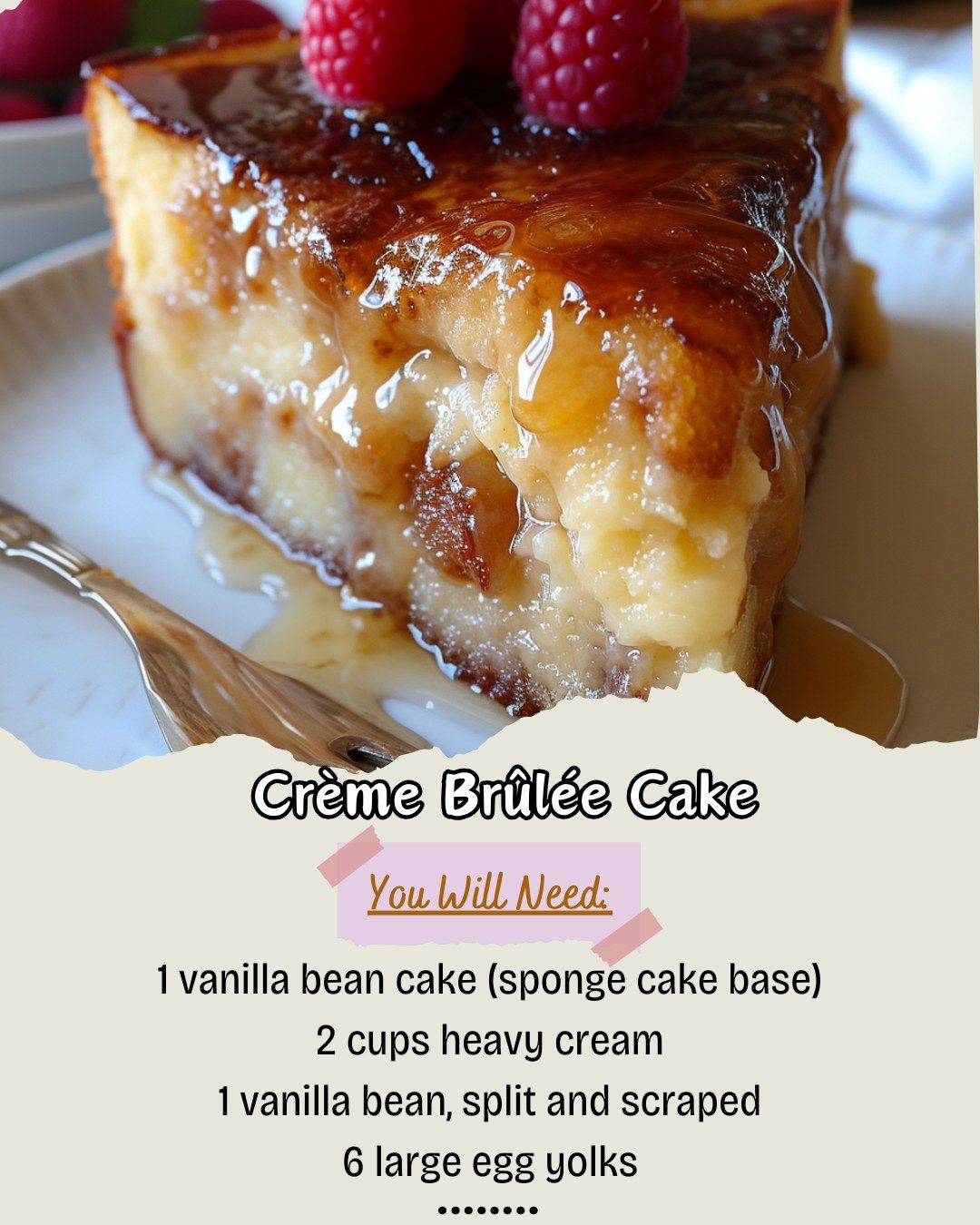
I love serving Crème Brûlée Cake slightly chilled, with the caramel top freshly torched so that it crackles perfectly with each slice. The contrast between the cool, creamy custard and the crisp sugar is out of this world. For presentation, I often place fresh raspberries on top because their tartness helps balance the sweetness.
If you want to make it even more elegant, drizzle a thin line of warm caramel down the plate before adding the slice. It gives the dessert a restaurant-style finish, and the warmth of the caramel pairs beautifully with the cool custard. Sometimes I sprinkle powdered sugar around the edges just for a little extra softness.
This cake also pairs wonderfully with hot drinks. I’ve served it with espresso, cappuccino, and even chamomile tea, and each pairing brings out different notes in the vanilla and caramel. My personal favorite is serving it with a strong black coffee—the bitterness balances the rich sweetness perfectly.
For holiday dinners or dinner parties, I like presenting the cake whole and torching the sugar at the table. The dramatic crackling sound always gets a reaction, and the warm caramel scent makes everyone eager for dessert. It’s simple, but it feels magical.
Variations & Customizations
If you want a deeper vanilla flavor, you can add a tablespoon of vanilla bean paste in addition to the scraped vanilla bean. The little flecks throughout the custard look gorgeous and taste even better. I’ve also experimented with almond extract—just a small splash—and it transforms the cake into something reminiscent of a French almond tart.
Another variation I enjoy is adding a thin layer of raspberry jam between the cake and custard. The bright fruitiness cuts through the rich cream beautifully. Just spread a thin layer on top of the cake before pouring the custard over it. It adds both color and flavor without overpowering the vanilla.
If you’re a chocolate lover, sprinkle mini chocolate chips onto the cake layer before adding the custard. They melt slightly during baking and create little pockets of richness. It doesn’t become a chocolate cake, but it adds a lovely dimension.
And for a caramel-forward dessert, replace the brûlée sugar with a drizzle of dulce de leche on top after chilling. It won’t harden into a shell, but it creates a glossy, gorgeous caramel layer that tastes unbelievably indulgent.
How to Store, Freeze & Reheat
Storing this cake is simple, but it must be kept chilled. I place it in an airtight container or tightly wrap the pan in plastic wrap. It keeps beautifully for up to three days, and the custard stays silky as long as it’s refrigerated. The caramel top will lose some crispness by the second day, but you can sprinkle a little fresh sugar and torch it again to bring it back to life.
Freezing works surprisingly well—though I recommend freezing the cake before adding the brûlée topping. Wrap the cake tightly in plastic wrap and foil and freeze for up to two months. When you’re ready to serve it, thaw it overnight in the fridge and then caramelize the top fresh. This method keeps the texture closest to the original.
If you want to freeze individual slices, wrap each slice separately. This makes it easy to thaw one serving at a time. I’ve pulled out slices on busy evenings and they thaw in just a couple of hours, still tasting rich and creamy.
Reheating isn’t necessary since this cake is meant to be served chilled, but if the caramel top has softened in storage, just torch a thin layer of sugar again. It restores that classic crackly shell perfectly.
Nutrition Information
Crème Brûlée Cake is definitely a treat, but it’s meant to be exactly that—a luxurious dessert enjoyed on special occasions. The custard layer is rich because of the egg yolks and heavy cream, which give it that unmistakable silky texture. There’s also sugar in both the custard and the brûlée topping, which is what creates the caramel crunch.
The cake base contributes the carbohydrates and helps balance the dessert so it’s not overwhelmingly rich. While this isn’t a low-calorie dessert by any means, it’s also not something heavy or cloying. It tastes balanced thanks to the vanilla bean and the lightness of the sponge cake beneath.
The fat content is primarily from the cream and yolks, which also provide flavor and structure. If you’re mindful of portions, a small slice can satisfy even the strongest dessert craving. It’s one of those desserts where each bite feels indulgent enough that you don’t need a huge piece.
And of course, the simple ingredient list means you know exactly what you’re enjoying—no preservatives, no artificial flavors, just classic ingredients coming together to create a comforting, elegant dessert.
FAQ Section
Can I use vanilla extract instead of a vanilla bean?
Yes, you can. While a vanilla bean provides a deeper flavor, good-quality extract still makes a delicious custard.
My custard looks curdled—what happened?
It likely overheated during cooking or the cream was too hot when added to the yolks. Tempering slowly prevents curdling.
Can I bake the cake and custard in separate layers and assemble later?
It’s better to bake them together so the custard bonds to the cake and creates that seamless two-layer texture.
Do I need a torch to caramelize the top?
A torch works best, but a broiler can also caramelize the sugar—just stay close and watch carefully.
Can I make this the day before serving?
Absolutely. In fact, the texture improves with overnight chilling—just brûlée the top before serving.
Conclusion
Making this Crème Brûlée Cake always reminds me why I love baking—the quiet moments of whisking, the warm vanilla scent rising from the cream, and that magical transformation when custard sets into something silky and luxurious. Every slice feels like a special occasion, even when I’m just sharing it at home on a quiet evening. If you’re looking for a dessert that’s elegant yet comforting, impressive yet simple, this cake brings together the best of both worlds. I hope it becomes as special in your kitchen as it has in mine.