
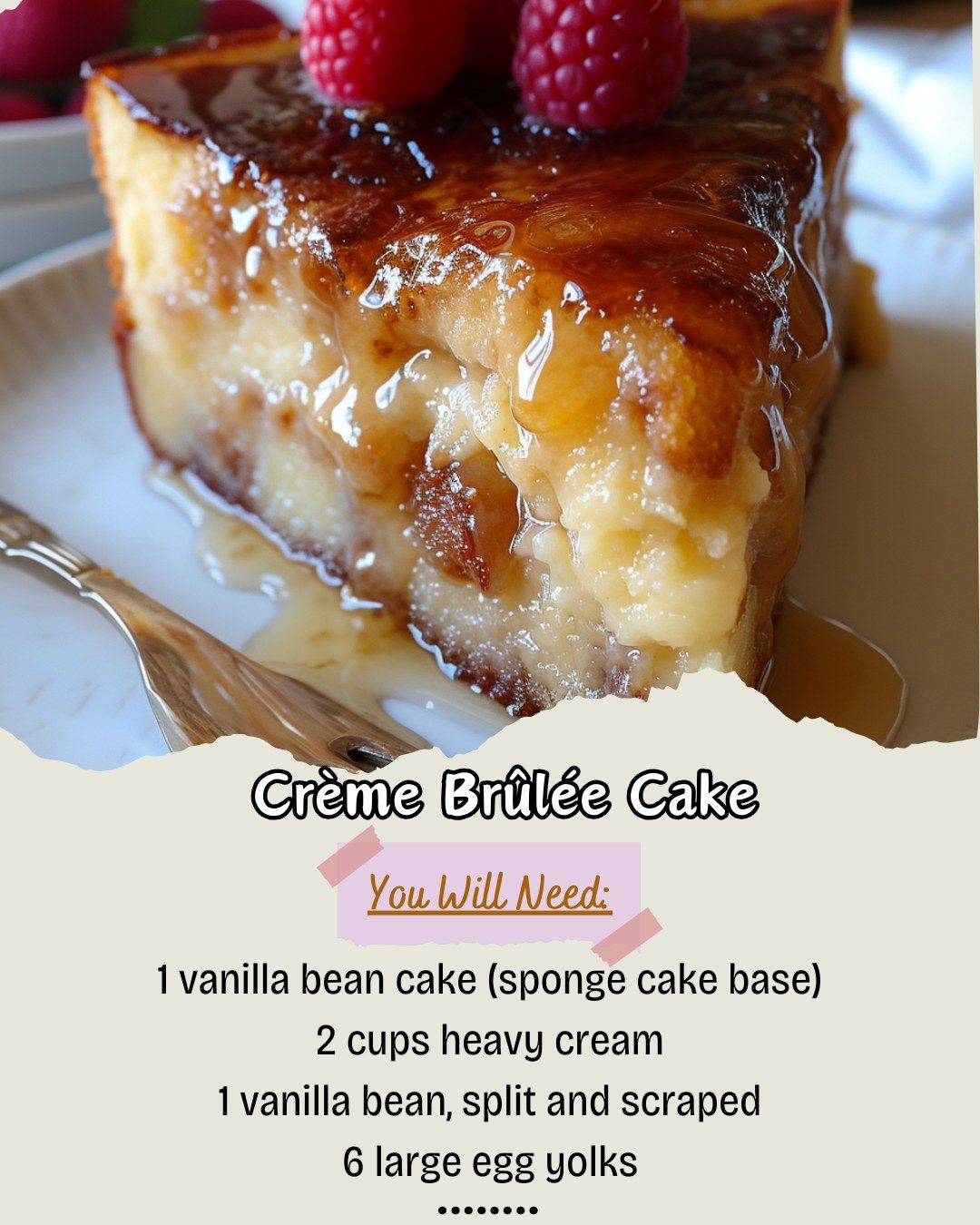
Once the mixture is combined, I strain it through a mesh sieve into a clean bowl. Straining removes any tiny lumps and ensures the custard layer bakes perfectly smooth. Then I pour the custard over the cooled cake, gently tapping the pan on the counter to release any air bubbles. At this point, the cake looks like it’s drowning in cream, but that’s exactly what you want. The custard will set into a creamy top layer as it bakes.
I bake the cake at a low temperature—usually 325°F—until the custard jiggles slightly but no longer looks wet. This usually takes about 45 minutes in my oven. The hardest part is waiting for it to cool completely before chilling it for several hours. When I finally pull it from the fridge, the custard is set, the cake is firm underneath, and the surface is ready for its brûlée moment. I sprinkle sugar evenly on top and torch it until a glassy, caramel shell forms.
Pro Tips for Best Results
I tested this cake several different ways, and the number one tip I can give you is don’t overheat the cream. If the cream boils, the texture of the custard becomes grainy. Heating just until steaming keeps everything silky and smooth. I also learned that straining is absolutely worth the extra minute. Anytime I skipped straining, there were small cooked-egg specks that disrupted the texture.
Another trick I love is chilling the cake overnight. When I tried slicing it after only two hours of chilling, the custard was still a bit loose. But overnight chilling allows the flavors to deepen and gives the custard that firm, sliceable texture that makes the cake look stunning when served. It’s one of those small steps that turns a good dessert into a remarkable one.
When caramelizing the sugar, use a thin, even layer of sugar. I used to sprinkle too much, thinking it would create a thicker caramel top, but it actually created uneven patches that didn’t burn uniformly. A thin layer melts faster and gives that perfect crackly shell. The kind that shatters lightly beneath your fork.
Lastly, if you use the broiler instead of a torch, watch it like a hawk. The sugar can go from caramelized to burnt in seconds. I once turned away for “just a moment” and came back to a smoky kitchen and a very dark cake top. Never again.
Common Mistakes to Avoid
The first mistake I made with this recipe was pouring the custard mixture onto a warm cake. It caused the cake to absorb too much liquid and lose structure. Always cool the cake completely before assembling. Taking your time here results in beautifully distinct layers later.
Another common mistake is skipping the tempering step. I know it can feel tedious to slowly whisk the hot cream into the egg yolks, but pouring it all in at once will cook the eggs instantly. The mixture needs gentle coaxing to become custard. Anytime I rushed the tempering, the mixture ended up lumpy and unusable, which meant starting over.(See the next page below to continue…)