
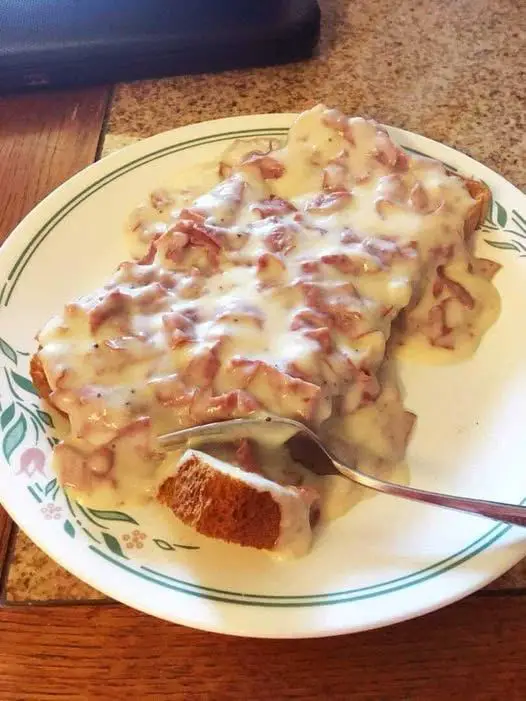
Finally, I stir in the chopped, rinsed dried beef. I let it simmer for another 2-3 minutes, just to heat the beef through and let its flavor infuse the sauce. I take it off the heat and give it a final taste. Only now, if it needs it, will I add a tiny pinch of salt. While the sauce does its final simmer, I toast my bread until golden and crisp, then butter it generously. I place the toast on plates and ladle the hot, creamy chipped beef right over the top. A final crack of fresh black pepper is the perfect finish.
Pro Tips for Best Results
I tested the milk temperature three different ways: cold, room temp, and warmed. Warmed milk is the undisputed champion. Adding cold milk to the hot roux causes the butter to harden slightly and the flour to clump, leading to a grainy texture. Warmed milk incorporates smoothly, creating a velvety sauce from the start.
Here’s what I learned the hard way about the roux: cook it, but don’t rush it. My first time, I added the milk as soon as the flour was mixed in. The sauce tasted faintly of raw flour, even after cooking. Letting the flour-butter mixture cook for a full 2 minutes over medium heat toasts the flour slightly, giving the final gravy a richer, deeper flavor and eliminating any raw taste.
For the absolute best texture, use a whisk for incorporating the milk and a wooden spoon for stirring as it thickens. The whisk prevents lumps during the initial, critical thickening phase. Once it’s smooth, the wooden spoon is gentler and lets you scrape the corners of the pan perfectly to prevent any sauce from sticking and burning.
Common Mistakes to Avoid
My first-time mistake was not rinsing the beef. I just chopped it and tossed it in. The resulting sauce was so salty it was nearly inedible. Don’t do what I did! Rinsing the dried beef is a non-negotiable step. It washes away the heavy brine and leaves you with perfectly seasoned, meaty flakes.(See the next page below to continue…)