
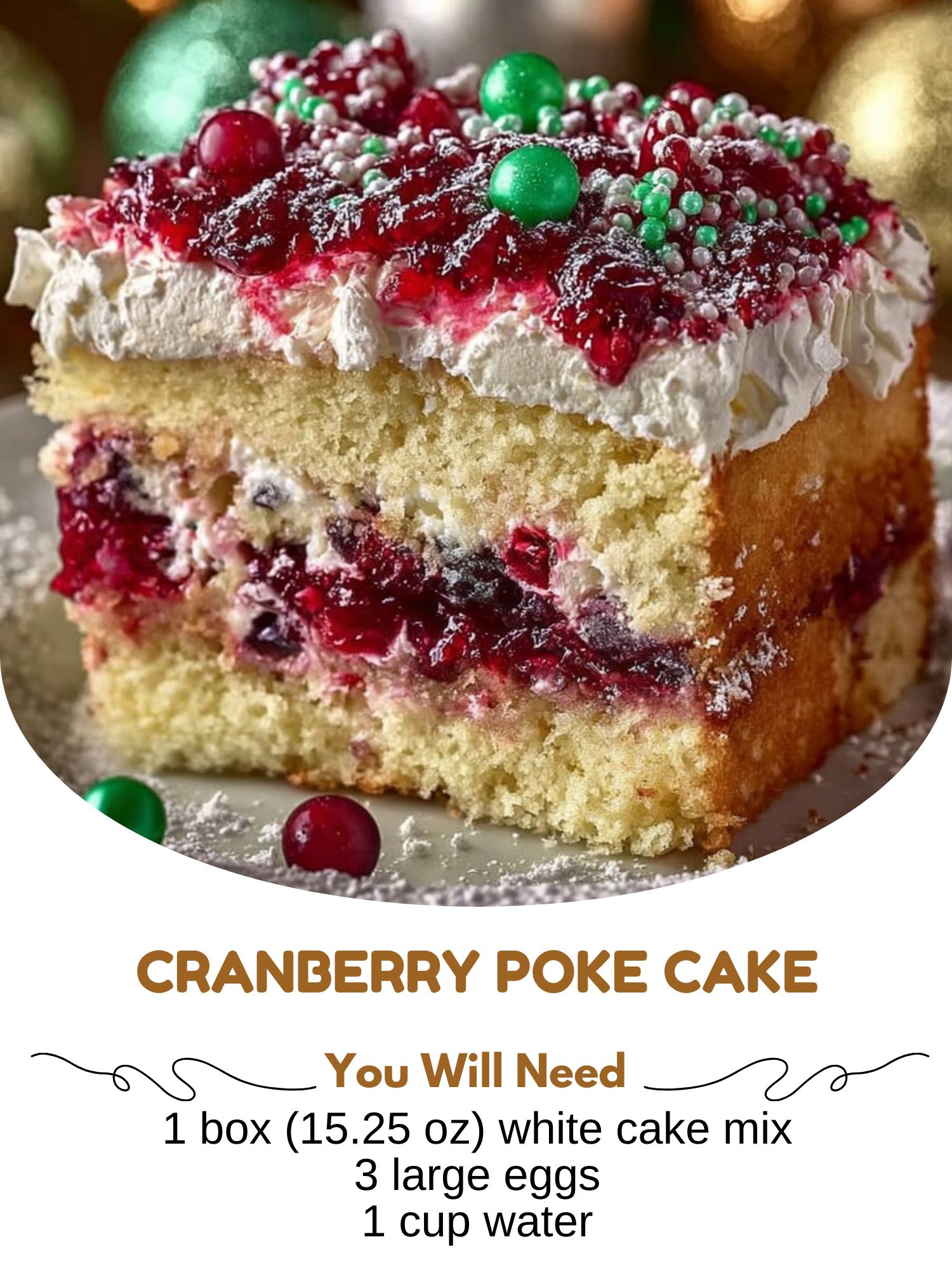
Once the cake is completely cool to the touch, I make the frosting. In a large bowl, I whisk the instant vanilla pudding mix with the cold milk for a full two minutes until it’s very thick. I then gently fold in the entire tub of thawed whipped topping with my spatula until no white streaks remain. This creates a light, cloud-like frosting. I spread it evenly over the cooled cake. For a final festive touch, I’ll scatter a few fresh cranberries and a little mint on top. Then, the hardest part: I cover it and let it chill in the fridge for at least four hours, or ideally overnight. This chilling time is the secret that allows all the flavors to meld and the texture to become supremely moist.
Pro Tips for Best Results
My biggest tip is about the poking tool. I’ve tried forks, chopsticks, and skewers. The round end of a wooden spoon handle is the absolute best. It creates holes that are wide enough for the syrup to flow into but don’t tear the cake apart. A chopstick or skewer makes holes that are too narrow and can close up, preventing that deep soak. Trust me on this—the right tool makes for perfect saturation.
The temperature of the cake when you poke and pour is everything. I made the mistake once of poking and pouring the syrup on a cooled cake. The syrup just pooled on top and never soaked in, creating a soggy top layer and a dry bottom. You must do this step while the cake is still very warm from the oven. The warmth opens up the crumb and acts like a sponge, pulling that delicious syrup deep into the heart of the cake.
For the fluffiest, most stable frosting, make sure your milk is very cold and your whipped topping is fully thawed but still chilled. I whisk the pudding and milk until it’s so thick it leaves clear trails from the whisk. Then, I fold in the whipped topping gently—no stirring or beating! Over-mixing will deflate it. This frosting method is a dream: it’s easy to spread, doesn’t weep, and holds up beautifully for days in the fridge.
Common Mistakes to Avoid
The first mistake I ever made was not greasing the pan well enough. I was in a hurry and just gave it a quick spray. When I went to serve the cake, the beautiful cranberry-soaked bottom layer stuck fiercely to the pan, ruining my perfect slices. Now, I am meticulous: I use a pastry brush to coat the bottom and sides with softened butter or a generous layer of baking spray. It’s a simple step that guarantees clean, beautiful pieces every single time.(See the next page below to continue…)