
Once the sherry has reduced, I gradually whisk in the seafood stock. I add the bay leaves, Old Bay, and smoked paprika. I bring the whole pot to a gentle simmer, then reduce the heat to low, partially cover it, and let it cook for 25 minutes. This simmering time allows all the flavors to marry beautifully. After that, I remove the bay leaves. Here’s where we get that signature silky texture: I use an immersion blender right in the pot to puree the soup until it’s completely smooth. If you use a standard blender, do it in batches and hold the lid down with a towel—hot soup expands!
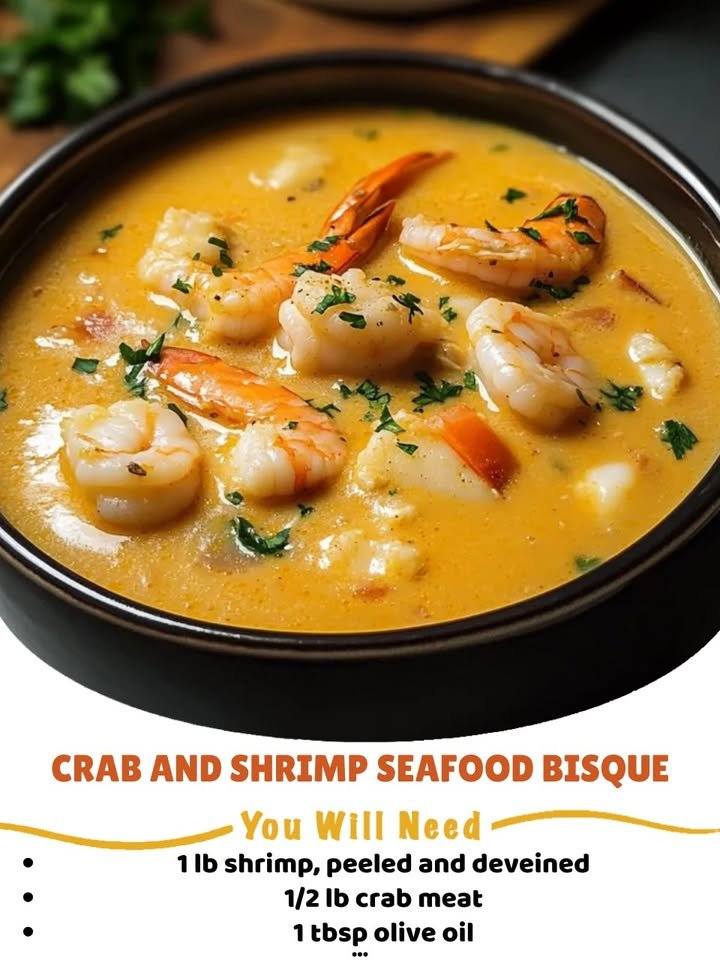
With the base smooth and luxurious, I stir in the heavy cream and return the soup to a very gentle simmer—do not let it boil hard now, or the cream can separate. I season the broth well with salt and pepper. Now for the star players: I add the raw shrimp and let them cook in the hot soup for 2-3 minutes until they turn pink and opaque. Finally, I gently fold in the delicate lump crab meat, letting it just warm through for the last minute. Over-stirring here will break the crab into shreds. I turn off the heat, and it’s ready to serve.
Pro Tips for Best Results
My number one tip is about the sherry. Don’t skip it, and please use a good-quality dry sherry or a dry white wine like Sauvignon Blanc. I’ve tried making it without, and the bisque lacked that essential bright, complex acidity that cuts through the richness. The alcohol cooks off, leaving behind an incredible depth of flavor. If you must avoid alcohol, a tablespoon of good sherry vinegar added with the stock can work in a pinch, but it’s not quite the same.
The second tip is all about texture. Taking the time to truly puree the soup base is non-negotiable for that classic, velvety bisque mouthfeel. I used to be lazy and leave it a bit chunky, but the finished soup felt more like a chowder. An immersion blender is my best friend here for ease and less mess. If you want an extra-smooth finish, you can even strain the pureed base through a fine-mesh sieve before adding the cream and seafood, though I find a good blend is usually perfect.
Finally, handle your seafood with care. For the shrimp, I buy them raw, peeled, and deveined, but I always check for the vein. For the crab, I splurge on fresh lump crab when I can for a special dinner, but good-quality pasteurized lump crab from the refrigerated section works wonderfully and is my usual go-to. The key is to add them at the very end. Overcooked shrimp become rubbery, and over-stirred crab disintegrates. I add them last, let them just cook through in the hot liquid, and then serve immediately.(See the next page below to continue…)