
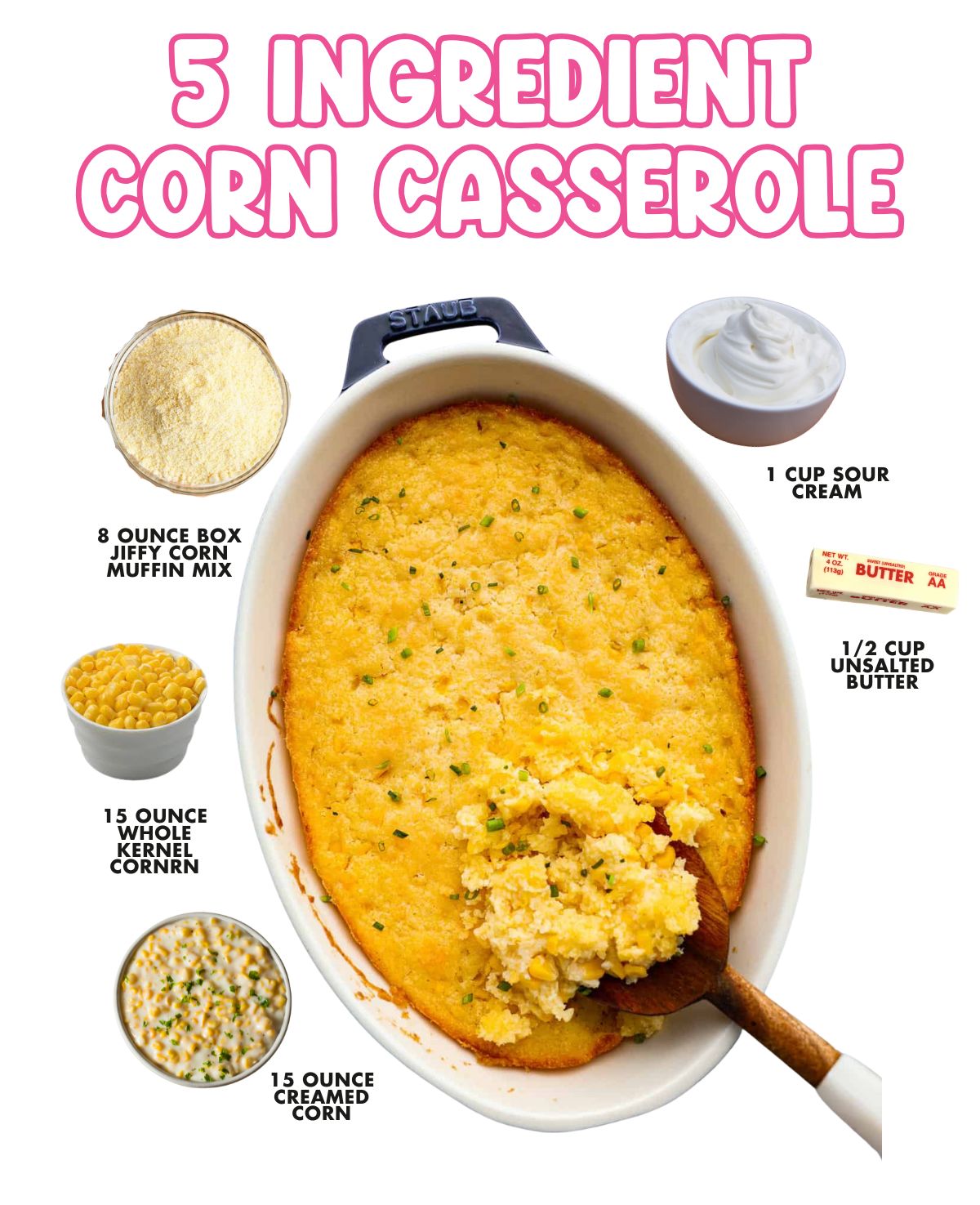
Corn Casserole is a creamy, spoonable corn side dish made from corn muffin mix, whole kernel corn, creamed corn, sour cream, and butter baked into a rich, slightly sweet, pudding‑like casserole. It’s a classic holiday and potluck favorite because it uses pantry ingredients, stirs together in minutes, and bakes into a golden, fluffy casserole that sits somewhere between cornbread and creamed corn.
What is Corn Casserole?
Corn casserole (often called corn pudding, Jiffy corn casserole, or corn spoon bread) is an easy baked side dish that combines cornbread mix with both creamed corn and whole kernel corn, plus sour cream, melted butter, and eggs. As it bakes, the cornbread mix provides structure, the sour cream and butter keep it moist and tender, and the corn pieces add pops of sweetness and texture throughout.
The texture is softer and more custardy than regular cornbread—meant to be scooped with a spoon rather than sliced like a firm bread. It’s popular on Thanksgiving, Christmas, Easter, and at Sunday dinners because it pairs well with turkey, ham, roast beef, barbecue, and almost any comfort‑food main, and it’s easy to double for a crowd.
Equipment
- 8×8‑inch, 9×9‑inch, or 2‑quart baking dish (many recipes also scale to a 9×13‑inch dish)
- Large mixing bowl for stirring everything together
- Whisk and/or spatula for mixing wet ingredients and folding in muffin mix
- Measuring cups and spoons for butter, sour cream, and seasonings
- Can opener for canned corn and creamed corn
- Oven preheated to 350°F/175°C for baking until set and golden
Ingredients
The classic “Jiffy” corn casserole uses just a handful of pantry staples. Most versions look almost identical in ratio and method.
Basic Jiffy corn casserole (5–7 ingredients):
- 1 box (8.5 oz) Jiffy Corn Muffin Mix (or similar corn muffin mix)
- 1 can (15 oz) whole kernel corn, drained
- 1 can (15 oz) creamed corn
- 1 cup sour cream or plain Greek yogurt
- ½ cup (1 stick) unsalted or salted butter, melted
- 1–2 large eggs (some recipes omit eggs; others use 2 for a more “pudding” texture)
- ½–1 teaspoon salt and ¼–½ teaspoon black pepper, to taste (optional)
Cheesy or creamy variations often add:
- 1–2 cups shredded cheddar or a cheese blend, stirred in and/or sprinkled on top
- 4–8 oz cream cheese for an ultra‑creamy corn casserole (beat into butter or melt together first)
- 1–2 tablespoons sugar for a sweeter casserole, especially if using less sweet corn muffin mix
- Diced jalapeños or green chiles for a spicy kick
These amounts usually fill an 8×8‑ or 9×9‑inch dish and serve about 8 people as a side. Doubling everything works well in a 9×13‑inch pan for larger gatherings.
Step-by-step instructions
Corn casserole is famously simple: everything goes into one bowl, gets stirred together, poured into a greased dish, and baked. Most recipes follow nearly identical steps with small variations for eggs and cheese.
The oven is preheated to 350°F (175°C), and the baking dish is greased with butter or cooking spray. This prevents sticking and helps the edges crisp slightly. In a large bowl, wet ingredients are combined first: melted butter, sour cream, and eggs (if using) are whisked together until smooth.
Next, corn is added. Drained whole kernel corn and the can of creamed corn are stirred into the butter–sour cream–egg mixture, folding until evenly distributed. At this point, any sugar, extra salt, pepper, or optional mix‑ins like shredded cheese or diced jalapeños can be added and stirred in.
Finally, the dry corn muffin mix is folded in. Jiffy or another corn muffin mix is sprinkled over the wet mixture and gently stirred until just combined; recipes emphasize not over‑mixing, which keeps the casserole tender. In some versions, half the cheese is stirred in at this stage, with the rest reserved for topping later.
The batter is poured into the prepared baking dish and smoothed into an even layer. Some recipes preheat the greased dish with butter in the oven until the butter melts and the dish is hot, then pour the batter into the hot pan to help crisp the edges. If using a cheesy version, shredded cheese can be sprinkled over the top either before baking or during the last 10–15 minutes of baking so it melts and browns lightly.
The casserole bakes uncovered at 350°F until set in the center and golden around the edges. Bake time is usually 40–50 minutes for an 8×8 or 9×9 dish, or 45–60 minutes for a deeper or larger pan. Doneness cues include: the top is golden brown, edges are slightly puffed and may crack a bit, and the center feels set (not jiggly) when gently shaken, or a toothpick inserted near the center comes out mostly clean.
Once baked, the casserole is removed from the oven and allowed to stand for about 5–10 minutes so it can firm up slightly and become easier to scoop. It is then served warm, scooped with a spoon directly from the dish.
Texture and flavor tips
Good corn casserole should be moist, creamy, and spoon‑able, with a lightly crisped, golden top and edges. Using both creamed corn and whole kernel corn is key: the creamed corn provides moisture and a loose custard base, while the whole kernels add bite and sweetness. Sour cream and melted butter contribute richness and tenderness, preventing the casserole from drying out or turning into dense cornbread.
Eggs affect texture significantly. Versions without eggs lean more toward a dense, very moist spoon bread, while recipes with 1–2 eggs set up more like a soft, scoopable corn pudding that holds its shape a bit better on the spoon. If you want a firmer, sliceable casserole, using 2 eggs and baking slightly longer until the center is fully set works well.
Choosing Jiffy or a similar sweet corn muffin mix gives the classic flavor many people expect; Jiffy is naturally sweet, so most recipes skip additional sugar. If using a less sweet mix or a homemade cornbread mix, a tablespoon or two of sugar can bring the flavor closer to traditional Jiffy‑based casseroles.
Baking in the right size pan also matters. An 8×8 or 9×9 pan gives a thicker, fluffier casserole with a soft center, while spreading the same mixture in a 9×13 dish makes a thinner layer that bakes faster and has a higher proportion of browned edges. Checking early to avoid overbaking—especially in a shallower pan—helps keep it creamy rather than dry.
For extra flavor, shredded cheddar or a cheese blend folded into the batter and/or sprinkled on top adds savory richness and a gooey top layer. Cream cheese stirred into the mixture or melted with butter before mixing creates a denser, ultra‑creamy consistency that leans into “cream cheese corn casserole.”
Variations and add-ins
Corn casserole is easy to customize for different palates and menus. A cheesy corn casserole simply includes shredded cheddar or a Mexican blend either mixed in or baked on top until bubbly. Jalapeño or “Mexican” versions add diced jalapeños, green chiles, or pepper jack cheese to bring gentle heat and a Tex‑Mex flair.
Cream cheese corn casseroles swap sour cream for cream cheese (or use both) and sometimes omit the muffin mix entirely, focusing on sweet corn in a cream cheese–butter–milk sauce topped with cheese. These are thicker, richer, and feel more like a creamed corn gratin. Old‑fashioned cream corn casseroles may use cream cheese plus milk, sugar, and butter with canned or frozen corn, no Jiffy, for a scoopable creamed corn bake.
Some holiday versions go heavier on whole kernel corn, using 2 cans of corn instead of one, for more texture. Others add a little onion, green onion, or herbs for savory notes, though the most classic versions stick to corn, sour cream, butter, and muffin mix. For extra crunch, a light breadcrumb or cracker topping with butter and cheese can be added in the final 15 minutes of baking.
Health‑conscious tweaks may reduce butter slightly, use Greek yogurt in place of some or all of the sour cream, or sub in low‑fat cream cheese. Some recipes use frozen corn instead of canned; thawing and draining it first keeps the casserole from becoming watery. Gluten‑free versions use a gluten‑free corn muffin mix or homemade gluten‑free cornbread mix while keeping the rest of the ingredients similar.
Make-ahead, storage, and serving ideas
Corn casserole is perfect for holidays because it’s easy to assemble ahead. Many recipes suggest mixing the batter and pouring it into the baking dish, then covering and refrigerating for several hours or overnight; baking may take a bit longer when starting from cold, but the results are very similar. Alternatively, the casserole can be fully baked a day in advance, cooled, covered, and refrigerated, then reheated covered with foil until warmed through.
Leftover corn casserole reheats well in the oven or microwave. Covered reheating in a 325–350°F oven with a splash of milk or cream if needed helps restore moisture. Individual portions reheat quickly in the microwave, making it a convenient side for leftover holiday meats.
On the table, corn casserole pairs beautifully with roast turkey, ham, pork loin, pot roast, fried chicken, barbecue, and many other comfort‑food mains. It sits comfortably alongside stuffing, mashed potatoes, green bean casserole, and cranberry sauce on holiday spreads. Its mild, slightly sweet flavor also makes it a hit with kids and picky eaters.
Corn casserole works well at potlucks and church suppers because it travels easily in the baking dish and can be kept warm in a low oven or insulated carrier. Scooped into small ramekins or served with a sprinkle of chives and extra cheese on top, it can even be dressed up for more formal dinners.
As a recipe style, Corn Casserole checks all the boxes for beloved side dishes: budget‑friendly pantry ingredients, one‑bowl prep, forgiving bake time, and a rich, creamy, corn‑forward flavor and texture that consistently earns “must‑make every year” status on holiday menus.