
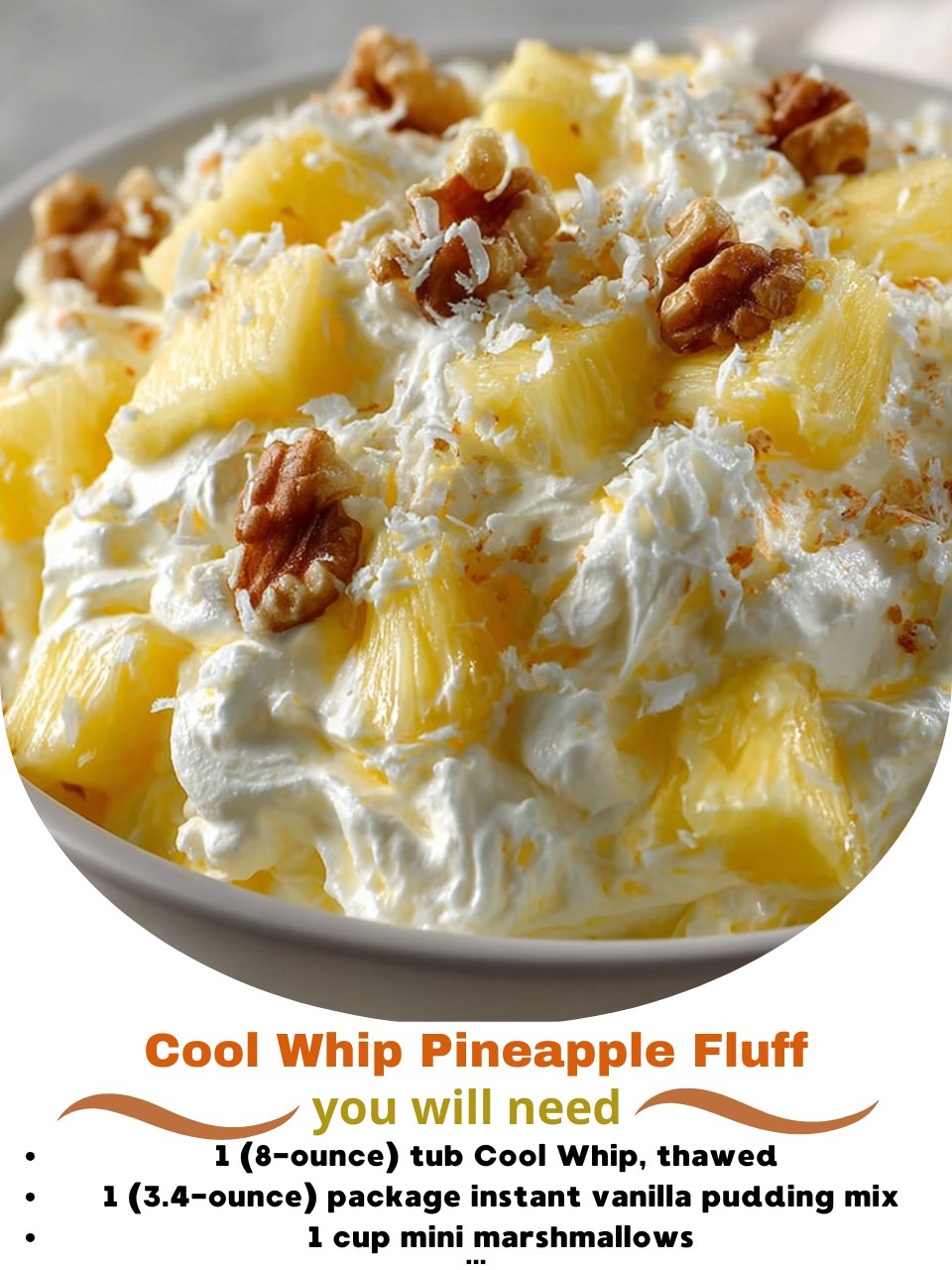
Here’s what I learned the hard way about the Cool Whip: it must be fully thawed. I once tried to speed-thaw it on the counter, and the outer layer became a liquid mess while the core was still icy. This threw off the texture completely. The only reliable way is to move it from the freezer to the fridge the night before you plan to make this. Patience here makes all the difference in that signature fluffy body.
For the absolute best texture, don’t skip the folding technique. When I first made this, I was in a hurry and just stirred everything together vigorously with a spoon. I deflated the Cool Whip and ended up with a denser, less voluminous dessert. Taking an extra minute to fold gently with a spatula preserves the airiness, making the final result truly live up to its “fluff” name.
Common Mistakes to Avoid
My first-time mistake was draining the pineapple. I thought, “Surely all that liquid will make it soupy.” I was so wrong. Without the juice, the dry pudding mix has nothing to react with, and you end up with a stiff, oddly dry mixture with pockets of undissolved pudding powder. Don’t do what I did! Dump the entire can, juice and all, straight into the bowl. The juice is the essential liquid that makes the chemistry work.
Don’t substitute whipped cream or make your own whipped topping for the Cool Whip. I tested this with homemade sweetened whipped cream, and it deflated and became watery within an hour because the acid in the pineapple breaks it down. Cool Whip is stabilized and holds its texture for days against the pineapple. It’s the one time I’m a purist—this recipe is designed for that specific product.
Avoid overmixing once you add the Cool Whip. This isn’t a batter that needs to be smooth. You want to just combine the ingredients until you no longer see streaks of white. Overmixing will beat out the air and give you a denser, less appealing texture. A few faint streaks are better than a deflated fluff.
Finally, don’t use fresh pineapple. The enzymes in fresh pineapple (bromelain) will break down the Cool Whip and pudding, causing the entire dish to become a watery, separated mess within a short time. Canned pineapple is cooked during the canning process, which deactivates those enzymes, making it stable and perfect for this recipe. It’s a non-negotiable swap.
Serving Suggestions
I love serving this fluff in a clear glass trifle bowl or a large, colorful serving dish so everyone can see its lovely texture. It’s a fantastic standalone dessert, especially after a heavy meal like barbecue or fried chicken, because it’s so light and refreshing. I often set out a bowl of vanilla wafer cookies or graham cracker sticks on the side for dipping and scooping—it adds a fun, interactive crunch.
For a festive presentation at a summer BBQ or baby shower, I’ll sometimes serve individual portions in pretty glass cups or small mason jars. I layer the fluff with crumbled vanilla wafers or a spoonful of crushed graham cracker to mimic a mini “pineapple lasagna” parfait. It looks adorable and is so easy for guests to grab and enjoy.
This also makes a incredible fruit dip! I’ll serve it in a hollowed-out pineapple half (for major wow factor) surrounded by a platter of fresh strawberries, apple slices, and banana chunks. The creamy, sweet fluff is heavenly with tart, fresh fruit, and it turns it into a beautiful, shareable centerpiece for any party table.
Variations & Customizations
One of my favorite twists is the “Strawberry Fluff” version. I swap the can of crushed pineapple for a can of strawberry pie filling (undrained). The color is a vibrant pink, and the flavor is like a creamy strawberry shortcake. I fold in fresh sliced strawberries instead of coconut for a fresh berry twist.
For a “Tropical Sunrise” fluff, I use a can of mandarin oranges (drained well this time!) along with the crushed pineapple. I fold in the coconut and add a handful of chopped macadamia nuts for a buttery crunch. It tastes like a tropical getaway in a bowl.
If you love the flavors of a classic ambrosia salad, this is your perfect base. To the original recipe, fold in a cup of well-drained maraschino cherries (chopped) and a small can of well-drained mandarin oranges along with the marshmallows and coconut. It becomes a fluffier, creamier version of that beloved fruit salad, and it’s always a huge hit.
How to Store, Freeze & Reheat
This fluff stores incredibly well, which is part of its genius. I cover the serving bowl tightly with plastic wrap or transfer leftovers to an airtight container. It keeps perfectly in the refrigerator for 3-4 days. The texture holds up beautifully, and some even think it tastes better on the second day as the flavors fully meld.
I do not recommend freezing this dessert. I tried freezing a portion once to see if it would work for make-ahead planning, and the result was a grainy, separated texture when it thawed. The water in the pineapple juice forms ice crystals that break down the structure of the Cool Whip. It’s best enjoyed fresh or refrigerated.
Since this is a no-bake, chilled dessert, there’s no need to reheat it. Always serve it cold straight from the fridge. If it sits out on a buffet table for a few hours on a warm day, it will hold up, but for food safety and the best texture, I like to keep it nestled in a larger bowl of ice or return it to the fridge between servings.
Conclusion
This Cool Whip Pineapple Fluff is more than a recipe; it’s a little bowl of joy, a time machine to potlucks past, and the easiest ticket to smiles I know. It proves that the most beloved dishes are often the simplest, requiring not culinary skill, but just a willingness to fold together a few happy ingredients. I hope this recipe finds its way into your summer rotations and holiday spreads, bringing a taste of sweet, fluffy sunshine to your table. Now, go grab that can of pineapple—your new favorite no-fuss dessert is waiting to be whisked together.