
Another error I see often is baking Cloud Bread at too high of a temperature. If your oven runs hot, the exterior browns too quickly while the inside stays wet. Use an oven thermometer if you have one—I rely on mine constantly.
And most importantly, don’t open the oven door too early. The sudden temperature change can make the bread deflate. I’ve learned to trust the process and resist the urge to peek until the last few minutes.
Serving Suggestions
When I serve Cloud Bread, I love leaning into its whimsical charm. For breakfast, I spread a little honey butter on top, and the sweetness melts beautifully into the warm interior. It tastes like a gentle, airy treat that brightens my morning.
If I’m making it for kids—or let’s be honest, my own playful mood—I’ll slice it and layer it with fresh berries and whipped cream. It becomes a light, dreamy dessert that feels indulgent without being heavy. Even adults love this version.
Another serving idea I adore is turning Cloud Bread into a fruity sandwich. Two slices with strawberry jam or lemon curd in the middle make an unexpectedly delightful snack. It’s a soft, melt-in-your-mouth alternative to traditional bread.
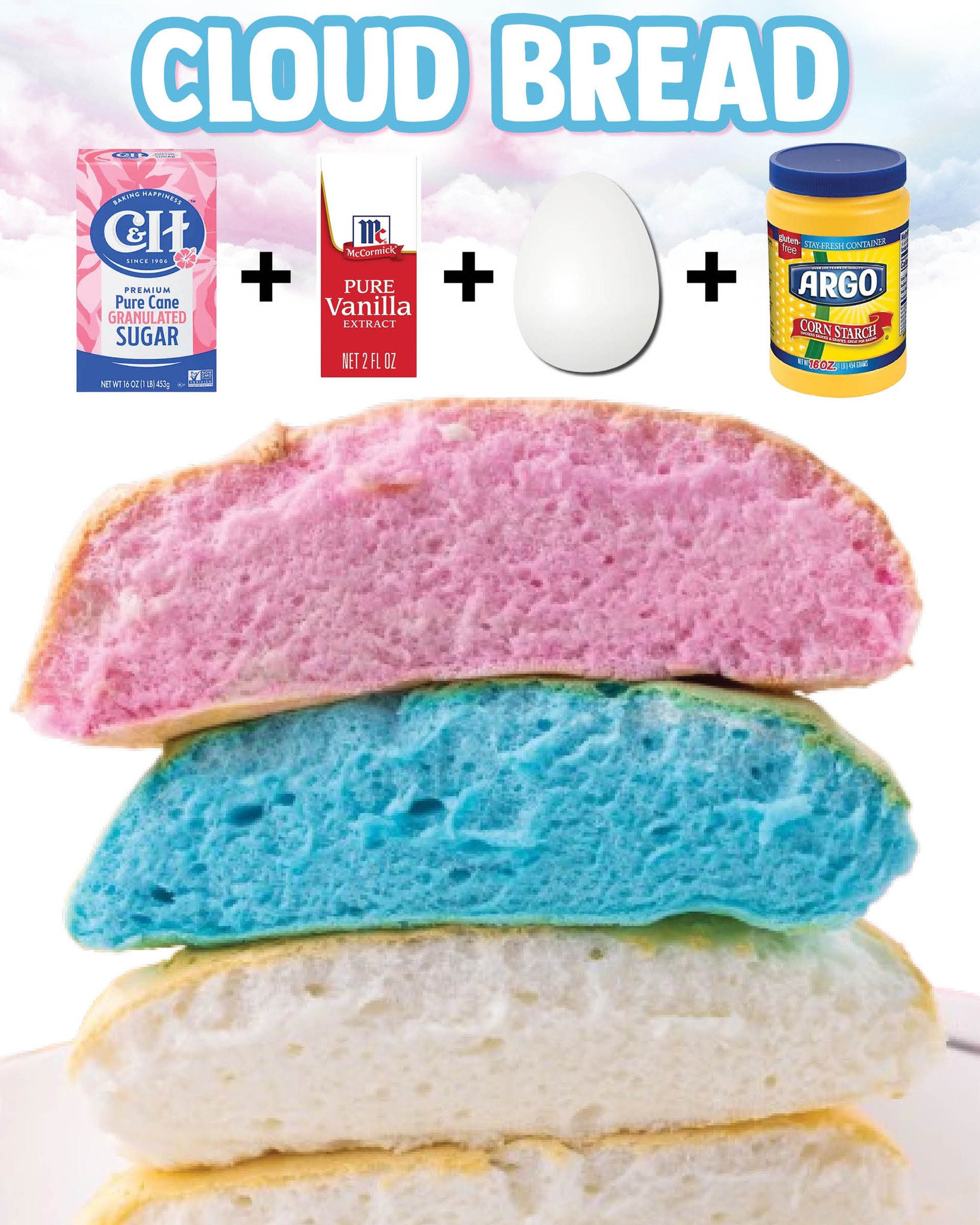
And when I’m feeling creative, I’ll use multiple colors of batter to swirl or layer the clouds. It makes each slice look like a piece of edible art, perfect for parties or brunch tables.
Variations & Customizations
One of the reasons I make Cloud Bread so often is because it’s endlessly customizable. I’ve experimented with many flavors and colors, and each variation brings something new to the table. Adding a touch of almond extract creates a delicate, bakery-style aroma that pairs beautifully with the soft texture.
If you want a citrus twist, a bit of lemon or orange zest folded in at the end adds brightness without weighing down the mixture. Just be careful not to add liquid juices—they can deflate the batter. Zest gives the flavor without affecting structure.
Chocolate lovers can sift in a teaspoon of cocoa powder with the cornstarch. It gives the bread a gorgeous light chocolate flavor and a stunning color. I’ve even added rainbow sprinkles for a funfetti-style cloud that kids absolutely adore.
And of course, the color options are endless. I’ve made pastel layers, bold ombrés, and even tie-dye clouds. Gel colors give the most control and don’t disrupt the meringue texture.
How to Store, Freeze & Reheat
Cloud Bread is delicate, so I’ve learned a few tricks for keeping it fresh. If you plan to eat it the same day, store it loosely covered at room temperature. Sealing it too tightly can trap moisture and make the exterior sticky.
For storing overnight, I place it in an airtight container but leave one corner slightly open. This helps preserve the bread’s soft interior without making the outside gummy. It won’t last more than two days, so enjoy it while it’s at its best.
Freezing Cloud Bread is surprisingly effective. I freeze slices on a baking sheet first, then transfer them to a freezer bag. This prevents them from sticking together. When you’re ready to enjoy it, a brief thaw at room temperature works perfectly—no microwave needed.
Reheating isn’t usually necessary, but if you want it warm, place it in a low oven for just a minute or two. Too much heat will dry it out, so I always keep a close eye on it.
Nutrition Information
Cloud Bread is naturally gluten-free and low-carb, which makes it a great option for people looking for a lighter baked treat. Each serving is mostly composed of egg whites, so it’s higher in protein than traditional bread, though still very airy and low in calories.
Because it includes sugar, it’s not carb-free, but you can adjust the sweetness if you want it lighter. I’ve made versions with slightly reduced sugar for a more subtle flavor, and they turn out just as fluffy with a clean vanilla aroma.
Cornstarch adds a tiny bit of body without adding much nutritionally, and the whole recipe remains incredibly simple. If you prefer a sugar substitute, powdered forms like erythritol work much better than granular kinds, but expect slightly less shine in the finished product.
Overall, Cloud Bread is one of those enjoyable treats that feels indulgent but still fits into a balanced eating style. I love making it when I want something sweet without feeling weighed down.
FAQ Section
1. Can I make Cloud Bread without sugar?
Yes, but the texture changes. When I’ve made it with sugar substitutes, it doesn’t get quite as glossy or stable. If you want to reduce sugar, cut it down—but I don’t recommend eliminating it entirely for this version.
2. Why did my Cloud Bread collapse after baking?
This usually happens when the egg whites weren’t whipped to true stiff peaks or when the oven door was opened early. I’ve had both happen, and once you learn to recognize those perfect peaks, the bread becomes much more reliable.
3. Can I flavor Cloud Bread with extracts?
Absolutely. I’ve used almond, lemon, and even coconut extracts. Just stick to a small amount—½ teaspoon is usually plenty—so you don’t thin the mixture.
4. Why is my Cloud Bread sticky?
Humidity and storage are the culprits. When I store it too tightly covered, the exterior gets tacky. A loose cover or partial seal keeps the texture better.
5. Can I double the recipe?
Yes! I’ve doubled it many times. Just make sure your mixing bowl is large enough so the egg whites have room to expand, and bake in two mounds rather than one giant one for best results.
Conclusion
Cloud Bread has become one of those recipes I reach for whenever I need something joyful, simple, and irresistibly pretty. Every time I whip up a batch, I’m reminded of how magical it feels to create something so airy from just a few everyday ingredients. Whether you enjoy it plain, colored, flavored, or turned into a whimsical dessert, Cloud Bread is a recipe that always sparks a little wonder. I hope it brings just as much delight to your kitchen as it does to mine.