
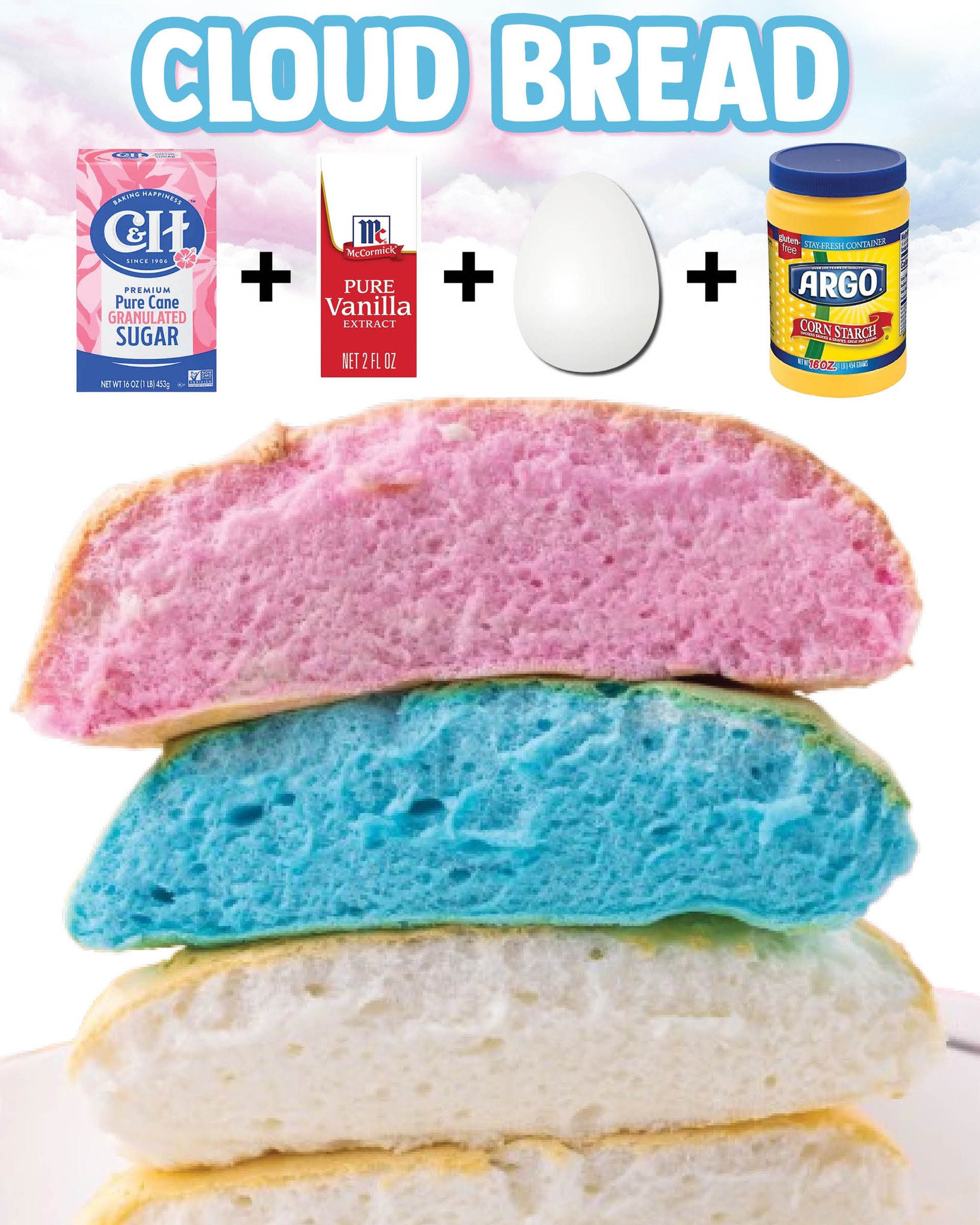
Now comes my favorite part—adding the vanilla and optional food coloring. I use a spatula for these final additions because stirring too aggressively with the mixer can knock the air out. Once the batter is beautifully tinted and smooth, I scoop it onto a lined baking sheet and gently shape it into a fluffy mound. The key here is not flattening it too much; the height is what gives you that dramatic cloud-like interior.
Finally, I bake it low and slow, letting the exterior become lightly golden while the inside stays soft and airy. When it comes out of the oven, I always feel like I’ve opened the door to a pastel daydream. Let it cool slightly so it sets properly, then enjoy the strangely perfect texture—somewhere between a soufflé and a marshmallow.
Pro Tips for Best Results
I tested this Cloud Bread recipe three different ways before settling on the method I use now, and the biggest lesson I learned is that whipping the egg whites properly is everything. If your bowl or beaters have even a trace of grease, the whites won’t whip, so I always wipe everything down with a little vinegar beforehand. It may seem extra, but it saves frustration later.
Another tip I swear by is adding the sugar slowly—truly, grain by grain makes a difference. When I rushed this step once, the sugar clumped inside the batter and created weepy spots during baking. Take your time, and you’ll get a much more stable meringue.
For the cornstarch, sifting is your friend. I used to sprinkle it in without sifting, but I kept finding tiny chalky lumps in the middle of the loaf. It doesn’t ruin the bread, but once I started sifting, the texture improved by 100 percent.
Finally, avoid overbaking. Cloud Bread isn’t meant to be browned heavily like real bread. The moment the outside feels set and slightly crisp, take it out. The inside will finish firming as it cools, and this preserves the signature cloudlike feel.
Common Mistakes to Avoid
I made nearly every possible Cloud Bread mistake in my early attempts, and I’m here to help you avoid them. The first big one is letting yolk slip into your whites. Even a tiny dot of fat prevents the whites from whipping, so crack your eggs one at a time in a separate bowl.
The second mistake is overmixing after adding the cornstarch. Once the whites reach stiff peaks, stop whipping. Continuing to whip can cause the mixture to collapse or turn grainy. This is one of those steps where “less is more” is truly accurate.(See the next page below to continue…)