
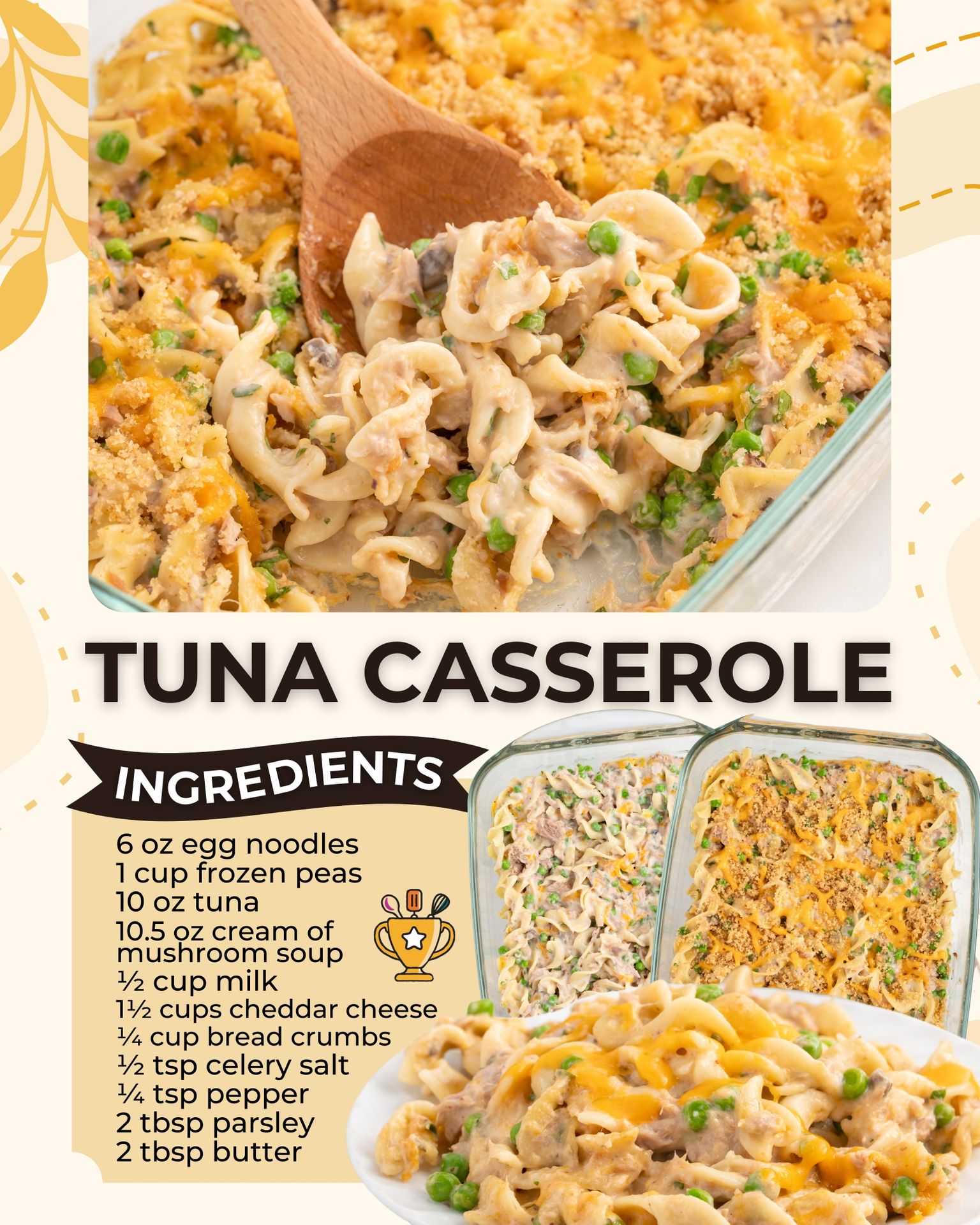
I’ve also tried baking it covered, thinking it would help the filling stay more moist. Instead, the breadcrumbs turned soggy, and I had to throw them back in the oven to crisp them up. This casserole is always best baked uncovered so the topping gets that irresistible golden crunch. And finally, don’t skip seasoning the creamy base. Without celery salt and pepper, the casserole tastes flat.
Serving Suggestions
When I serve this casserole, I love pairing it with something fresh to balance its creamy richness. A crisp green salad with a tangy vinaigrette is perfect—it gives that refreshing contrast that makes every forkful of casserole taste even better. Sometimes I even toss in cherry tomatoes for color and acidity, which complement the savory flavors beautifully.
I also enjoy serving it with warm dinner rolls or simple buttered bread. There’s something so cozy about scooping creamy noodles onto a soft roll—it feels like the ultimate comfort meal. If I’m serving guests, I’ll also put out steamed green beans or roasted carrots to round out the plate with some extra veggies.
This casserole also works well as part of a potluck spread. It’s hearty, filling, and easy to transport. Whenever I’ve brought it to gatherings, it’s been one of the first dishes to disappear. People love that it’s classic, familiar, and satisfying without being too heavy. It also reheats beautifully, so it stays delicious long after it leaves your oven.
If you want to dress it up a bit for a family dinner, sprinkle a little fresh parsley or chives on top just before serving. The pop of green adds a lovely touch of color and freshness. I’ve done this many times when I wanted it to look extra inviting on the table.
Variations & Customizations
One of the things I love most about this tuna casserole is how easy it is to customize. If you want a bit more flavor depth, try adding sautéed mushrooms or onions to the mixture. I’ve done this when I had a little extra time, and it turned out wonderfully savory and hearty. The mushrooms especially complement the cream of mushroom soup.
Another variation is switching up the cheese. While cheddar is the classic, I sometimes mix in a bit of Monterey Jack or mozzarella for extra creaminess. Just make sure it’s freshly shredded. You can even go for a sharp cheddar if you want a bolder flavor. The cheese really lets you tailor the dish to your preference.
If you want to lighten it up, replace half the noodles with cauliflower florets. I tried this recently, and not only did it lower the carb count, but it also added a lovely texture that played beautifully with the creamy sauce. Kids didn’t even notice—I call that a win. You can also use whole-wheat egg noodles if you prefer more fiber.
For a fun twist, add a little paprika or crushed red pepper to the breadcrumb topping before baking. It gives a subtle kick without overpowering the classic flavors. I once added a hint of smoked paprika, and it gave the casserole a warm, smoky aroma that tasted like something completely new but still familiar.
How to Store, Freeze & Reheat
Storing this casserole is incredibly simple. If I know we’ll finish it within a couple of days, I cover the dish tightly with foil or a lid and store it in the refrigerator. It reheats beautifully and still tastes comforting even after a night or two. Just make sure to keep it in an airtight container to prevent it from drying out.
For reheating, I prefer using the oven because it helps crisp the topping again. I cover it loosely with foil and warm it at 350°F until heated through, then remove the foil for the last few minutes to let the breadcrumbs crisp up. The microwave works in a pinch, but the topping will soften rather than crisp. Still tasty, though.
This casserole also freezes exceptionally well. I often prepare an extra batch just to freeze for busy nights. To freeze it unbaked, assemble the casserole, wrap it tightly in foil and plastic wrap, and freeze. When you’re ready to bake it, thaw it overnight in the refrigerator, then bake as usual. If baking from frozen, add extra time and keep it covered until the last 15 minutes.
Freezing leftovers is easy, too. I portion them into individual containers and freeze them for quick lunches. When I thaw and reheat them later, the flavor is just as comforting, and the texture holds up surprisingly well. It makes meal planning so much easier.
Nutrition Information
While tuna casserole is definitely comfort food, I always remind myself that it’s also surprisingly balanced. The tuna adds lean protein, the peas contribute fiber and vitamins, and the noodles bring that satisfying heartiness that makes this dish feel like a full meal. Even though the sauce is creamy, portion control makes a big difference.
One serving typically offers a good amount of protein thanks to the tuna and cheese. The peas provide antioxidants and natural sweetness without adding much fat. The breadcrumbs add a bit of crunch but aren’t overly heavy. It’s a good example of a classic dish that doesn’t feel too indulgent when enjoyed in moderation.
If you want to boost the nutritional value, feel free to add extra vegetables—spinach, broccoli, bell peppers, or mushrooms blend beautifully into the sauce. I’ve made versions that were half veggies and half noodles, and they still tasted classically delicious. It’s an easy way to stretch the recipe and make it even more wholesome.
The sodium content can vary depending on the brand of soup and tuna you use. If that’s a concern, look for low-sodium cream soup and tuna packed in water. I’ve made it that way many times, and the flavor stays just as satisfying without the extra salt. Small tweaks can make a surprisingly big difference.
FAQ Section
1. Can I use canned chicken instead of tuna?
Yes! I’ve swapped in canned chicken before when I was out of tuna, and it tasted wonderful. The flavor is slightly different but still creamy and comforting. Just be sure to drain it well to avoid extra moisture in the sauce.
2. Do I need to cook the peas first?
Nope! Frozen peas go straight into the mixture. They cook perfectly in the oven, and they stay bright and tender without becoming mushy. I love how easy this step is.
3. Can I make this casserole ahead of time?
Absolutely. I often assemble it earlier in the day, refrigerate it, and then bake it at dinnertime. If baking straight from the fridge, just add 10–15 extra minutes so it warms evenly. The make-ahead factor is one of my favorite things about this recipe.
4. Can I use a different type of noodle?
Yes, but egg noodles really are best. I’ve tried penne, rotini, and even spaghetti, but the texture just isn’t quite the same. Egg noodles absorb the sauce beautifully and keep the classic feel of the dish.
5. Why is my casserole watery?
This usually happens if the tuna isn’t drained well or if the noodles were overcooked. Make sure to drain the tuna thoroughly and cook the noodles until just tender. These two small adjustments make a huge difference in consistency.
Conclusion
Every time I make this classic Tuna Casserole, I’m reminded why it has stood the test of time. It’s cozy, creamy, simple, and filled with flavors that bring a sense of home with every bite. Whether you’re preparing it for a weeknight dinner, a potluck, or just because you’re craving something nostalgic and warm, this dish never disappoints. Trust me—once you make it, it will become one of those recipes you return to again and again.