
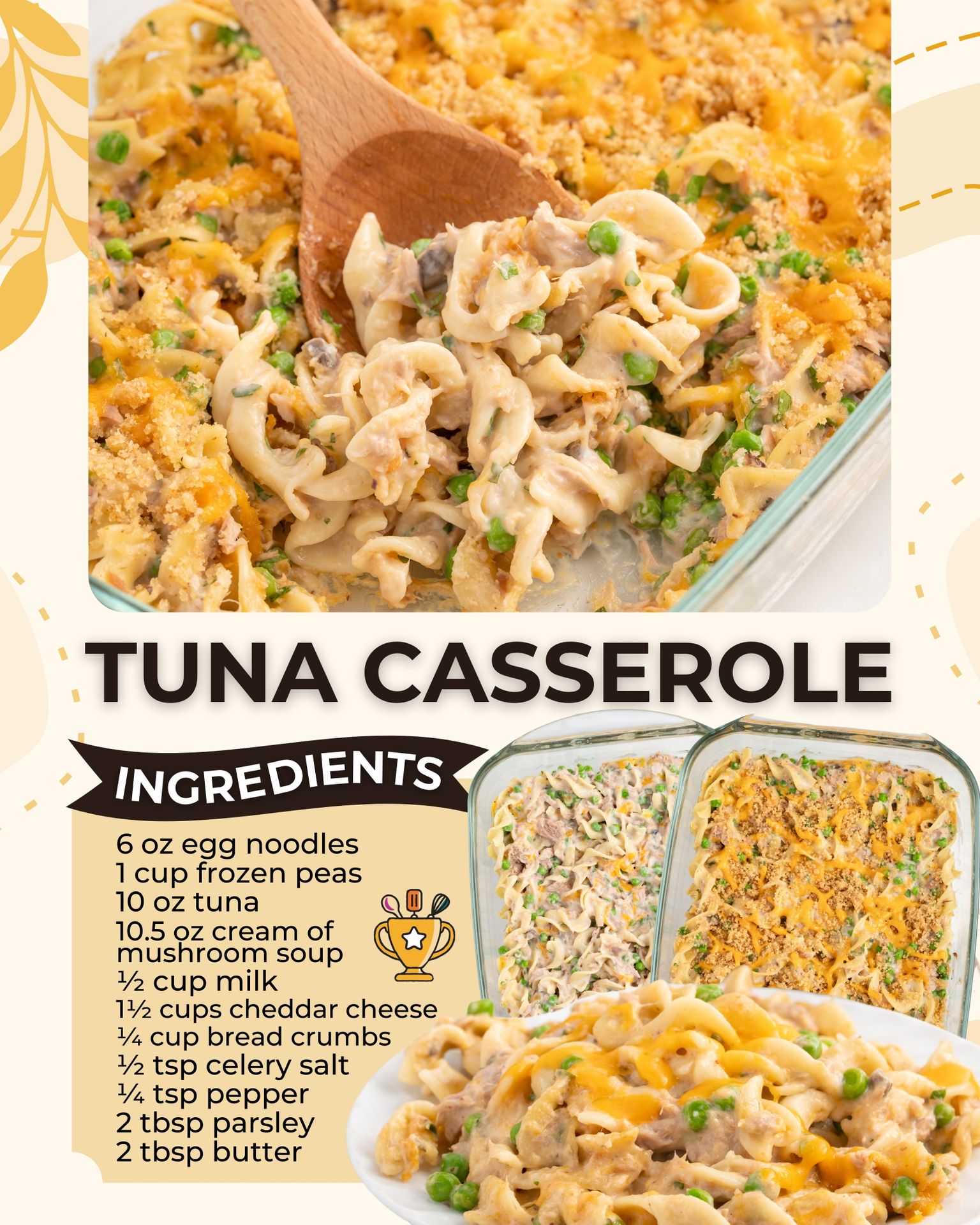
Finally, I melt the butter and combine it with the breadcrumbs before sprinkling the mixture across the top. Sometimes I give the dish a little shake so the breadcrumbs settle naturally. After that, it bakes uncovered until golden brown, bubbly, and irresistibly fragrant. When it comes out of the oven, the top is crisp, the edges are bubbling, and the smell fills the kitchen with the coziest old-fashioned aroma.
Pro Tips for Best Results
I’ve tested this tuna casserole more times than I can count, and each time I learned something new. One of the best tips I can give you is not to overcook the noodles. Slightly underdone noodles hold up much better in the oven and keep the casserole firm instead of soupy. I’ve made the mistake of letting them boil too long before, and the difference in texture was huge.
Another tip is to drain the tuna really well. If it’s too watery, the extra moisture makes the sauce thinner and prevents the casserole from setting up nicely. I usually press the lid of the can tightly against the tuna to squeeze out excess liquid—simple but effective. And don’t skip the frozen peas. They brighten the dish both in color and taste, giving that subtle sweetness that balances the richness of the sauce.
If you want an even crispier top, toast your breadcrumbs briefly with melted butter in a skillet before adding them to the casserole. I’ve done this a few times when I wanted extra crunch, and it makes the topping taste almost like a buttery cracker crust. The oven will crisp them, but pre-toasting adds a deeper, richer flavor.
Lastly, let the casserole rest for about five minutes after baking. I know it’s tempting to dig right in—the bubbling cheese practically begs you—but letting it rest helps it firm up so slicing and serving is much easier. Those few minutes really do make a difference.
Common Mistakes to Avoid
I made plenty of mistakes the first few times I prepared this recipe, so I’m not shy about sharing them. My biggest slip-up was using pre-shredded cheese. It seems convenient, but the anti-caking coating prevents it from melting into that smooth, creamy texture that makes tuna casserole so delightful. Once I switched to shredding my own cheese, the difference was night and day.
Another mistake I made was thinking more tuna automatically meant better flavor. Too much tuna actually overwhelms the dish, making it dense and overly salty. The recipe amount—10 ounces—is the sweet spot. It blends perfectly without taking over. I also once added un-drained tuna in a rush, and the extra liquid turned the casserole into a soupy mess. Trust me: drain it well.(See the next page below to continue…)