
Common Mistakes to Avoid
My first meatloaf was dry and crumbly because I used very lean beef and skipped the panade, thinking I’d make it “healthier.” Don’t do what I did. The fat and the panade are what create a succulent, cohesive loaf. Use 85/15 beef and trust the process.
Overmixing the meat is the most common path to a dense, tough, hockey-puck-like result. As soon as you no longer see distinct streaks of the different meats or the breadcrumb mixture, stop mixing. A few uneven bits are far better than an overworked loaf.
Skipping the rest time after baking is a disservice to your effort. Slicing it hot out of the oven will cause all the precious juices to flood onto the cutting board, leaving you with a drier slice. That 15-minute rest is non-negotiable for a perfect texture.
Not using a meat thermometer and guessing doneness is a recipe for either undercooked or overcooked meatloaf. Ovens vary. Pull it at 160°F, and the residual heat will carry it to a safe 165°F as it rests. This guarantees perfect doneness every single time.
Serving Suggestions
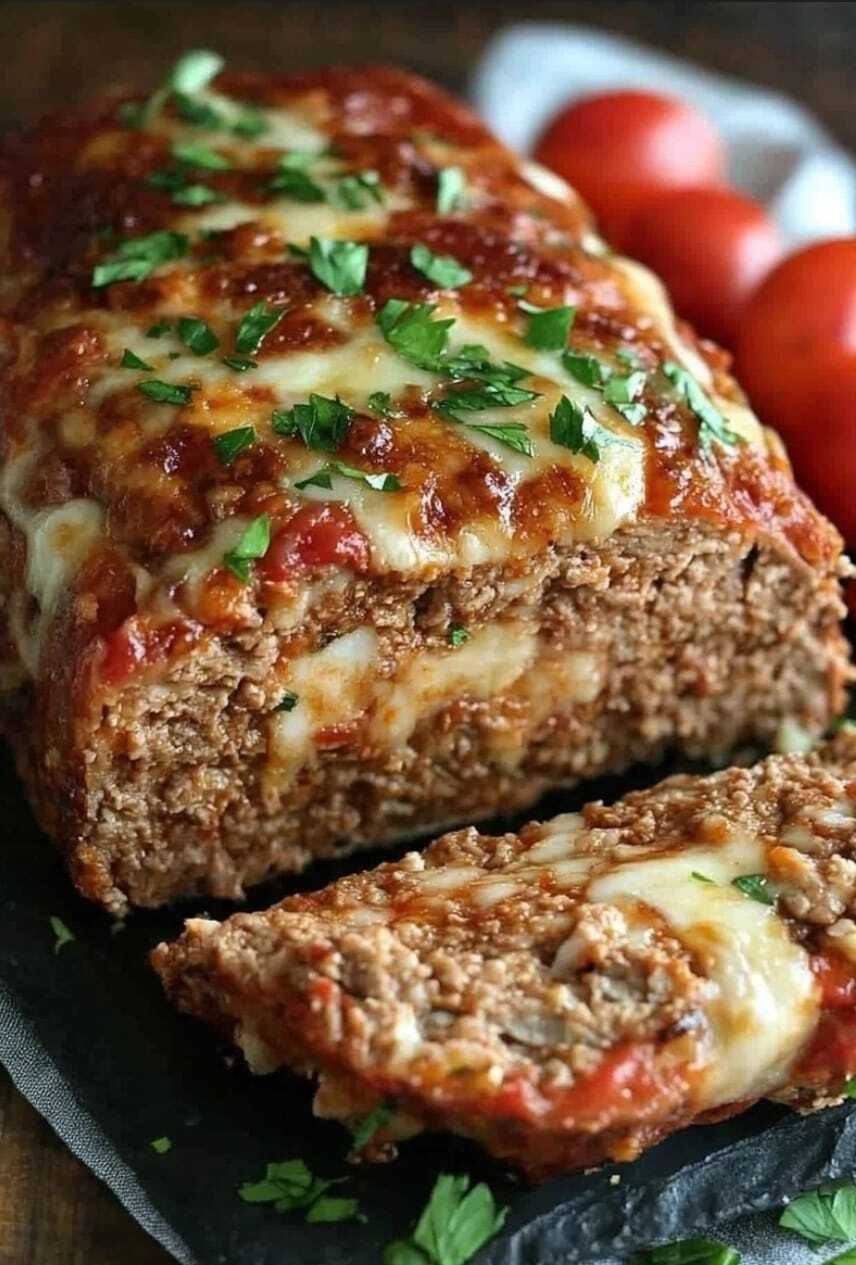
I love serving thick, warm slices of this meatloaf right from the pan. It’s phenomenal alongside a big pile of creamy, buttery mashed potatoes or a heap of soft polenta to soak up any extra glaze and juices. A simple steamed green vegetable, like broccoli rabe or green beans, completes the plate.
The leftovers are arguably even better. I love a cold meatloaf sandwich the next day on crusty Italian bread with a smear of mayonnaise, a layer of arugula, and maybe a slice of provolone cheese. It’s the ultimate lunch.
For a full Italian feast, I’ll serve it with a side of roasted vegetables (like peppers and onions) and a crisp, acidic salad dressed with a lemon vinaigrette to cut through the richness. It turns a simple meatloaf dinner into a celebratory meal.
Variations & Customizations
For a more intense “pizza” flavor, swap the tomato sauce glaze for ¾ cup of a good pizza sauce and mix ½ cup of chopped pepperoni and ½ cup of shredded mozzarella into the meat mixture before baking. It’s a fun, family-friendly twist.
If you want to hide extra veggies, grate a small zucchini or carrot and squeeze out the excess moisture in a clean kitchen towel. Mix it into the meatloaf with the other ingredients. It adds moisture, nutrients, and a subtle sweetness.
To make individual portions, divide the mixture and shape it into smaller loaves or even large meatballs. Adjust the baking time accordingly (usually 25-35 minutes for smaller loaves). This is great for portion control or for a party appetizer with the glaze as a dipping sauce.
How to Store, Freeze & Reheat
Store leftover meatloaf, tightly wrapped in plastic wrap or in an airtight container, in the refrigerator for up to 4 days. The flavors meld and it becomes even more delicious. Reheat slices gently in a covered skillet with a splash of water or broth to keep them moist, or in the microwave.
This meatloaf freezes beautifully both before and after baking. To freeze unbaked, shape the loaf, wrap it tightly in plastic wrap and then foil, and freeze for up to 3 months. Thaw in the refrigerator overnight before glazing and baking as directed, adding a few extra minutes to the bake time.
You can also freeze baked slices. Let them cool completely, wrap individually, and freeze. Reheat from frozen in a 325°F oven, covered with foil, until heated through, or use the defrost setting on your microwave.
Conclusion
Classic Italian Meatloaf is more than a recipe; it’s a comforting, flavorful masterpiece that turns a simple supper into something memorable. It has taught me the importance of a good panade, the value of resting meat, and the joy of filling a home with the scent of garlic, herbs, and tomato. It’s become my reliable, crowd-pleasing comfort food that feels both familiar and special. I hope this recipe finds its way to your table and brings as much warmth and satisfaction to your kitchen as it has to mine. Now, go get your hands in that bowl and mix up some Italian magic.