
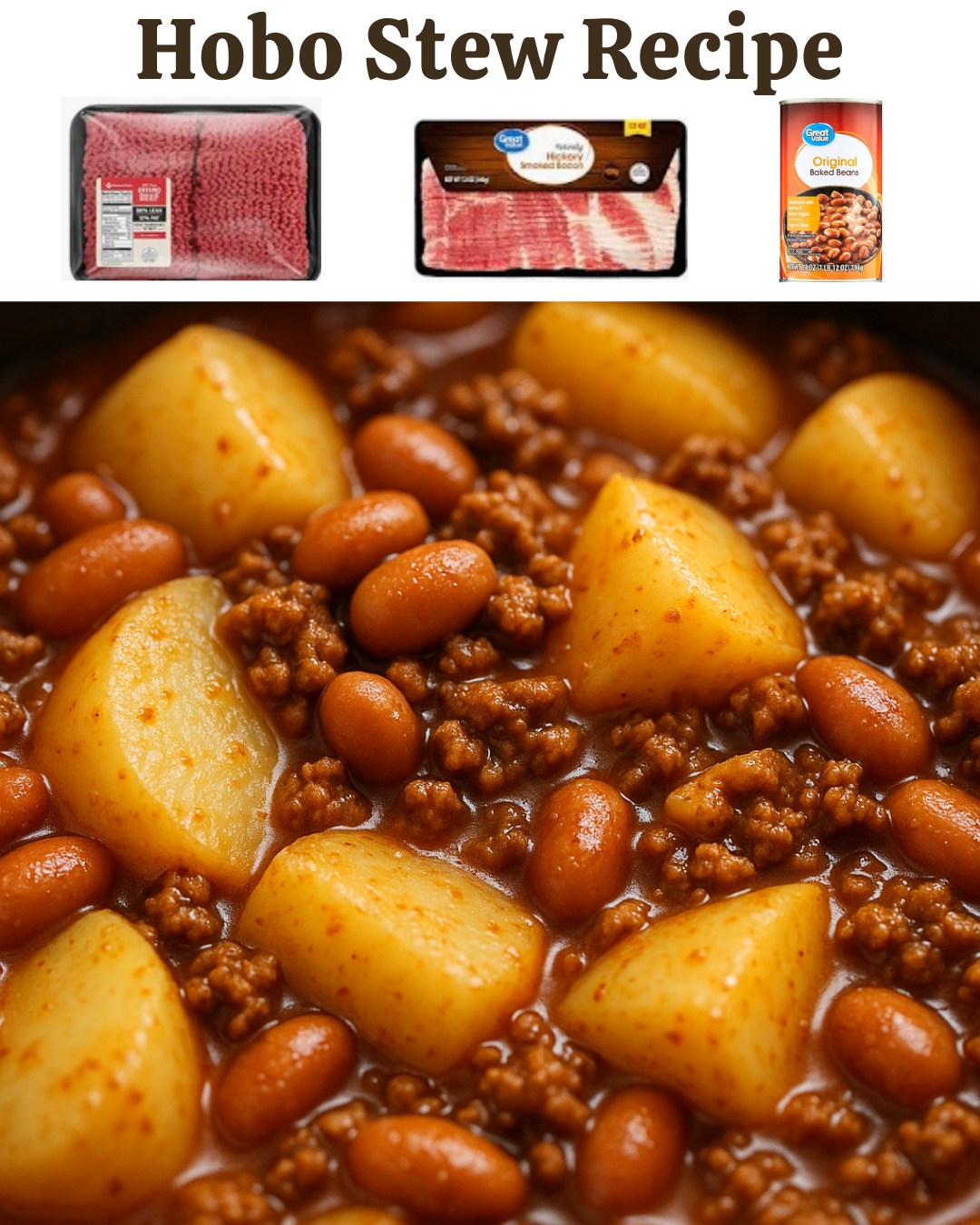
Classic Hobo Stew is the kind of hearty, no-fuss one-pot meal that feels like it was made to feed a crowd around a campfire or a busy family around the kitchen table. It takes simple, inexpensive staples—ground beef, potatoes, carrots, onions, tomato, and mixed vegetables—and turns them into a thick, cozy stew with big chunks of veggies and a savory, tomato-beef broth.
Every bowl is loaded with tender potatoes, sweet carrots, juicy bits of ground beef, and pops of corn and peas, so it’s filling and satisfying without being fussy.
Equipment
- Large Dutch oven or heavy soup pot
- Cutting board and sharp knife
- Wooden spoon or spatula
- Measuring cups and spoons
- Ladle
Ingredients
- 1½ pounds ground beef
- 1 tablespoon olive oil (only if your beef is very lean)
- 1 medium onion, diced
- 2–3 cloves garlic, minced
- 3–4 medium potatoes, peeled and cubed (Yukon gold or russet)
- 2 carrots, peeled and sliced or diced
- 2 ribs celery, sliced (optional but classic)
- 1 green bell pepper, diced (optional for extra flavor)
- 1 can (14.5 ounces) diced tomatoes, with juices
- 1 can (8 ounces) tomato sauce or condensed tomato soup
- 4 cups beef broth (or water plus bouillon)
- 1 packet dry onion soup mix (or 1–2 teaspoons Worcestershire plus extra salt)
- 1 teaspoon Italian seasoning or dried thyme
- ½ teaspoon smoked or sweet paprika (optional, for depth)
- 1 teaspoon salt, plus more to taste
- ½ teaspoon black pepper
- 1½–2 cups frozen mixed vegetables (such as corn, peas, green beans)
- Additional water or broth as needed
Instructions
To make Classic Hobo Stew, start by browning the ground beef to lay down a flavorful base. Set a large Dutch oven or heavy soup pot over medium-high heat and add the ground beef. If you’re using very lean beef, drizzle in the olive oil to prevent sticking; fattier beef usually renders enough fat on its own.
Cook the beef, breaking it up with a wooden spoon, until it’s no longer pink and has started to brown in spots. As it cooks, scrape along the bottom of the pot so some of the meat gets good color—those browned bits are packed with flavor and will make the broth richer later.
When the beef is mostly browned, add the diced onion straight into the pot. Stir and cook the onion with the beef for 3–4 minutes, until it softens and turns translucent. This step mellows the onion’s sharpness and lets it absorb some of the beef drippings.
Once the onion has softened, stir in the minced garlic. Let it cook for about 30 seconds, just until fragrant; you’ll smell it bloom in the hot fat. Garlic burns quickly, so move to the next step as soon as it smells toasty and aromatic rather than letting it sit and darken.
If you see a lot of grease pooling at the bottom of the pot at this point, carefully spoon some off, leaving just a thin coating on the bottom. A little fat adds flavor and helps the vegetables sauté, but too much will make the finished stew feel heavy.
With the heat still at medium to medium-high, add the cubed potatoes, sliced carrots, celery if you’re using it, and the diced green bell pepper if you want that extra sweet, peppery note. Stir the vegetables into the beef and onions so they’re coated in the drippings and beginning to pick up some color.
Let the vegetables cook with the beef mixture for about 3–5 minutes, stirring occasionally. You’re not trying to cook them all the way through here; this is just to start softening them and toasting their edges slightly, which deepens their flavor. The potatoes will start to look a little opaque around the edges, and the carrots will lose their raw look. This quick vegetable sauté makes the stew taste like it simmered a lot longer than it really did.
Next, pour in the canned diced tomatoes with all their juices. They add both acidity and sweetness to balance the richness of the beef. Add the tomato sauce or condensed tomato soup as well, which thickens the base and gives it that classic, slightly tangy tomato backbone you expect in a Hobo Stew. Stir everything together until the meat and vegetables are well coated in the tomato mixture.
Now it’s time to add the liquid and seasonings that turn everything into a proper stew. Pour the beef broth into the pot and give it a good stir, scraping along the bottom to loosen any remaining browned bits from the pot—they’ll dissolve into the broth and help build a deep, savory flavor.
Sprinkle in the dry onion soup mix if you’re using it, along with the Italian seasoning or dried thyme, paprika if you like a hint of smokiness, the salt, and the black pepper. If you’re not using a packet of onion soup mix, this is when you’d add Worcestershire sauce instead, which adds a slightly tangy, umami note.
Stir thoroughly so the seasonings disperse throughout the liquid and everything is evenly mixed. The pot should look crowded with chunks of vegetables and beef but still have plenty of liquid to cover them.
If the potatoes and carrots are not mostly submerged, add a bit more broth or water until they are. This ensures they can cook evenly and become tender without drying out or scorching on the sides.
Turn the heat up just long enough to bring the pot to a gentle boil, then immediately reduce it to a medium-low or low simmer. Cover the pot with the lid slightly tilted so some steam can escape without letting too much moisture out.
Let the stew simmer for about 25–30 minutes, stirring every now and then to prevent sticking. During this time, the potatoes and carrots will soften, and the flavors from the tomatoes, beef, and seasonings will meld into a thick, fragrant broth.
After about 25 minutes, check a piece of potato and carrot with the tip of a knife or a fork. They should be tender all the way through and easy to pierce. Once the root vegetables are at that tender stage, stir in the frozen mixed vegetables.
Corn, peas, and green beans are all traditional and work well, but you can use any blend you like. Because these cook quickly, adding them later keeps them from getting mushy and helps maintain their color and texture.
Let the stew continue to simmer for another 10–15 minutes, uncovered this time, so the frozen vegetables warm through and the broth can reduce slightly. This uncovered simmer also gives you a chance to watch the consistency and adjust it to your liking.
If you prefer a thicker, almost “chili-like” stew, let it bubble gently a bit longer to evaporate more liquid. If you’d rather it be more brothy and spoonable, add a splash of extra broth or water to loosen it.
Once the vegetables are all cooked and the stew has the thickness you like, taste the broth and adjust the seasoning. Depending on how salty your broth, onion soup mix, and tomato products are, you may want another pinch of salt or a bit more pepper.
If the flavor seems a bit flat, a small dash of Worcestershire sauce or a pinch more Italian seasoning can help perk it up. Remember that the stew will continue to develop flavor as it sits, so aim for a balanced, savory taste rather than over-seasoning.
When it tastes just right, turn off the heat and let the stew sit for about 5–10 minutes before serving. This brief rest lets the flavors deepen and gives the potatoes a chance to firm up slightly so they don’t fall apart as you ladle the stew into bowls. Use a ladle to dish up generous portions, making sure each bowl gets a good mix of beef, potatoes, carrots, and mixed vegetables along with plenty of broth.
Tips & Variations
One of the best things about Classic Hobo Stew is how adaptable it is to what you have on hand. Potatoes can be swapped or supplemented with other hearty vegetables like sweet potatoes, turnips, or parsnips.
Sweet potatoes will add a subtle sweetness and a creamier texture, while turnips and parsnips bring a slightly earthier flavor. Just keep the pieces roughly the same size as your potato cubes so everything cooks at the same rate.
For the meat, ground beef is traditional and very budget-friendly, but you can easily substitute part of the beef with ground pork or sausage for extra richness and spice. A mix of ground beef and Italian sausage, for example, will give you a stew with a more robust, slightly herby flavor.
If you prefer a leaner option, ground turkey works too—just make sure to brown it thoroughly and be a bit more generous with your seasonings to keep the flavor big and hearty.
Tomato products can be adjusted based on what’s in your pantry and how tomato-forward you like your stew. Using condensed tomato soup instead of tomato sauce will give a slightly sweeter, creamier edge. If you want a deeper tomato flavor, you can add a tablespoon or two of tomato paste when you sauté the vegetables, letting it cook for a minute before adding the broth so it caramelizes slightly.
For a less tomato-heavy stew, reduce the amount of tomato sauce and add more broth instead, keeping the focus more on the beef and veggies.
Seasonings are flexible as well. The dry onion soup mix is a shortcut that adds instant savory flavor and salt, but if you prefer to skip packaged mixes, you can build similar depth with onions, garlic, Worcestershire sauce, and a bit of soy sauce or beef bouillon. Italian seasoning keeps things familiar and homey, but you can steer the stew in a different direction with chili powder and cumin for a more Southwestern feel, or with extra thyme and a bay leaf for a more old-fashioned, pot-roast-style stew.
Frozen mixed vegetables are an easy way to bulk up the stew and add color, but canned vegetables or fresh can also be used. If you’re using canned vegetables like corn or green beans, drain them well before adding and stir them in closer to the end of the cooking time, since they’re already tender.
Fresh green beans or corn cut from the cob can be added a bit earlier than frozen so they have time to soften without overcooking.
If you want to stretch the stew even further, adding a can of beans is a great option. Kidney beans, pinto beans, or even baked beans can all work, each bringing its own character. Rinsed and drained canned beans add extra protein and fiber, making the stew more filling.
Baked beans will change the flavor a bit and make the broth slightly sweeter and thicker, which some people love in a campfire-style stew.
For a little smokiness and depth, a small amount of cooked bacon or smoked sausage can be added with the ground beef or stirred in at the end.
Just be mindful of salt if you go this route, as smoked meats can be quite salty on their own. A pinch of smoked paprika is another easy way to introduce that campfire vibe without adding more meat.
Serving & Storage
Classic Hobo Stew is a full meal in one pot, but it shines even more with a simple side or two. Serve it with slices of crusty bread, cornbread, or warm dinner rolls so everyone can soak up the flavorful broth.
Crackers are another traditional pairing and can be crumbled over the top of each bowl for a bit of crunch. If you’d like something green on the table, a simple side salad or some steamed green beans or broccoli balance the hearty stew nicely without much extra work.
Leftovers keep very well, and the flavors often deepen overnight, making the stew even more delicious the next day. Let the stew cool to room temperature, then transfer it to airtight containers and refrigerate for up to 3–4 days.
When you’re ready to reheat, warm it gently on the stovetop over low to medium-low heat, stirring occasionally until hot. If the stew has thickened a lot in the fridge, you can add a splash of water or broth to loosen it slightly as it heats.
This stew also freezes beautifully, which makes it a great option for stocking the freezer with ready-made meals. Cool the stew completely, then portion it into freezer-safe containers or heavy-duty freezer bags, leaving a bit of headspace for expansion.
Label with the date and freeze for up to 2–3 months. To serve, thaw overnight in the refrigerator, then reheat on the stovetop or in the microwave, again adding a bit of liquid if needed to restore your preferred consistency.
Because it’s so hearty, forgiving, and freezer-friendly, Classic Hobo Stew is a smart recipe to keep in rotation for busy nights, chilly weather, or times when you just want a big, comforting pot of something that will feed everyone and still leave a little extra for later.