
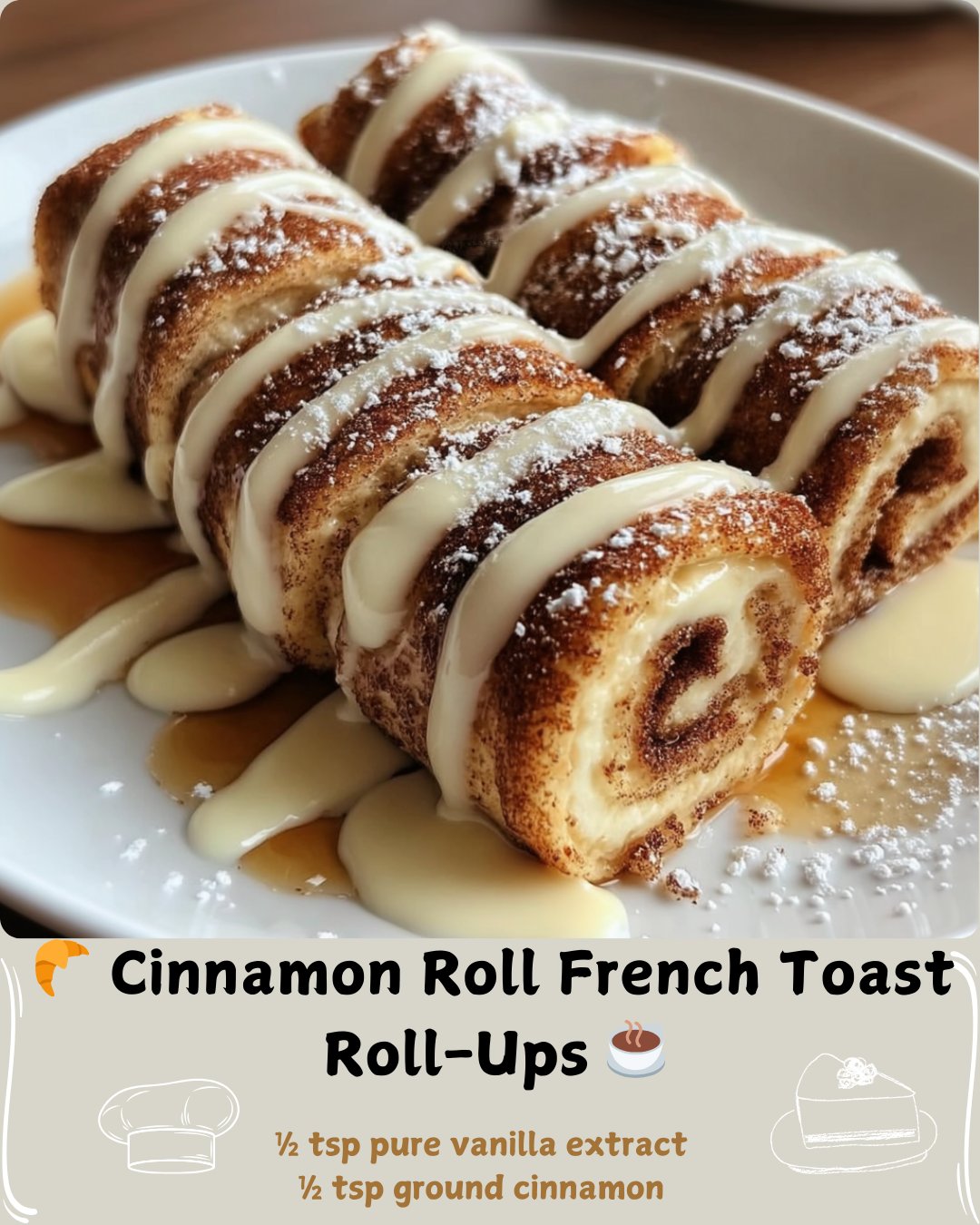
After rolling, I whisk together the eggs, milk, vanilla, and salt in a shallow dish to create the egg dip. Each roll-up gets a quick dip—fast enough to coat, but not long enough to soak. If you soak them, they get soggy and fall apart, something I learned the hard way during my early attempts. Once dipped, I place them directly into a warm skillet melted with a little butter, hearing that satisfying sizzling sound as they begin to cook.
As they cook, I gently rotate each roll-up so every side becomes golden brown. This step is my favorite because I can smell the cinnamon sugar caramelizing slightly, and the bread begins taking on that perfect French toast texture. When they finish cooking, the outsides have a delicate crispness while the centers stay warm and gooey with cinnamon filling. At this point, they’re ready to be rolled in a bit of extra cinnamon sugar or topped with a little icing if I’m in the mood for something extra indulgent.
Pro Tips for Best Results
One of the biggest tips I’ve learned is to always use soft, fresh bread. I once tried using thicker slices because that’s all I had on hand, and the bread just wouldn’t cooperate. It cracked and refused to roll smoothly, and the finished roll-ups were bulky rather than delicate. Now I stick to classic white sandwich bread because it rolls easily and cooks evenly.
Another tip is to spread the cinnamon mixture all the way to the edges but not too thickly. When I first experimented, I was overly generous with the filling, thinking more would taste better. Instead, it oozed out during cooking, creating burnt sugar spots on my pan and ruining some of the roll-ups. A thin, even layer gives you the perfect flavor without the mess.
When dipping the rolls into the egg mixture, be quick. I’ve tried soaking them like regular French toast, and the bread absorbed way too much liquid. The roll-ups became soggy and fragile, tearing apart before they even hit the pan. A brief dip on all sides helps them stay firm and makes the coating light and golden.
Finally, cook on medium heat—not high. High heat browns the outside too fast and leaves the inside eggy or undercooked. Medium heat ensures the roll-ups cook through slowly and evenly, giving you that perfect caramelized exterior without burning. I’ve made that mistake enough times to know patience is absolutely worth it.
Common Mistakes to Avoid
One mistake I made early on was not flattening the bread enough. If the bread isn’t fully rolled out, it doesn’t cook evenly and doesn’t hold its shape well. The roll-ups end up fat and clumsy instead of neat and tight. Rolling the bread thinly ensures a better texture and helps it absorb just enough egg mixture without becoming mushy.
Another mistake is forgetting to seal the ends. If you roll too loosely, the filling leaks out during cooking and can burn onto the skillet. I’ve had batches where almost all the cinnamon mixture escaped, leaving bland roll-ups. Now I make sure to roll them snugly so everything stays tucked inside.
Using too much butter in the skillet can also be a problem. While butter adds flavor, too much of it causes the bread to brown unevenly or burn in spots. A thin layer of butter is all you need to get that perfect golden exterior. If the pan starts to look dry, I add just a tiny bit more before continuing.(See the next page below to continue…)