
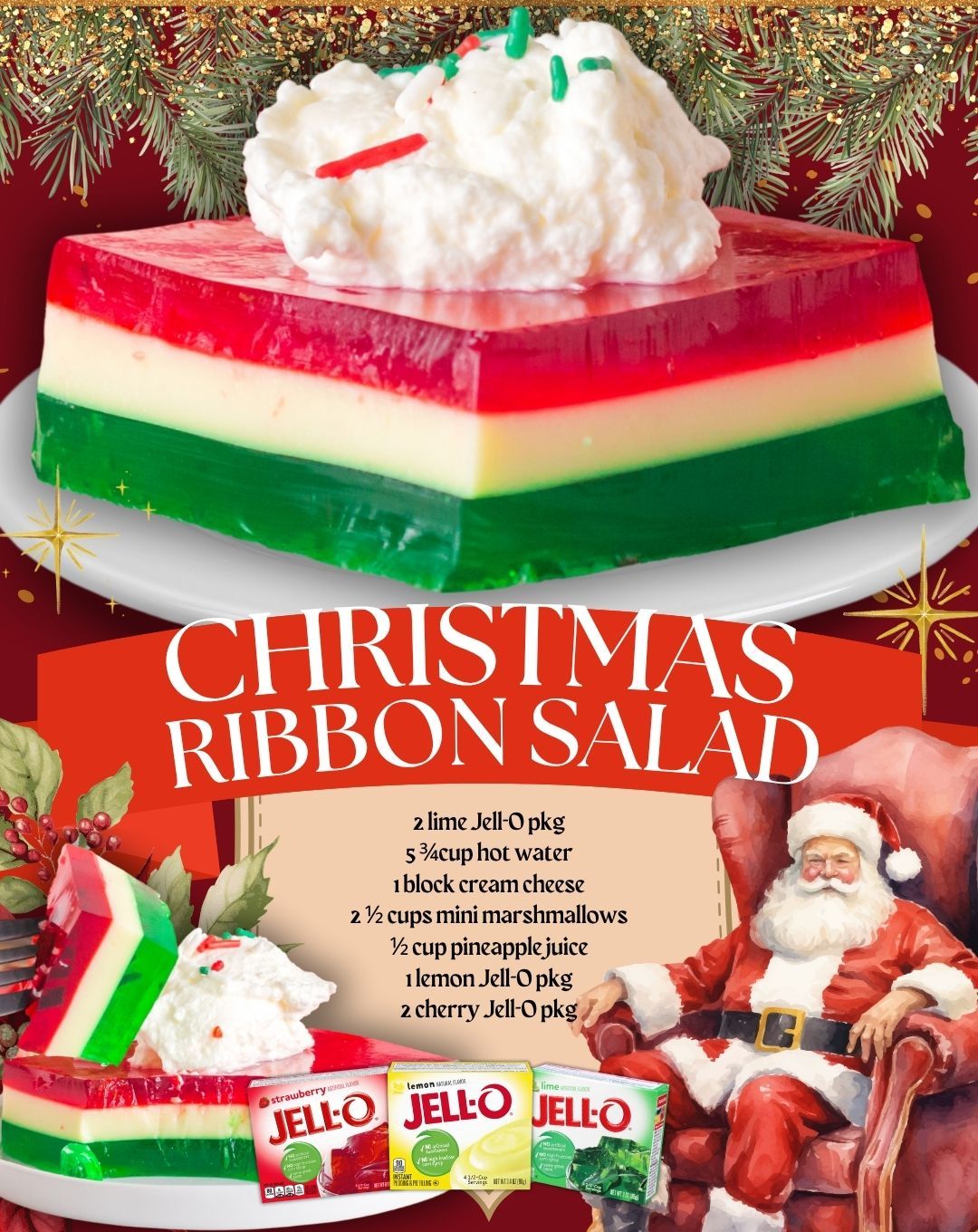
Next, I prepare the creamy white layer. In a saucepan, I gently melt the mini marshmallows with pineapple juice over low heat. The scent is sweet and nostalgic, almost like warm holiday punch. Once the marshmallows are fully melted, I whisk in the softened cream cheese until the mixture becomes silky smooth. After letting it cool slightly—so it doesn’t melt the green layer—I pour it gently over the lime Jell-O. This layer feels like velvet once set.
The lemon Jell-O comes next. I dissolve it in hot water like the first layer, and I always let it cool until it’s close to room temperature before pouring. If it’s too warm, it can disturb the marshmallow-cream cheese layer, and I’ve made that mistake before. I gently pour it over the back of a spoon so it doesn’t splash, allowing it to settle into a perfect yellow layer that contrasts beautifully with the green and white.
Finally, I make the cherry Jell-O top layer. This bright red ribbon instantly completes the Christmas palette, and I always feel a little thrill when the final layer goes on. Once everything is assembled, I refrigerate it for several hours—preferably overnight. The next morning, slicing into the salad reveals those picture-perfect Christmas colors, and it feels like creating edible holiday joy.
Pro Tips for Best Results
I tested this recipe three different ways, and one of the biggest lessons I learned is how important it is to let each layer cool before pouring it onto the previous one. Rushing this step—even a little—leads to colors bleeding into each other. Trust me, set a timer, and let each layer reach the perfect temperature.
Another helpful tip is to pour each new layer slowly over the back of a spoon held just above the surface of the previous layer. This gentle technique prevents denting or cracking the layer underneath. When I tried pouring directly from the bowl without the spoon trick, the warm gelatin created bubbles and pockets instead of a smooth surface.
Softening the cream cheese thoroughly is key to preventing lumps in the marshmallow layer. I once used cream cheese straight from the fridge and ended up whisking forever, trying to break down tiny bits that just wouldn’t melt. Leaving the cream cheese on the counter while prepping the first layer solves this problem perfectly.
Lastly, make sure your hot water is truly hot—almost boiling. Warm water doesn’t dissolve the gelatin fully, and you’ll end up with grainy or inconsistent textures. Fully dissolved gelatin sets more evenly, which is essential when working with multiple layers.
Common Mistakes to Avoid
One mistake I made early on was not waiting long enough for the layers to set. I got impatient and added the next layer too soon, which caused them to blend together instead of staying crisp and distinct. The salad still tasted great, but it looked more like abstract art than ribbon layers. Allowing each layer to chill completely makes all the difference.(See the next page below to continue…)