
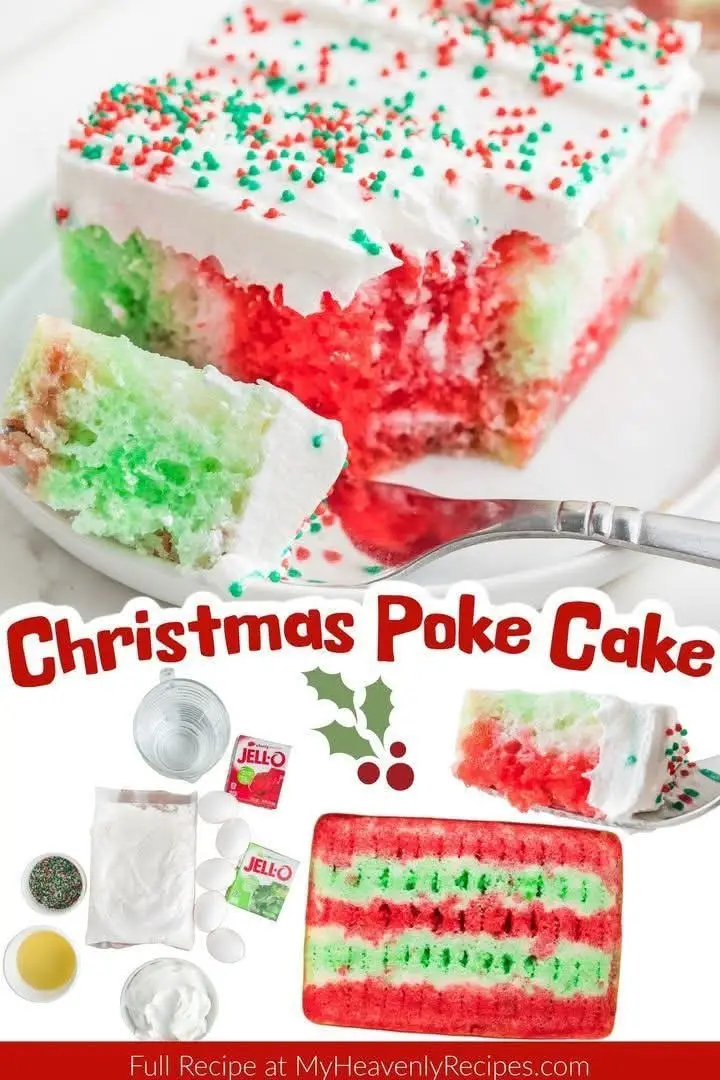
Next, I repeat the same process with the green gelatin. I’ve tested pouring both colors at once, but trust me—doing them separately works much better because you have more control and avoid the colors bleeding together. Once both colors are added, I refrigerate the cake for at least four hours, but overnight is even better. The gelatin needs time to soak into the cake fully and set into those gorgeous holiday stripes. After chilling, I spread a thick layer of whipped topping over the surface, creating a snowy, smooth finish.
Finally, I scatter Christmas sprinkles across the top. This step makes the cake truly come alive—those little pops of red and green make it look festive, whimsical, and ready for any holiday gathering. Cutting into the cake and seeing the stripes never gets old. Every slice looks like a little edible piece of Christmas joy.
Pro Tips for Best Results
I tested this recipe three different ways—pouring gelatin while the cake was hot, warm, and completely cooled. The warm cake always gave me the best results. A very hot cake makes the gelatin run too quickly, soaking into the bottom, while a cold cake doesn’t absorb it deeply enough. Warm is the perfect middle ground.
If you want bright, vibrant stripes in your cake, don’t reduce the amount of gelatin or water. I once tried halving the liquid to make the colors “pop,” but it made the gelatin too thick and it didn’t soak properly. Using the full measurements creates the ideal consistency for absorption and appearance.
Another thing I learned is to avoid poking holes too close together. I used to get overly enthusiastic and poke dozens of holes, but that caused the colors to merge together. Spacing the holes about an inch apart creates cleaner, more defined stripes. You’ll see a huge difference in the final presentation.
Lastly, don’t rush the chilling process. It’s tempting to frost the cake early, especially when you’re excited to finish, but if the gelatin isn’t fully set, the whipped topping slides around and the slices won’t hold together well. A fully chilled cake cuts beautifully and keeps its stripes sharp.
Common Mistakes to Avoid
I made this mistake the first time—waiting too long to poke holes in the cake. If the cake is completely cool, it becomes spongy and doesn’t accept the gelatin as well. The holes don’t open fully, and most of the gelatin ends up sitting on top instead of sinking down into the crumb. Aim for warm but not hot.
Another mistake I made early on was pouring the gelatin too quickly. When you dump it all at once, it floods the surface and runs to the edges instead of into the holes. Pour slowly, letting it seep into each hole before moving on. This creates clean color pathways and prevents sogginess.
Don’t skip the step of dissolving the gelatin completely. Undissolved crystals leave little crunchy bits in the cake, and while they won’t ruin the dessert, they definitely distract from the texture. Stir until the mixture is crystal-clear and smooth.(See the next page below to continue…)