
Adding all the dry ingredients at once is a surefire way to overmix. Dumping three cups of flour into the wet mixture forces you to mix longer to incorporate it, which overworks the gluten and leads to tough cookies. Adding the flour in 2-3 batches on low speed allows it to incorporate gently. I stop the mixer as soon as I no longer see dry flour. A few remaining dry bits are okay; they’ll get worked in when I form the dough into a disk.
Skipping or shortening the chill time is the most common error, and I’ve been there. Impatient, I baked a batch after only 30 minutes in the fridge. The dough was too soft, the shapes lost their definition, and the cookies baked up thin and crispy instead of thick and soft-centered. The chill time firms the butter, preventing spread. It’s not a suggestion; it’s a requirement for the cookie you see in your head to become the cookie on your plate.
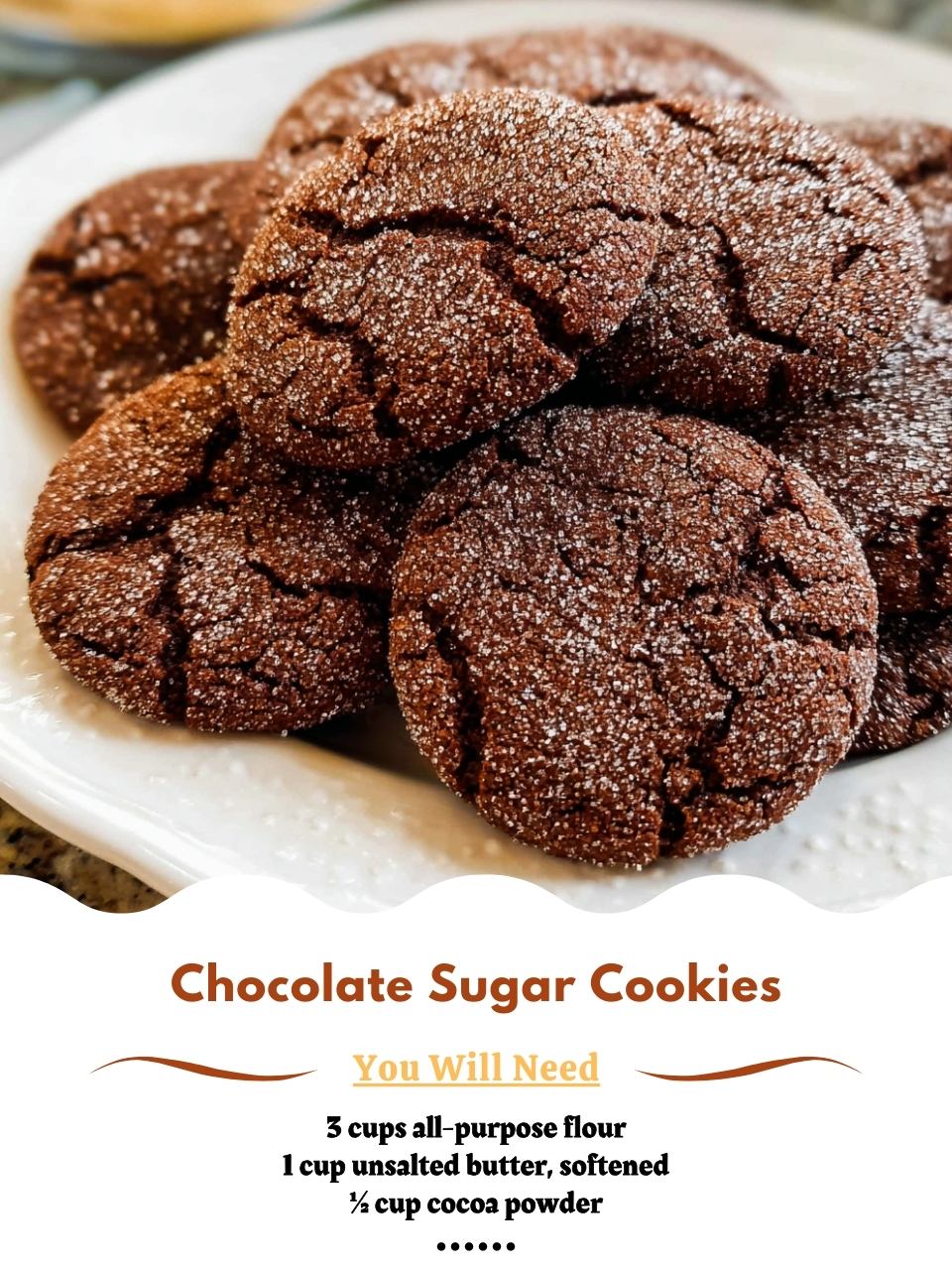
Overbaking is the silent killer of a tender chocolate sugar cookie. Because they’re dark, it’s hard to judge by color. They continue to bake on the hot sheet after being removed from the oven. I pull them when the centers no longer look wet and the edges feel set if I gently touch them. They will look slightly underdone, but that’s perfect. Leaving them on the sheet for 5 minutes before transferring to a rack finishes the cooking process perfectly without drying them out.
Serving Suggestions
I love serving these cookies just as they are, piled high on a cake stand with a pot of coffee or a glass of cold milk. Their rich chocolate flavor and sugary crunch are complete on their own. They are my absolute favorite cookie to include on a holiday dessert platter because the deep brown color looks so beautiful next to blond sugar cookies and peppermint bark.
For a more decadent treat, I’ll sometimes sandwich two cookies together with a simple vanilla buttercream, chocolate ganache, or even a smear of raspberry jam. The jam adds a wonderful fruity contrast that really highlights the chocolate. It turns them into a special, almost petit four-style dessert that’s perfect for a party or a fancy afternoon tea.
These are also fantastic for gifting. I’ll stack them in a clear cellophane bag tied with a ribbon, or pack them carefully in a decorative tin. They are sturdy, travel well, and because they’re not overly fragile, they arrive at their destination looking as good as they did when they left my kitchen. They always get rave reviews.
Variations & Customizations
For a festive twist, you can roll the cookies in colored sanding sugar instead of plain granulated sugar. Red and green for Christmas, pastels for Easter, or orange and black for Halloween makes them instantly thematic. You can also drizzle the cooled cookies with a little melted white chocolate for a beautiful contrast, or dip half of each cookie in chocolate for a classic half-dipped look.
To add texture and flavor, mix a handful of mini chocolate chips, chopped toasted nuts, or even crushed peppermint candies into the dough along with the dry ingredients. I love adding a cup of mini chocolate chips for an extra chocolatey punch. The chips stay intact during baking and create lovely little pockets of melted chocolate.
For a different flavor profile, you can replace 1 teaspoon of the vanilla extract with ½ teaspoon of almond or orange extract. Almond pairs beautifully with chocolate and gives them a sophisticated, almost marzipan-like note. Orange extract makes them taste like a chocolate orange in cookie form—absolutely delicious and a hit during the holidays.
How to Store, Freeze & Reheat
Once completely cooled, I store these cookies in an airtight container at room temperature. They stay perfectly fresh and delicious for up to 5 days. The sugar coating may soften slightly over time, but the flavor and texture remain wonderful. I place sheets of parchment between layers if I need to stack them to prevent sticking.
You can freeze both the dough and the baked cookies beautifully. To freeze the dough, wrap the disks tightly in plastic wrap and then foil, and freeze for up to 3 months. Thaw overnight in the fridge before rolling. To freeze baked cookies, let them cool completely, then freeze in a single layer on a tray before transferring to a freezer bag. They’ll keep for up to 2 months. Thaw at room temperature.
“Reheating” isn’t necessary, but if you prefer a warm cookie, you can place one on a microwave-safe plate and heat it for just 5-7 seconds. Any longer and the sugar coating can melt. For a crisper texture, a brief 3-4 minute warm-up in a 300°F oven works wonders. They taste nearly fresh-baked again.
Conclusion
These Chocolate Sugar Cookies have earned a permanent spot in my recipe box, bridging the gap between simple nostalgia and deep chocolate satisfaction. They’ve brought joy to countless bake sales, holiday parties, and quiet evenings with a good book. I hope you’ll give them a try and experience the delight of a cookie that’s both familiar and excitingly new. Happy baking, and don’t forget to roll them in that sugar—it’s the final touch of magic.